

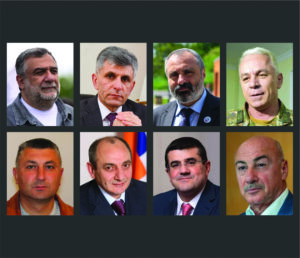
Armenian prisoners who formed the leadership in Karabakh now on trial in Baku

Armenian Hostages Languish in Azerbaijan in Face of Opaque Judiciary

12
0

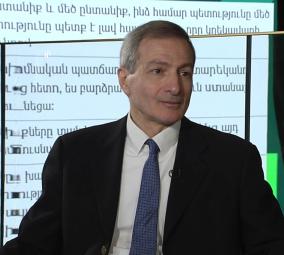
As the case of the Armenian prisoners in Azerbaijan continues, many are worried. The ominous pronouncements by the Azerbaijani government and the relative silence of the regime in Armenia are causing worry for the loved ones of the former political top echelon in Artsakh (Karabakh), including Ruben Vardanyan, whose case is separated from the others. One person intimately involved with the fate of those arrested is international attorney and regular contributor to the Armenian Mirror-Spectator Philippe Raffi Kalfayan. He recently answered questions about how he thinks their cases are going.

How are you involved with the defendants?

I am involved at three levels. As an attorney, I co-represent the interests of some families of prisoners before the European Court of Human Rights, in association with attorneys from the Republic of Armenia (under the coordination of Siranush Sahakyan). As a strategist, I participate into a coalesced group of lawyers and former ombudsmen from Armenia and Artsakh that elaborates and coordinates the strategic litigation and related advocacy. As an advocate for the collective cause of prisoners, I initiated and took the lead for advocacy within the OSCE and by its participating states for the triggering of the Moscow Mechanism. That one enables in principle to send an expert mission in a country to investigate specific aspects of the administration of justice when there are blatant and severe violations like in the present case if ten countries make the request for it.

How many people exactly are on trial?

There are 23 prisoners: 16 are on trial. The other 7 have already been condemned and sentenced.

Why did the Azerbaijani prosecutors separate the case of Ruben Vardanyan from the others?
Get the Mirror in your inbox:

We don’t really know. We can build assumptions but not assert them. I prefer to skip that question.

Philippe Raffi Kalfayan

Vardanyan in particular remains very outspoken about Artsakh. Why do you think he is risking it?

The recent statement of Ruben Vardanyan, while he rejected any service from a lawyer, is enigmatic and we have no direct explanation about the meaning of his message. To whom is this message addressed: To Azerbaijan, to Armenia, to both? In the context, I commend his remarkable courage, which is in line with his decision to settle and stay in Artsakh at the risk of being detained with the other leaders. I just hope that it is not an act of despair and depression because his handover to Afeyan family on the occasion of the last Aurora awards ceremony felt like a farewell message.

How do you think the trials will end? The prosecutor has called for lengthy sentences but do you think the trials will end with them getting long sentences?

The Azerbaijani authorities are proceeding with their pre-determined plan without hesitation or magnanimity. The verdict in the ongoing trials against the 15 + 1 (Ruben Vardanyan being separated) will be known at the end of 2025 or beginning of 2026. It is unclear whether all the initial charges will be upheld by the military tribunal, but the convictions are certain and will be heavy since the goal is to deter once for all any idea of “revanchism” (this is the word Azerbaijan uses). The defense lawyers, who are court-appointed, have requested an acquittal for six of the prisoners on trial but this is a tactical move by the Azerbaijani judiciary which seeks to simulate respect for the right to fair trial. There is no doubt that all will be condemned but with slight differences according to the status of the prisoner: whether they were military personnel, civilian, or former leader of the Nagorno-Karabakh Republic.

Given that they are all hostages, although not recognized as such by Azerbaijan, their fate will depend both on the progress of the peace treaty between Armenia and Azerbaijan (Bayramov stated that the signing would take place in the first half of 2026 if all goes according to plan, meaning the fulfillment of Azerbaijani demands), and on the domestic politics in Armenia in the lead-up to the parliamentary elections of June 2026. It is in the Armenian Prime Minister’s interest to secure the release of hostages, but not too soon. Their release would be a political gift from Azerbaijan to Nikol Pashinyan to ensure his re-election. The leaders of the former Nagorno-Karabakh Republic are therefore doubly held hostage by the political agendas of both Azerbaijan and Armenia.

How can we in the diaspora support them?

The diaspora should continue to raise awareness about those prisoners, denounce the violations of fair trial principles, domestically and internationally. The government of Armenia says they are using a gentle tone in order not to jeopardize the fragile peace process. To counter this argument, every one shall argue by third parties that: 1. those trials are unfair and aim only at humiliating the defeated Armenians and in particular the former leaders of the Republic of Artsakh. 2. This approach is not serving the building of a sustainable peace, since the humiliation of the defeated, as history shows repeatedly, can only lead to new wars.

From that perspective, the advocacy for the cause of Artsakh and of the 23 prisoners and the violations of international law rules they are victims of, must continue at any rate by the respective domestic Executive and Legislative but also in international forums such as the United Nations, the European Union and the Organization for Security and Cooperation in Europe. Silence is synonymous with indifference, disrespect, and impunity.

What are the best and the worst scenarios these people could expect?

There are several possible scenarios in my humble opinion. The military personnel will be considered prisoners of war by the Azerbaijani authorities and may be released unconditionally if the peace treaty complies with their demands. Those considered “mercenaries” (Lebanese national Vicken Euledjian, for example) are in an uncertain situation. The bad health condition of Euledjian may force the Azerbaijani authorities to release him. Meanwhile, his conviction was a message sent to all diaspora Armenians by Azerbaijan. The case of the former leaders of Nagorno-Karabakh is also uncertain since their fate depends on the geopolitical bargain and on the domestic politics in both countries. Some may be released but not all. They may also potentially be deported to Armenia on the condition that they serve their sentences in Armenia. That political arrangement would satisfy both the Armenian and Azerbaijani leaders. Personally, I do consider the release of Baku’s prisoners to be the absolute priority, regardless of the cynical games being played out behind the scenes by both parties.

Are European or regional observers at the trials?

The transparency of the hearings is limited to official images showing packed courtrooms and broadcastings relaying some statements from either the defendant or the defender. But what is its value in a dictatorship where there is no justice and no independent civil society, and where 392 political prisoners are registered according to the Freedom for Political Prisoners of Azerbaijan Union, an Azerbaijani NGO in London, that published it on October 7, 2025? Foreign media, diplomats and international NGOs are not present at the hearings. There was some surprise when the US State Department responded to the Armenian National Committee of America (ANCA) solicitation that “US embassy staff, when possible, attend court hearings in Baku.” After cross-checking, it is likely that employees were invited to one or two hearings, most probably at the beginning of the trial. But, more factually, I can share my own experience as attorney. A French colleague and I requested permission from the Azerbaijani Embassy in France to go and visit one of our clients, who has already been convicted and has been serving his sentence. After a long silence, a terse mail reply advised us to apply for a visa through their consular service in Paris. Considering that the French Ministry of Foreign Affairs recommends that French citizens not travel to Azerbaijan, this response is pure cynicism.

Some people call them POWs or hostages. Why are those labels not correct?

Both are correct labels.

The term “hostage” under international law is defined indirectly. It is the act of taking hostages that determines hostage status. The International Convention against the Taking of Hostages defines the hostage-taking (Art. 1) as “the act of seizing or detaining a person (the hostage) with threats to kill, injure, or continue to detain them in order to compel a third party, namely a State, an intergovernmental international organization, a natural or legal person, or a group of persons, to perform or refrain from performing any act as an explicit or implicit condition of the hostage’s release.”

The Rome Statute of the International Criminal Court (ICC) adds another dimension: the required conduct of the third party could be a condition not only for the hostage’s release but also for their safety. Hostage-taking is characterized by the specific intent behind it; this is what distinguishes it from the deprivation of liberty of another person, a human rights concept.

Although the prohibition of hostage-taking is specifically included in the Fourth Geneva Convention and is generally associated with the detention of civilians, Article 3 common to the four Geneva Conventions, the Rome Statute of the International Criminal Court, and the International Convention against the Taking of Hostages do not limit the scope of the offense to civilians alone, but apply it to any person protected by the Geneva Conventions.

Several well-known facts allow us to state unequivocally that Armenian prisoners, regardless of their status (military, civilian, or former leader), are hostages. Recall that to secure Armenia’s support for hosting COP 29, Azerbaijan, “guided by the values of humanism and as a gesture of goodwill,” released 32 prisoners of war (Joint Declaration of the Armenian Prime Minister and President Aliyev on December 7, 2023). Prior to this, between 2020 and 2023, prisoners of war were released by Azerbaijan in exchange for Armenia providing maps of minefields. It’s important to remember that the mutual and simultaneous withdrawal from interstate proceedings before the European Court of Human Rights and the International Court of Justice is also one of the eighteen points of the draft peace treaty. Azerbaijan insists on this point because it is the only area where Armenia has a real chance of securing a judgment against Azerbaijan, particularly regarding the issue of prisoners. Finally, the Prime Minister’s statement of November 12 concerning prisoners is unequivocal. He said: “If resolving the issue of peace is essential, then I would say that the more favorable the climate, the more quickly and effectively this problem will be resolved.” The status of hostage could not be clearer.

What is the legal status of the former leaders of Nagorno-Karabakh: leaders of an unrecognized entity, prisoners of war, civilians protected by international humanitarian law? Can the Geneva Convention on prisoners of war apply in this case?

As for these former military and political leaders of Nagorno-Karabakh, they are first and foremost political prisoners according to the definition adopted by the Council of Europe. Resolution 1900 (2012) of the Parliamentary Assembly states: “A person deprived of their individual liberty must be considered a ‘political prisoner’ if at least one of the following criteria is met: violation of fundamental rights, purely political reasons, disproportionate punishment, discrimination, manifest irregularities in the procedure.”

These leaders were arrested not during hostilities but after the dissolution of the Republic of Artsakh, for manifestly political reasons, since they are accused of having held a political and military office in a republic considered illegal because “separatist”, even though we all know that this political entity was created by the will of the Armenian people of Nagorno-Karabakh to exercise their right to self-determination in a valid constitutional framework, that of Soviet Union. Two criteria are therefore relevant: the purely political reasons for their arrest and trial, and the manifest irregularities of the procedure.

Those leaders also benefit from the protection of international humanitarian law due to any civilian or prisoner of war, particularly when they are hostages. In addition to the provisions mentioned above, practice shows that the prohibition of hostage-taking, firmly established in customary international law, is considered a war crime. According to the Statute of the ICC, hostage-taking constitutes a war crime in armed conflicts, whether international or non-international. The Statutes of the ad hoc International Criminal Tribunals (former Yugoslavia, Rwanda, Sierra Leone) considered it as such. In the Blaškić case in 2000, the ICTY found the accused guilty of hostage-taking as a violation of the laws and customs of war, and of taking civilians hostage as a grave breach of the 4th Geneva Convention. In other words, they are also prisoners of war.

Are there negotiations happening behind the scenes, especially by Armenia or the United Nations, for example?

The behavior of the Armenian authorities is changing. Initially, they made damaging statements against the prisoners. Some supporters of Prime Minister Nikol Pashinyan continue claiming that one should not forget that the Artsakh leaders have failed ruling the Republic of Artsakh and they are responsible for their situation. That kind of inappropriate and treasonous remarks only strengthened Azerbaijan’s resolve to try and convict them. Generally speaking, everything said by the Prime Minister and his lieutenants on the Nagorno-Karabakh issue is detrimental to the prisoners. In recent months, the rhetoric has shifted. Is the pressure from civil society and the media, or our advocacy efforts (attorneys and advocacy groups) with foreign governments, intergovernmental institutions (UN, EU and OSCE) and foreign parliaments having an effect? Even Donald Trump raised this issue on August 8, catching the Armenian Prime Minister off guard. The prime minister now claims that his government is working on it daily! In the diplomatic field, I can say that the Armenian government has been inactive in multilateral forums, even obstructing the progress of our advocacy. While Armenian ambassadors and the minister claim to regularly raise the issue in bilateral contacts, which is partly true, they are obstructing efforts undertaken with intergovernmental institutions. For example, we had been working within the framework of the OSCE to convince states to launch an investigation into the conditions of arrest, detention, and trial of prisoners. We consistently encountered the same response: we cannot take any initiative unless the Armenian government requests for it. The priority given to the peace treaty is presented as an excuse for inaction, even though everyone knows perfectly well that a genuine peace cannot be signed while hostages are being held.

For the past two months, the prime minister has no longer avoided the issue of the prisoners. He seems to have finally understood that securing their release would be a considerable asset on the domestic political front as the elections approach. Which is a positive step if the prisoners are released within the next months.

The lawyers in the US especially seem to want to connect the case of the Armenians on trial with an anti-Muslim, conservative Christian agenda, cozying up to people like Tucker Carlson or Franklin Graham. Do you think that is a good strategy?

I fully understand the opportunism of lawyers and lobbying organizations to step into this Trumpist wagon, which claims to want to defend Christians everywhere in the world. It is true that it was indeed President Trump who addressed the issue of Armenian Christian prisoners during the bilateral meeting on August 7-8 in Washington.

However, the “Christian” characterization of prisoners and any qualification with religious connotation of facts and events seems to me inappropriate in Europe and with intergovernmental organizations or international NGOs because those are not accepted either in practice or in the principles. I also consider that it is false because prisoners are discriminated not for religious reasons but for ethnic reasons. It is also dangerous: it is not and has never been in the interest of the Republic of Armenia and the Armenians to antagonize the Arab and/or Muslim world, an environment in which we have many friendly countries, such as Iran, Lebanon, former Syria, Egypt, but also for 20 years the monarchies of the Gulf. Finally, highlighting this religious character is contrary to the current policy of rapprochement between the Armenian government and Turkey.

The Red Cross (Crescent) has been expelled from Azerbaijan. Who can be an impartial witness?

The Armenian government refuses to solicit third countries to provide consular services to Armenian prisoners. These services are usual practices in international relations and they are essential in the absence, since June 2025, of the International Committee of the Red Cross (ICRC), which had to cease its mission in Azerbaijan at the request of the authorities. The Armenian Foreign Affairs officially replied to us in writing why they don’t envisage to take that step.

There are measures proposed in Europe and the US in their support, most recently a letter sent to Secretary of State Marco Rubio asking for sanctions against Azerbaijan and the release of the prisoners. Are any of them effective?

They are mainly appeasing messages to those requesting for help. But in reality, the stakes of USA and Europe are much different: they are of mercantile and geo-strategic nature. The foreign policy of Trump Presidency II clearly and openly aims at securing strategic interests for the USA: control and access to rare minerals and fossil fuels and their transport toward the West. In order to reach that goal, they are ready to sacrifice small nations, such as the three South-Caucasian countries, but also Ukraine. US is trying to find an agreement with Russia at any rate. The unique obsession of the USA is to counter the growing power of China on all continents.

Turkey and Israel are the two key allies of the geopolitical game of Washington in this region. This game is played on the US side by very close allies of President Trump, who are primarily businessmen.

That’s why the fate of prisoners is of little interest to those States. The so called “Trump Route” matters. In recent bilateral diplomatic discussions in Warsaw at the occasion of OSCE plenary sessions, we, attorneys or NGOs, have been told that “prosperity” is the goal, and the priority is then to establish peace. Therefore, the violations of human rights and international humanitarian laws concerning the prisoners are downgraded in the conduct of international relations. “Peace” and “Prosperity” matter at the expense of people and humanity. On 29 November Prime Minister Pashinyan declared that the starting point of the soon to come “new economical doctrine” is that the national interest of Armenia lies in economic development. The high-profile businessmen conducting the negotiations in the name of Trump either in the Middle East or in South-Caucasus, be they Tom Barrack (US Ambassador in Turkey and Special Envoy in Syria and Lebanon) and Stewe Witkoff (main negotiator of alleged peace deals in Israel-Gaza, Russia-Ukraine and Armenian-Azerbaijan) don’t understand or don’t care that peace is not cease-fire. Peace is not even the end of war. A lasting peace, means a sustainable peace, is not an event but a process, which might take long, take years, but really brings peace to the peoples and the society. Respecting the humanity and dignity of Armenians, primarily that of prisoners, is central to such peace building.


Get the Mirror-Spectator Weekly in your inbox: