

What Role Can Azerbaijan Play Against Iran?

273
0

In light of the developments around Iran during the past week, it is extremely important to also examine Azerbaijan’s role and its potential significance in a possible Iran–US/Israel conflict, as it could become an important factor in a broader global confrontation.

The alleged launch of drones by Iran in the direction of Azerbaijan has become a serious issue in bilateral relations. Iran has denied carrying out any action against Azerbaijan. As for Baku, President Aliyev has described the incident as a hostile act by Iran against Azerbaijan. In other words, Azerbaijan either does not believe — or does not wish to believe — Iran’s denial.

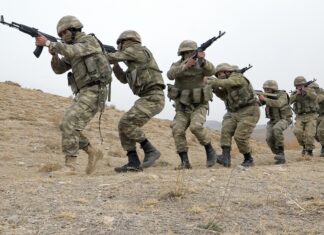
These developments have prompted Azerbaijan to place its armed forces on a higher level of readiness. This creates additional tension not only around Iran but also throughout the South Caucasus, a region that, until now, had largely managed to avoid becoming directly involved in such confrontations.

Regarding Azerbaijan, it appears that Baku is currently attempting to increase its strategic value both for Iran and for the US–Israel alliance. Azerbaijan is positioning itself as an important regional actor in ongoing geopolitical developments, pursuing its own strategic calculations. Baku presents itself as the strongest player in the South Caucasus and emphasizes that it is a state sharing a land border with Iran.

Under these circumstances, it is clear that Iran should work with Baku to ensure that Azerbaijan does not become a potential staging ground for actions against Iran. Conversely, Israel and the United States will likely seek closer cooperation with Azerbaijan in order to potentially utilize its infrastructure and territory in their confrontation with Iran.

The tightening of the strategic ring around Iran has been a priority of American policy for decades, and Iranian leaders naturally understand this, including the possibility that Baku could be drawn into an anti-Iran coalition.

Get the Mirror in your inbox:

Tehran has neither fully denied nor apologized for the drone incident. This could suggest that the incident was not necessarily intended as a message directed at Baku, and that Tehran may indeed have had no involvement in it.

In any case, it appears that such developments may primarily serve Baku’s interests, especially considering the factors mentioned above and the recent intensification of US military activity in various directions, including efforts to involve new actors in the conflict, as has been seen in the case of the Kurds.

It appears that not all states are willing to formally become involved in a war against Iran. The reason is that once the United States eventually reduces its presence or withdraws from the Middle East, many of these countries will be left face to face with Iran. This creates a rather complicated and risky situation for a number of Arab states.

A possible involvement of Azerbaijan could also lead to the indirect involvement of Turkey, given that Ankara is Azerbaijan’s senior partner and strategic ally. From this perspective, President Aliyev’s position is not an easy one. He owes a certain political debt to Israel, which supported Azerbaijan during the war over Artsakh. In this sense, some may argue that the time has come for Azerbaijan to return that support, and Israel could place expectations on Baku in this regard.

The United States may also attempt to draw Azerbaijan into the conflict, believing that its involvement could influence the final outcome of the confrontation.

For now, the sides are largely limited to political statements and demonstrations of strength. Nevertheless, it cannot be ruled out that Azerbaijan could become involved in the conflict in one way or another — not only under pressure from Israel and the United States, but also due to its own strategic ambitions.

Topics: Geopolitics, war

It should not be forgotten that millions of ethnic Azerbaijanis live in Iran, and some political circles in Baku believe that, under certain geopolitical circumstances, these populations could potentially be united under a single political framework. Such a development, in their view, could significantly increase Azerbaijan’s regional influence and potentially transform it into a major power in the region.

Even if Baku is eventually forced to become involved in the war, it will likely try to delay its participation for as long as possible. There are two main reasons for this. First, Azerbaijan would need time to prepare itself militarily and politically. Second, delaying involvement would allow Iran to become significantly weakened as a result of Israeli–American strikes, reducing its ability to respond with full force against Azerbaijan.

The risks for Baku are extremely high. A failure in such a confrontation could be total, while the chances of defeating Iran at the present moment remain relatively low. For this reason, Azerbaijan is currently trying to resist both external pressure and its own ambitions, carefully managing the situation, observing developments, and waiting for a more favorable moment.

Get the Mirror-Spectator Weekly in your inbox: