

By Peter Balakian
Robert Jay Lifton died on September 3 at the age of 99. He was a towering figure in the field of psychohistory (psychology and history) that he helped found with his mentor Erik Erickson, the eminent psychiatrist and historian who wrote Young Man Luther and Ghandi’s Truth. Lifton’s contributions to social thought in our time are central to our understanding of mass violence, trauma, and survivor experience. He created a new lexicon for thinking about how humans commit atrocities and how humans survive catastrophes. He opened up the discourse on survivors by conceptualizing survivor identity in his 1968 National Book Award winning study Life in Death about survivors of Hiroshima. He created concepts and definitions – a whole lexicon that transformed our understanding of our age. Some of them include: “Psychic numbing,” “doubling,” “atrocity producing situation,” “survivor guilt,” “nuclearism,” “counterfeit reality,” “superpower syndrome,” “totalism,” “malignant normality,” “proteanism,” “climate swerve,” “angry grief,” “symbolic immortality.” Among his two dozen books are The Nazi Doctors: Medical Killing and The Psychology of Genocide, Death in Life: Survivors of Hiroshima, Home From The War: Learning From Vietnam Veterans, Thought Reform and Totalism: A Study of Brainwashing in China, The Protean Self: Human Resilience in an Age of Fragmentation, The Broken Connection: On Death and the Continuity of Life.
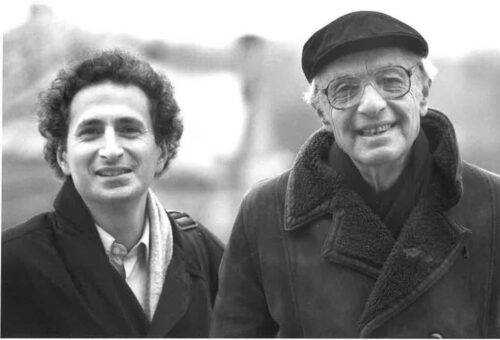
My own friendship with Robert is inseparable from his encounter with the Turkish ambassador to the United States – an episode that would have a large impact on breaking down the wall of Turkish denial of the Armenian Genocide. Robert and I came together in that moment and our friendship of the past thirty years was spawned. The story of his encounter with the Turkish ambassador could be part of a spy novel with an academic twist. When Robert received a letter from Ambassador Nüzhet Kandemir on October 2, 1990 scolding him for writing about the role of Turkish physicians during the Armenian Genocide in his book The Nazi Doctors – his landmark study of German physicians who served Hitler’s program of bio-medical killing – he was surprised. But – when he saw the pile of documents in the envelope, he was astonished. Inadvertently or not, someone had included the full correspondence that led to this castigating letter. It was revelatory. The inter-office correspondence included several pages from Mr. Health Lowry, Director of the Institute for Turkish Studies, funded by the Turkish government, in Washington DC. Lowry writes in a long memo: “I have located and read Lifton’s The Nazi Doctors, with an eye to drafting a letter for your signature to the author.. . . Lifton is a recognized authority in his own field who clearly knows nothing about the so-called “Armenian Genocide. . . . our problem is less with Lifton that it is with the works up which he relies, Lifton is simply the end of the chain.” Ingratiating himself to the power of the state, he writes “I strongly recommend that it be pointed out to Ankara that Lifton’s book is simply the end result of the Turkish failure to respond to Dadrian,” and the others. Lowry then drafted the letter that Ambassador Kandemir sent to Lifton: “I was shocked by your references to the so-called Armenian Genocide,” “to compare a tragic civil war perpetrated by misguided Armenian nationalists” to the Holocaust “is ludicrous,” and the letter goes on in an unctuous tone with denialist rhetoric.
Robert told me that when he received the packet from the embassy his first response was to fire a letter back to the ambassador conveying his disgust at the denial lies and the harm they do. But, then he decided he could be more effective if he teamed up two scholars Roger Smith an authority on the Armenian Genocide and Eric Markusen his co-author for The Genocidal Mentality — to write an article that would analyze the psychology and corruption of denialism. The article, “Professional Ethics and the Denial of the Armenian Genocide,” was published in the Journal for Holocaust Studies in the spring issue of 1995. It is a necessary text for everyone interested in genocide and criminal cover up in the aftermath. It’s online and an important read for everyone.
When I read the article in late April of ’95 I was in a low state having just been through yet another ordeal with Turkish denial. I was trying to educate the editors at the Syracuse Post-Standard who had to field angry denialist attacks from Turkish nationalists and the Turkish embassy after they had published my op-ed “Remembering the Armenian Genocide Eighty Years Later.” Feeling exhausted by the relentless attacks from Turkey to discredit all representations of the Genocide in our own country, I was fending off despondency. The Lifton/Smith/Markusen article came to me as manna. A profound piece of moral witness fused with scholarship and ethical reflection; it struck me as more important than anything I’d ever read on the issue of denial.
Immediately I wrote Robert Lifton, whom I knew only by reputation, a letter explaining to him that I would like to go public with his article with a petition I had drafted aimed at gathering a hundred prominent scholars and writers who would affirm the ethical significance Robert’s encounter with Lowry and the Ambassador. Robert called me right back and invited me to meet him in his office at John Jay College of Criminal Justice on the upper west side of Manhattan. I walked into his office on a Friday morning in mid-May and he greeted me with an affirmative handshake and the blend of calm and upbeat energy that defined him. He read my petition and liked it. The petition was asking fellow scholars and writers to take a stand against Turkish denialism and the other ethical issue wrapped up in this drama that had to do with the Turkish government’s efforts to manipulate the university curriculum in the US. A big part of Turkey’s denial campaign was focused on universities. And what had happened between the time that Robert received the packet from the ambassador and the publication of the article made this ever clearer. In 1994 Health Lowry had been advanced from his position at the Turkish Institute in DC (which boasted a goal of establishing chairs in Turkish studies at American universities) to an endowed chair at Princeton University named – no kidding — the Ataturk Chair in Turkish studies funded of course by the Turkish government. What had Lowry done to deserve this prestigious honor reserved for the most highly accomplished scholars in a given field? After finishing his Ph.D. in Ottoman Studies, he went to Turkey to work for a research institute in Istanbul and did some teaching at universities there and published a denialist tract attempting to discredit US Ambassador Henry Morgenthau’s memoir that included important chapters on the Armenian Genocide. Then he returned to the States to direct the Turkish Institute. He had never held a tenured position at an American university, nor had he published a book by mainstream scholarly or trade press. Given this record and the fact that the Turkish government and its supporters had funded the chair struck many professors around the nation as not quite right. “Let’s get going,” Robert said, and we talked for the next two hours. I told him that thought if we could flash a light on this scandal, we could raise a mainstream awareness about the Armenian Genocide and Turkish denial in a way that had never happened before.