

SARATOGA, Calif. — Lisa Prince Newman grew up in a Garden of Eden, surrounded by vineyards, pastures and orchards, on a two-plus-acre property with just about every kind of tree imaginable, from walnut to kumquat to apple to apricots. It was magical. A different kind of magic happens in her once-pastoral home now called Silicon Valley. She watched despondently as the bucolic area was slowly bulldozed to make room for housing and offices and malls, she says. But the taste of her family’s fruits, especially apricots — in her mind, a pretty much perfect fruit — never left her.
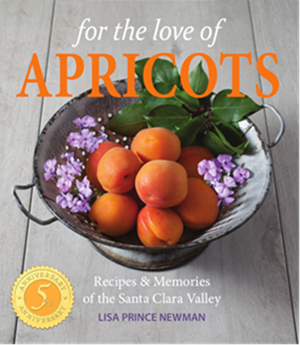
Lisa’s For the Love of Apricots (178 pages, Prince of the Orchards Publications), is a beautiful cookbook that includes treasured recipes and memories of growing up in the Santa Clara Valley, once known as Valley of Heart’s Delight. “Their appeal is so unique. They fit in your hand, and they’re just the most luscious fruit. They’re my favorite fruit,” she says. “It’s like looking at the California sun.” The cookbook is a feast for the eyes as well as the soul. Photography blends with images of California’s apricot orchards; from today as well as not so long ago, when fruit orchards covered much of the Santa Clara Valley landscape. Reflections on what the celebrated Valley of Heart’s Delight was like, how it changed, and what remains, add Lisa’s personal memories and perspective to the cookbook.
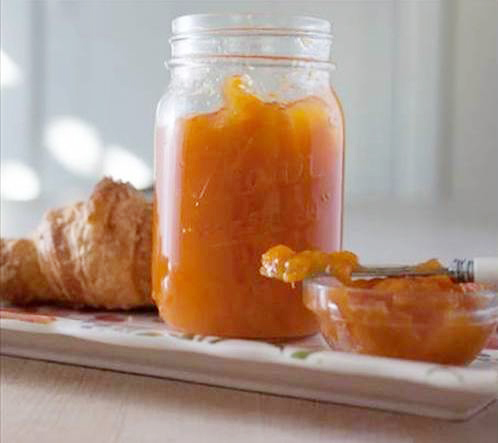
“There are as many ways to make apricot jam as there are mothers, aunts and grandmothers who make it. My mother preferred to make freezer jam, which doesn’t involve boiling jars and lids. She stored the jam in Tupperware containers that lasted our family through the year. I loved her jam growing up, but as an adult decided it was overly sweet for my taste. I wanted to make a jam that tasted more like the actual fruit. When I make apricot jam, I use a reduced sugar pectin such as Sure-Jell, which is easy to find in the grocery store. Reduced or no sugar recipes that are provided in the box allow the apricot flavor to shine through better than traditional recipes with a higher sugar ratio. Be sure to follow the instructions provided to achieve a proper jam consistency, and the best flavor.”
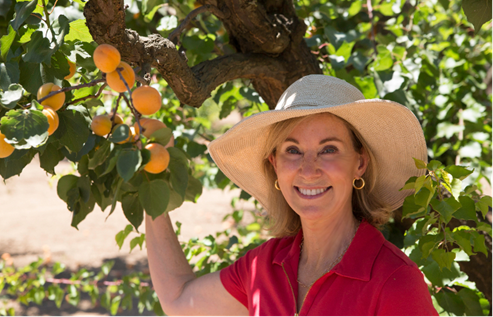
“The Blenheim apricot and its heirloom cousins, the Moorpark and Alameda-Hemskirke, shared international fame with the French Prune for nearly 100 years, when the Santa Clara Valley was known as the Valley of Heart’s Delight. Back then, orchards spread across the Valley in every direction. In springtime, visitors from around the Bay Area, across California, and even distant parts of the world, came to see the blossom spectacle celebrated at the Saratoga Blossom Festival, which ran from 1900 to 1942,” says Lisa.
“There are a few utensils that make the jam-making job easier, including three different sized pots: large – in which to boil the jars, medium – for making the jam, and small – for boiling the lids; pot holders and tongs to lift the hot jars out of their water bath onto a clean cloth; a wide-mouth funnel to insert into the hot jars; and a ladle to pour the hot jam into the hot jars before sealing them tightly with the screw band lids. I deviate from the recipe at this point and don’t process the jam further because I think the jam has a fresher fruit flavor. I’ve been making jam this way for years with great results.”
“Apricots,” she adds, shouldn’t be relegated to being considered just a summer fruit. “Apricots can be preserved, they can be frozen, you can make jams, and dried apricots can be used throughout the year. This recipe is the one I use to make many batches of jam each year. I keep a case of 16 oz. jars for our family’s enjoyment, and make a few more cases in varying sizes for gifts. Friends and family always enjoy receiving these jars of apricot sunshine.”