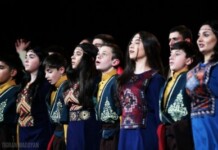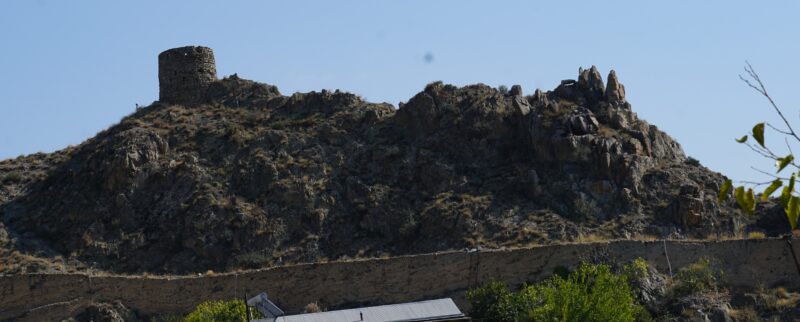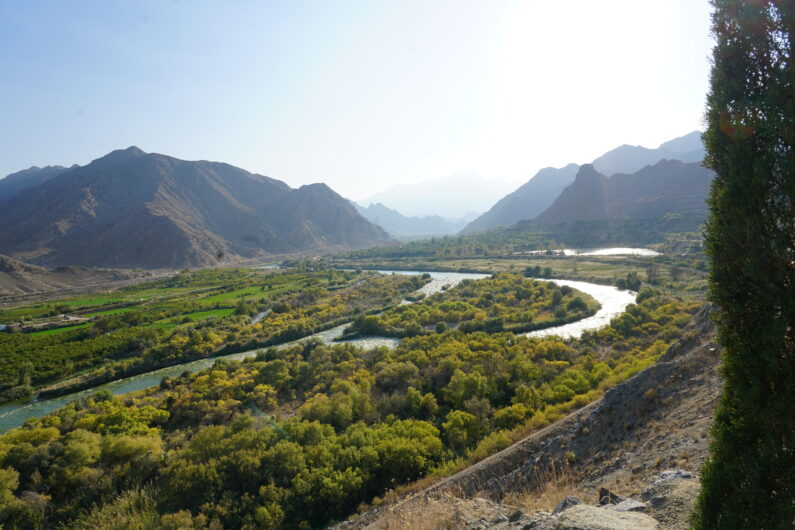


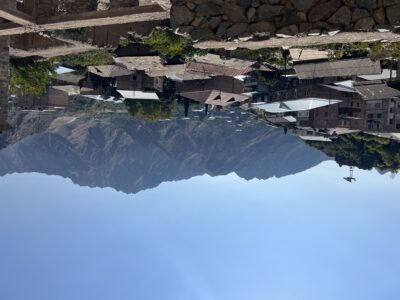
A view of part of Meghri town with surrounding mountains (photo Aram Arkun)

A Municipal Leader’s View of Meghri

313
0

MEGHRI, Armenia — Meghri, one of the southernmost towns in Armenia, is constantly in the news nowadays because of the Trump Route for International Peace and Prosperity (TRIPP) project. Its municipal head, Khachatur Seyrani Andreasyan, during an interview in mid-October of last year, declared: “Before when we would go somewhere, they would ask where are you from, and we would say Armenia, and they would say where is Armenia? Now they ask and I say Armenia, and then they ask where in Armenia and when I say Meghri, they say oh, Meghri! … It seems as if everyone knows Meghri now.”
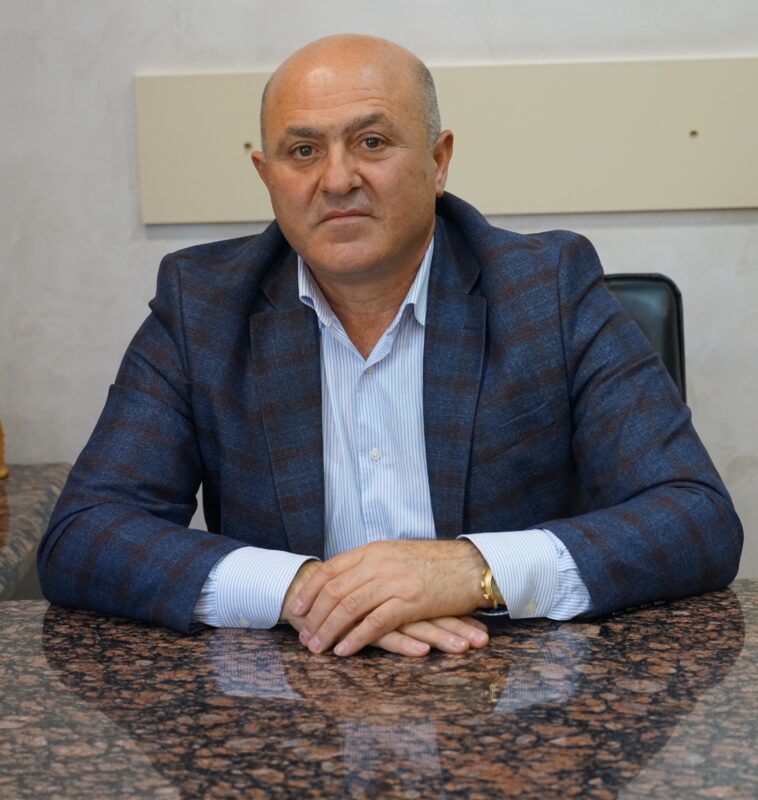
Khachatur Andreasyan (photo Aram Arkun)

Population and Work in Meghri

Andreasyan said that about 12,000 people live in what is called the enlarged municipality of Meghri, which includes about 4,000 people in the town of Meghri, the same number in the neighboring town of Akarak, and the remainder spread throughout the villages in the municipal district. (The perhaps slightly outdated 2022 Armenian census gives a total of 8,977 permanent population in the enlarged municipality.) Meghri is part of the Armenian province of Syunik. One major base of the economy is agricultural, with Meghri’s fruits, especially pomegranates, figs and persimmon, recognized as of the highest quality, Andreasyan said.

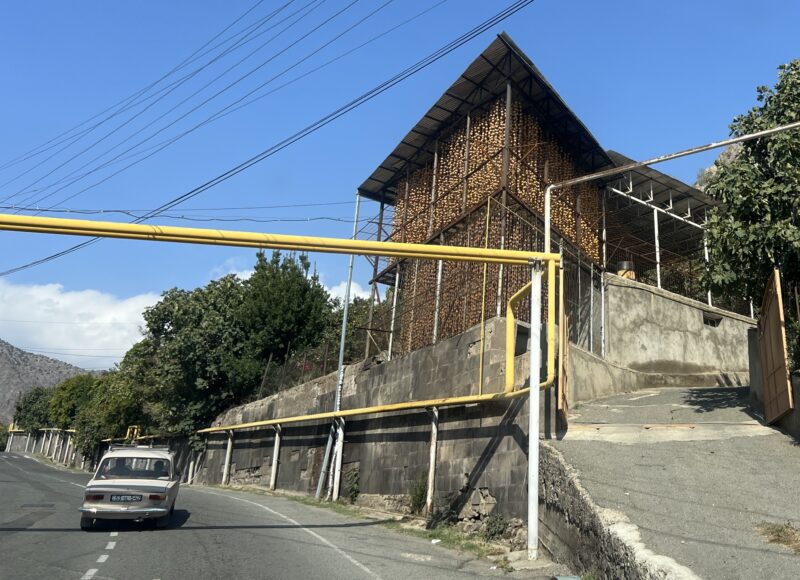
The local standard of living is higher than other regions of Armenia, he said, and there are plenty of jobs, so that unemployment is very, very low in the municipal region. Only having the desire to work is necessary, Andreasyan said. In fact, in order to fill the demand for workers, there are more than 100 Indian nationals who have come to work and live in Meghri. Four Indian citizens work for the municipality, including a garbage truck driver and other cleaners. Indians receive the same salaries as local Armenians for the same jobs.
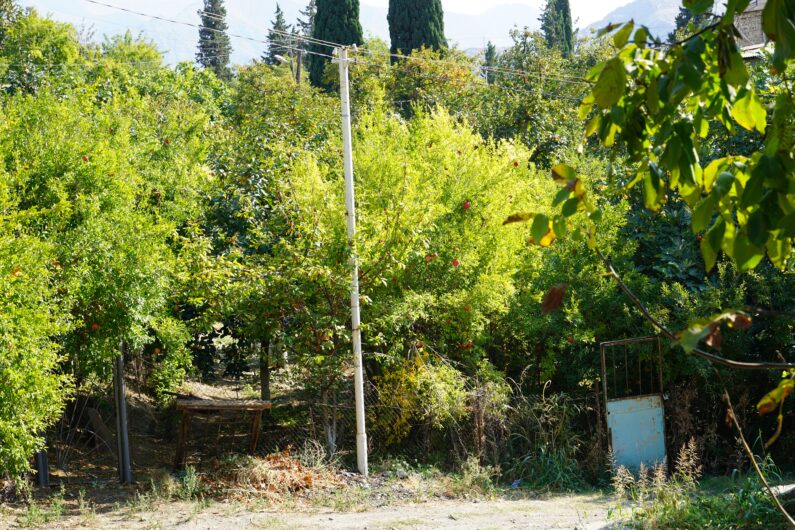
There are pomegranate trees in many yards in Meghri (photo Aram Arkun)

Workers receive a salary of 165,000 drams (about $436) monthly. Andreasyan said in neighboring municipalities it is 130,000 or 140,000 drams, but since there is sufficient money in his budget, “I want our workers to live well too. If I could, I would give them 200,000 [drams]. Let them feel good. … When you receive a high wage, you think about your work. When you receive little, you do whatever…thinking, if I don’t work here, I will work there and get the same 100,000 [drams].”
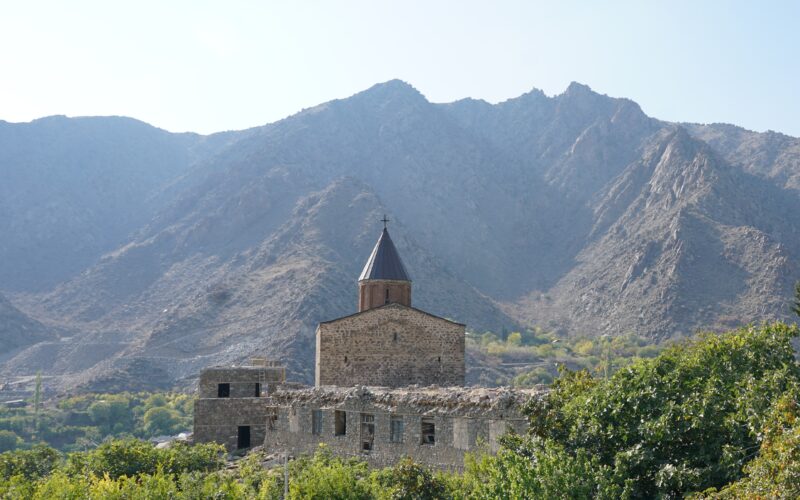
The exterior of the 17th century Sourp Hovhannes Church, also called Anapastanats, located in the Mets Tagh or Large Quarter of the town of Meghri (photo Aram Arkun)

Although there are no exact figures on the numbers of Iranians in the municipality, Andreasyan estimated that there are at least 2-300, including some 60 working on loadbearing trucks. They also drive 10 excavators and a number of smaller vehicles. Iranians work in relatively large numbers on the construction of a local portion of the North-South highway and the same Iranian company doing that won the contract to build a new customs house. They also are preparing high voltage current wires that will bring electricity from Yerevan. It will form a third line that will go into Iran.

Get the Mirror in your inbox:

Andreasyan noted that the Iranians learn Armenian quickly. While in Meghri and Akarak, many people understand Persian; soon Persian will also be taught in local schools.

There are Russian army border guards. Before they were very numerous but now they have decreased in number, Andreasyan said, with the majority being ethnic Armenians. There are at least over 100 ethnic Russians among them too. They have their own kindergarten and school and their relatives come sometimes to visit from Russia.

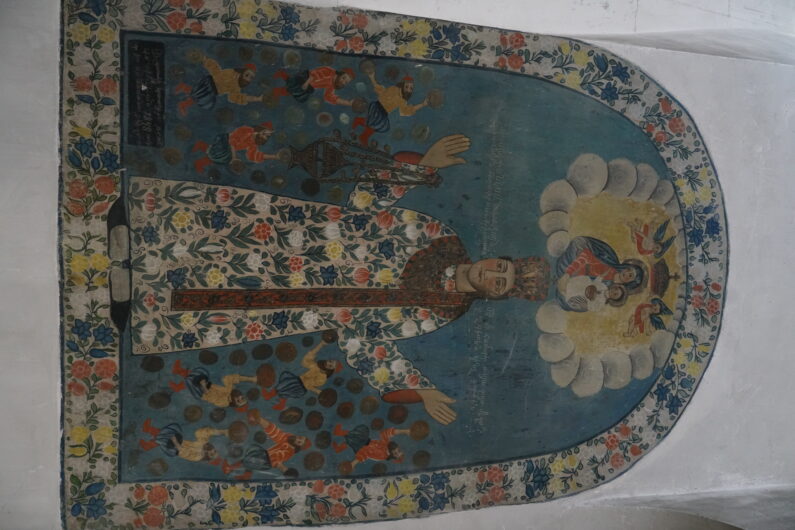
Fresco of St. Stephen the Protomartyr (Sourp Stepannos Nakhavkay) by Ohannes Simonian, 1848, in Sourp Asdvadzadzin Church of Meghri (photo Aram Arkun)

Finally, during the 2023 exodus of Artsakh Armenians, some 180 refugees came to Meghri. Andreasyan said their number varies between 173 and 175, as one family goes another comes. At present, there were 170, who chiefly live in Akarak, Meghri, Vardanidzor village and Tashtun village. They chiefly work in agriculture but also on the North-South highway construction, while others have their own businesses. They work in various places in Meghri, including bakeries. Andreasyan said that they do what they can but always are on pins and needles, hoping that they will be able to go back to their homes in Artsakh to live. “It is a tragedy,” he sighed. He said that at least none of them are starving in Meghri and he was ready to help in any matter. They call the municipal government for various issues, such as no electricity or they need wood, and the municipality helps them. Also sometimes Andreasyan has helped as an individual, or asked friends to help as individuals and they did.

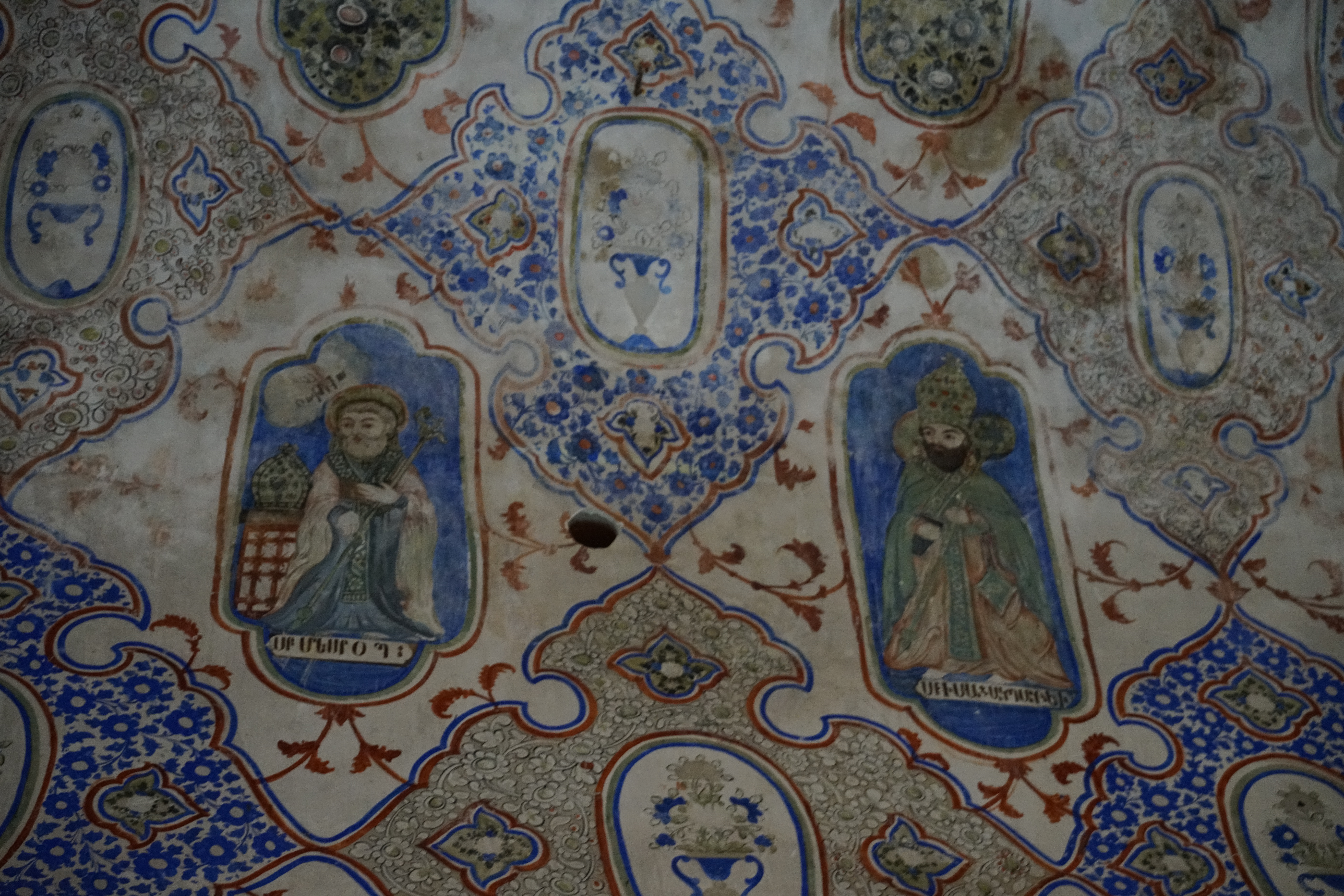
Frescos depict, among others, Sts. Mesrob and Sahag in Meghri’s 17th century Pokr St. Hovhannes (Saint Sargis) Church (photo Aram Arkun)

He recalled his recent visit to Artsakh Armenians living in Tashtun village on the day celebrating the elderly, and said that some people there gave them homes without taking any rent. The Artsakh Armenians said to him that they were very satisfied with life there and that the locals had accepted them and acted warmly with them.

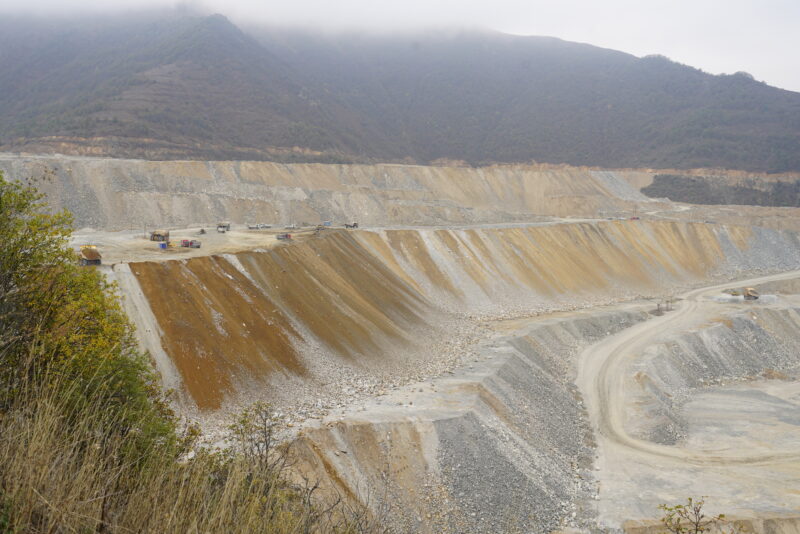
Agarak Copper Molybdenum Combine pump station (photo Aram Arkun)

Mines in the territory of Meghri are another major source of employment, including the Agarak Copper-Molybdenum Mine, the Lichk Copper Mine and some other gold and copper mines.

What appears to be mining work right next to the Kapan-Meghri Highway (photo Aram Arkun)

The Armenian central government is a source of employment, as it is currently making great investments in the Meghri region, Andreasyan said. Aside from the aforementioned North-South highway and customs house, on the construction of which many Meghri and Agarak residents work in addition to Iranians, there is a road from Shvanidzor village towards Lernadzor being built and two large stations for purifying drinking water.

Domestic Politics

Meghri was turned from a simple town into an enlarged municipality in 2016, due to a change in Armenia’s governmental system, increasing the territory under the control of the municipality. After the 2018 “Velvet Revolution” that brought Nikol Pashinyan and the Civil Contract Party to power, the first election bringing officials who were not connected with the former Armenian regimes took place in Meghri in 2021.

In fact, none of the political parties fielding slates in Meghri’s 2021 election were affiliated with the parties of the prior three Armenian presidents. Four parties, Civil Contract, Liberal, Republic and Country of Living, competed. Andreasyan said that he presented himself as the candidate of the Liberal Party for municipal head but was never a member of the party. He said that in fact, he never had been a member of any political party but was always an independent.

Remnants of the medieval Meghri Fortress (photo Aram Arkun)

Andreasyan explained that as no party received 51 percent of the votes, an alliance was formed between the Liberal Party, which was led nationally by Samvel Babayan, and the Republic Party, led nationally by Aram Sargsyan, to obtain a ruling majority. They decided that Bagrat Zakaryan of the latter party would serve for the first 2 ½ years of the five-year term as municipal head, with Andreasyan as first deputy, and then they would swap positions for the next 2 ½ years.

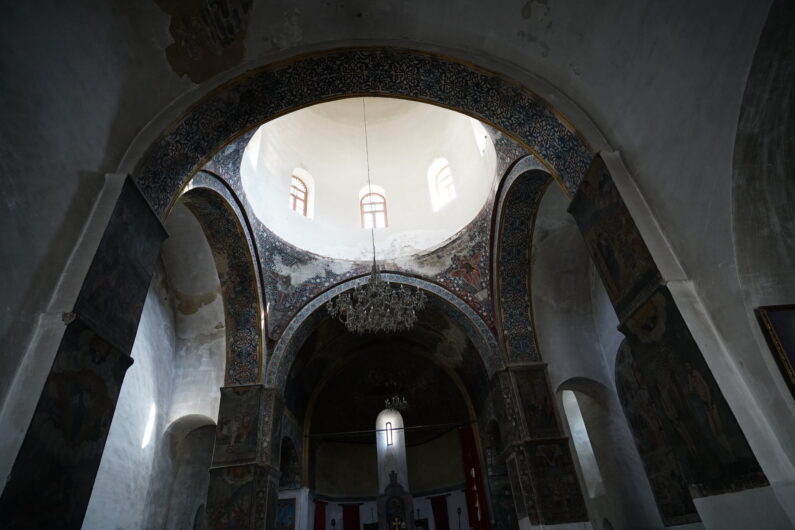
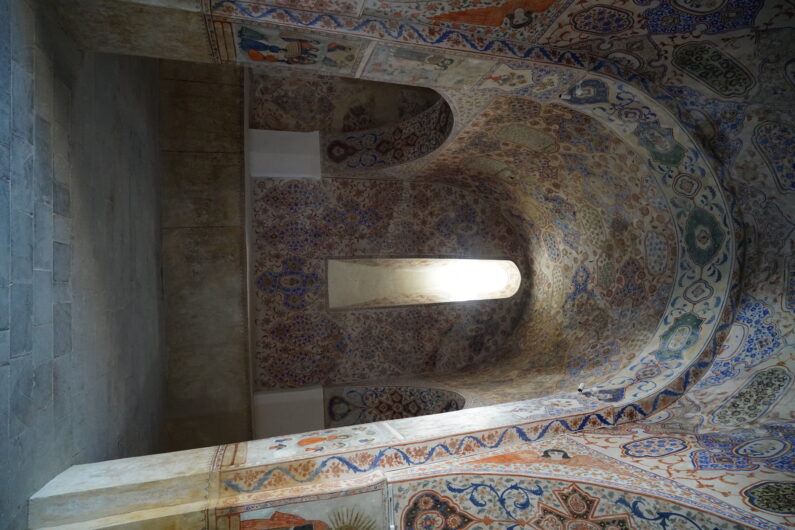
The interior of the 17th century Holy Mother of God (Sourp Asdvadzadzin) Church of Meghri (photo Aram Arkun)

Andreasyan began his period as municipal head in May 2024. It takes time to make plans and obtain funding for projects, he said, and he must again face elections in the fall of 2026. This time, however, he will be a candidate of the Civil Contract Party. Sometime in the spring of 2025, Andreasyan said he joined this party, declaring: “That happened knowingly: looking at their work, the movement of the government, their growth of the economy, and taking all this into consideration, I understood that we are going forward. I did this voluntarily. No one guided me.”

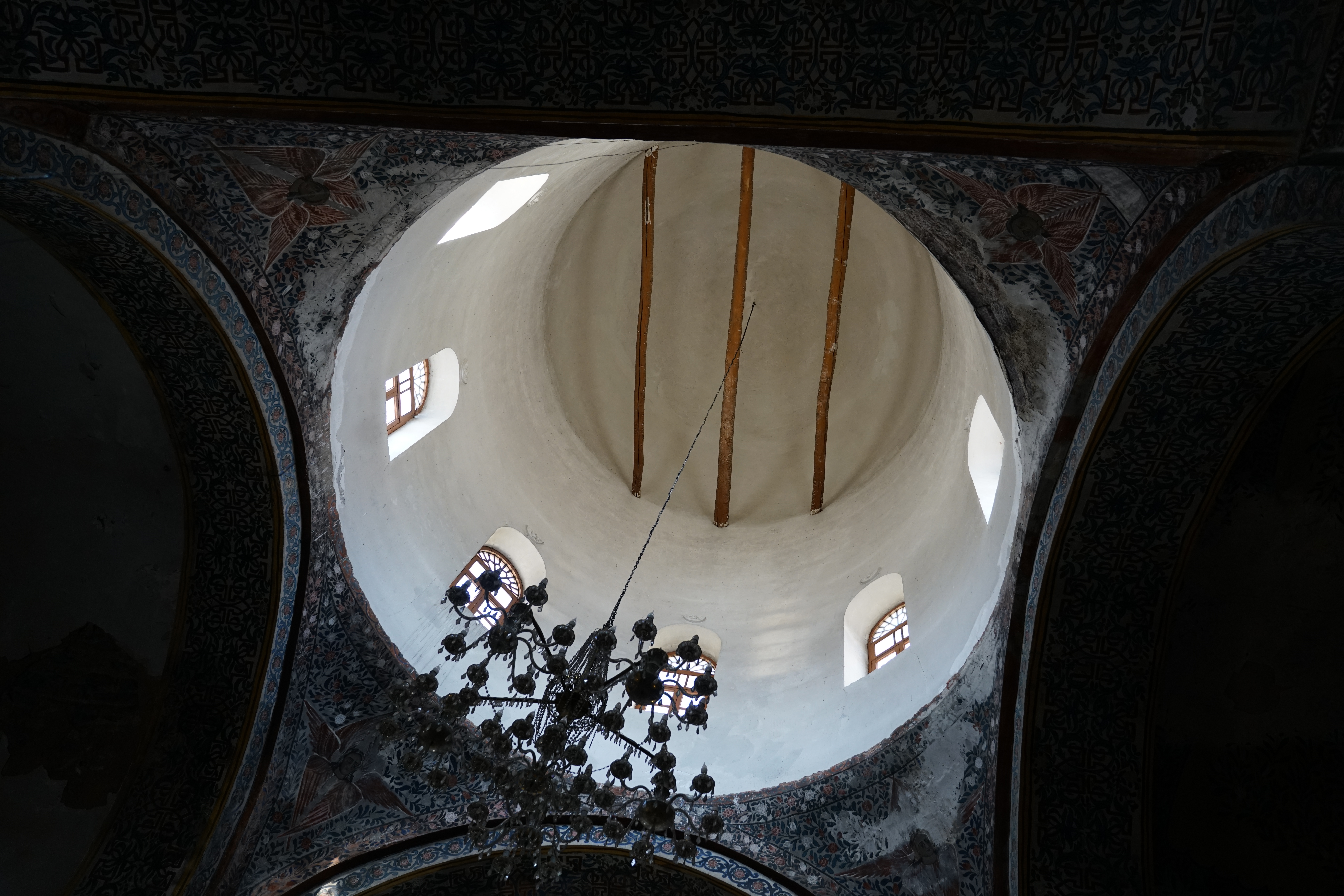
Underneath the dome of St. Asdvadzadzin Church (photo Aram Arkun)

Municipal Budget and Projects

The municipality has around 69 staff members in different departments or divisions, including social, construction, accounting, legal and planning, and each one has 6-7 people, Andreasyan said. Not all are based in Meghri due to space limitations. For example, Andreasyan said that an official dealing with education and school issues has his office in Agarak.

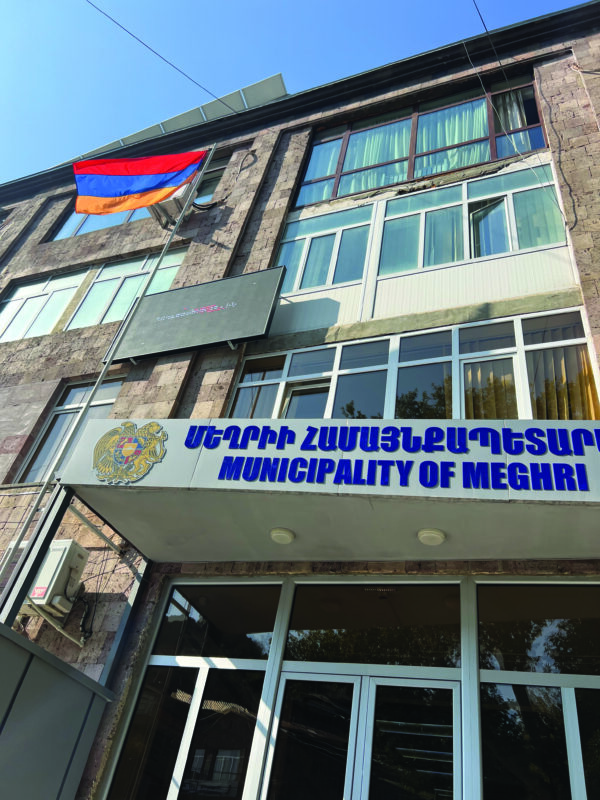
The municipal headquarters of Meghri (photo Aram Arkun)

The municipal budget was 1 billion 200 million drams (approximately $3,147,600) while Zakaryan was in charge. The state gave four or five hundred million drams and the rest came from municipal taxes and duties. Few renovations or repairs could be carried out because of budgetary restrictions, Andreasyan said. When Andreasyan took over, the budget increased by another 1 billion 280 million, more than doubling, to 2,480,000,000 drams.

Where did the additional money come from? Andreasyan answered that in part it was from the Agarak Copper-Molybdenum Combine. Aram Sargsyan’s Republic Party was pro-European and critical of Russia. The owners of the mining company are Russian and no investments were made by it during Zakaryan’s time in office by it nor by the Zangezur Copper-Molybednum Combine. Andreasyan said that after he was elected and became municipal head in 2024, he went to them and they contributed about 150 million drams (roughly $395,893) to the budget.

In addition, there were lands not given out to rent to the Agarak Combine in prior years. Local mayors would allow these lands to be used officially for free but in exchange they sold products like gas to them privately to make personal profit, Andreasyan said. Now Andreasyan formally rented these properties for 160 million drams annually, which of course increases the municipal budget, while Kajaran municipality also gives Meghri 150 million drams rent.

The central government also increased its contribution to Meghri to 700 or 800 million drams, Andreasyan said.

All the walls are covered with frescoes in Meghri’s 17th century Pokr St. Hovhannes (Saint Sargis) Church (photo Aram Arkun)

He spelled out several of the major projects which this 2025 budget will allow him to tackle. Roofs and elevators on some large apartment buildings in Meghri will be repaired for 234,158,000 Armenian drams ($617,955), towards which the municipality contributes 70,000,000 and the central government 140,000,000. The apartments are owned as private property and their owners take care of their internal spaces. They pay taxes which may be used towards repairs of the building but the responsibility of building maintenance still falls on the municipality (unlike the case of individual self-standing private homes). Andreasyan said that roughly speaking, the municipality pays 30 percent, the central government 60 percent, and individual taxpayer owners pay 10 percent towards such renovations.

The streets in Agarak used to be very dusty and made of dirt. Street repairs there, especially asphalting, will cost 563,000,000 drams ($1,485,919). This work was to begin at the end of last October and included changing the drainage or sewage pipes.

The mines in the region cause damage to the environment. Consequently, those who work there donate money to the municipality in part as a remedy. They donated around 100 million dram and the municipality sent 118,850,000 ($313,776) to the Meghri Regional Medical Center to buy new medical equipment, including laparoscopic equipment costing 18,840,000 drams (the price was set through an auction competition). Previously people had to go to Kapan, Goris or even Yerevan for laparoscopic procedures.

The hospital itself does not belong to the municipality but to the Health Ministry, but as it helps the municipal population the local government wants to help it as much as possible, Andreasyan said.

Fourthly, Karchevan village of the municipality suffers water shortages from July to September when river water dries up. The municipality allocated 22,000,000 drams ($58,064) for its water issues. A deep well will be prepared to provide inhabitants with water.

Another project is spending 100,000,000 drams ($263,928) to fix up the area behind the large statue of Paramaz (Madteos Sarkisian), an Armenian revolutionary and leader of the Social Democrat Hunchakian Party born in Meghri in 1863 and hanged by the Ottomans in 1915. The statue was erected in 2001 but the area behind it is rocky and in poor shape.

Andreasyan said part will be turned into a playground for children with a small swimming pool and slide. The great heat in the summer makes having swimming pools important for children’s health (the municipality also maintains public pools in Meghri and Agarak). The rest of the area will be a garden.

TRIPP and Trade

Andreasyan seemed very optimistic last October about TRIPP. He observed that President Donald Trump declared that great investments will be made there. Andreasyan said that the route would be profitable for Armenia as well as the US and there would be great growth in the Armenian economy. The Azeris would transport oil through Armenia since that is the shortest distance to Turkey, and they would pay a fee to use Armenian roads, as would the Turks, so the state budget of Armenia would increase.

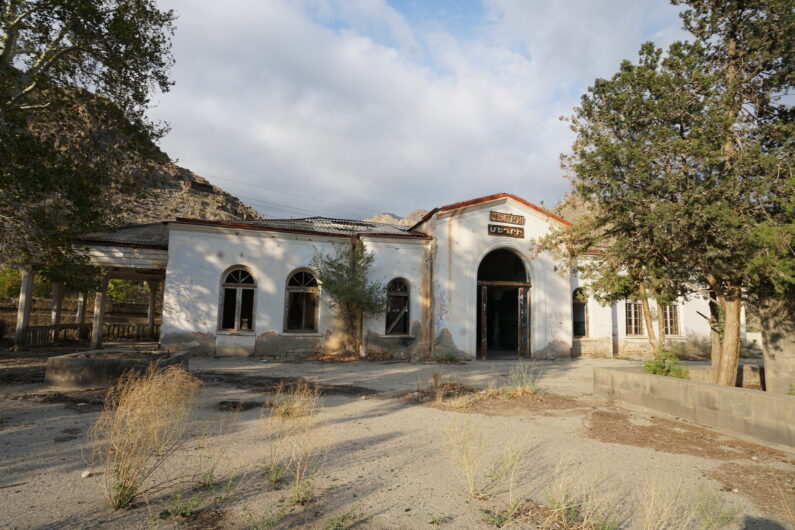
The abandoned railway station for Meghri, outside of the town in the nearby village of Araksashen (photo Aram Arkun)

A second bridge is going to be built over the Arax River, he said, and while there are daily 350-400 vehicles going over the current bridge with Iran, it would increase to 1,800-2,000 daily. One reason is that the Chinese right now use a route via Iran, then Azerbaijan to China, but TRIPP provides a way to shorten this. Instead, the Chinese will transport goods from Dubai to Iran and then through the Meghri route to the Black Sea (to Georgia and then via ship).

A statue welcoming visitors to the now abandoned railway station outside Meghri in the nearby village of Araksashen (photo Aram Arkun)

The $145 million the US is transferring is only for renovating the existing old railway line, which China will be able to use. If a totally new line would be built, Andreasyan estimated the cost would be several billion dollars.

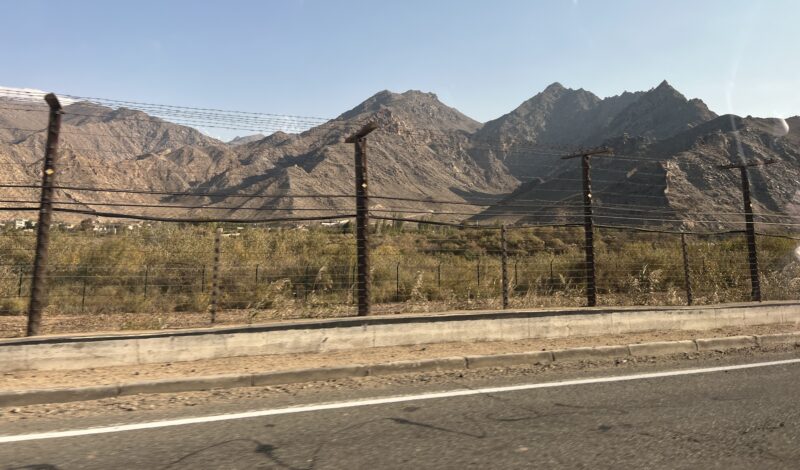
There is barbed wire at parts of the road at the border of Armenia and Iran (photo Aram Arkun)

Andreasyan said that based on the speech of the Armenian prime minister at the UN, the Armenians will check incoming Azerbaijani vehicles, while Azerbaijanis will check Armenian vehicles. He said, “There can be no objections, when a powerful state like America says it will be like this…we are very happy.”

The Araks (Araxes) River separating Armenia from Iran as seen from near the Kapan-Meghri Highway (photo Aram Arkun)

American supervision of the route, Andreasyan said, is desirable in his opinion, adding, “Why is it desirable? Because the two states have fought one other for over 30 years. There can’t be custom houses and conflicts not occur. This is impossible. Time must pass. It [relations] must be refined. People must progress and understand in a European way that law has force and law must operate. You have no rights outside of the law.”

He noted that around 10 European countries were also making major investments in Syunik province as donations, not loans in the fields of agriculture, including irrigation, business, and solar energy. He said that in general, while people were afraid and did not make investments, after the August peace agreement between Azerbaijan and Armenia, people have more hope.

Personal Background

The 60-year-old Andreasyan was born in Karchevan village of the Meghri municipality and graduated middle school there before moving to Agarak. He served in the Soviet army from 1985 to 1987. After he returned, he worked a year as a locksmith before the Karabakh movement began in 1988.

He became a fighter and formed a group with Ghevond Hovhannisyan as commander. They participated in the 1990-91 battles, including the defense of Meghri, towards Nakhichevan, and Kapan, until the peace arrangement. In 1993 and 1994 he was in the Armenian army and had the rank of senior lieutenant. After that, he became the president of the Meghri Regional Division of the Defenders of the Land [Yerkrapah] Volunteer Union, a paramilitary group of veterans ready to defend the borders in case of new wars.

In 1998, he put forth his candidacy for mayor of Meghri and won third place out of seven candidates. He decided then to get higher education, so he went to Yerevan’s Agricultural Academy. After graduation, he became the director of the Armenian-Iranian Market from 2000 to 2006. Trading with Iranians took place in a no customs zone until the Armenian state shut it down in 2006.

After this, Andreasyan went back to Yerevan and established two businesses. He exported nonferrous metals and iron scraps to India, Iran, Pakistan and other countries until 2012. In 2013 he imported goods from Ukraine.

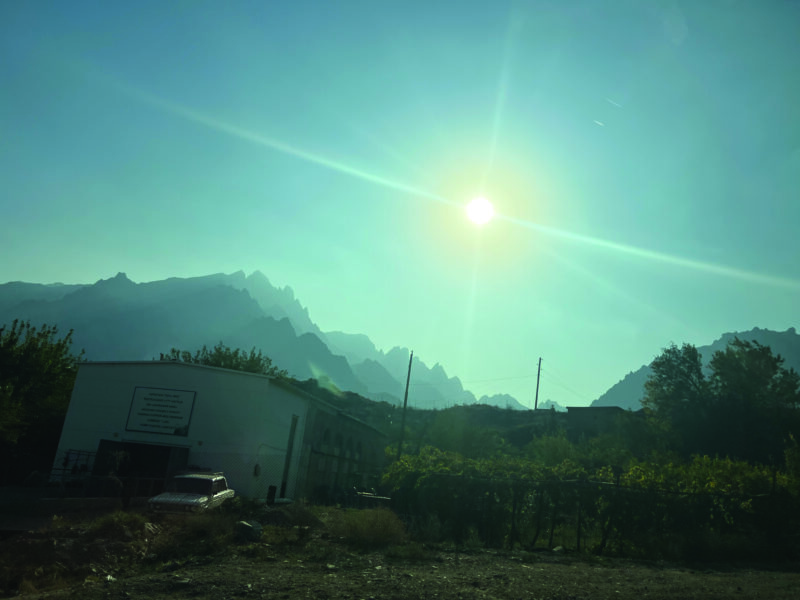
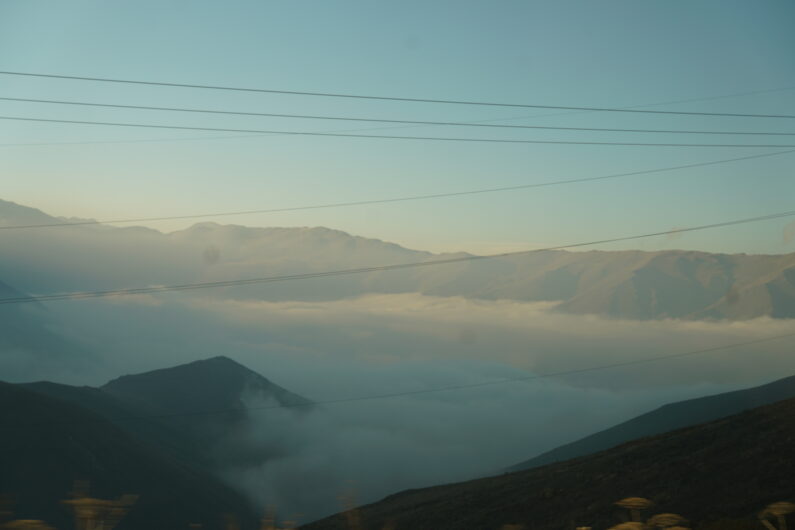
Clouds and mountains meet in Meghri (photo Aram Arkun)

When the 2020 Artsakh war began, Andreasyan enrolled as a volunteer but could not go because he got severely sick from Covid. Instead, he helped financially as much as he could, he said, and when the revolutionary movement of Nikol Pashinyan began in 2018, he was supportive though he did not join any political party.

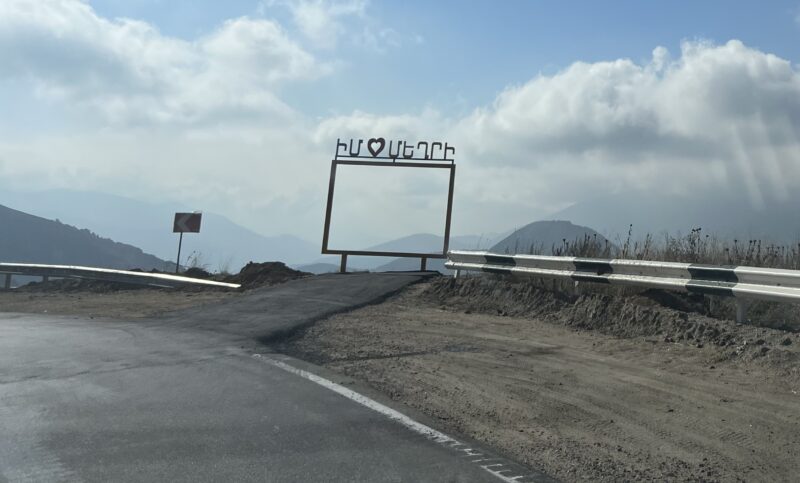
On one of the roads in Meghri municipality (photo Aram Arkun)

Andreasyan said that he would not move to Yerevan again because he loved Meghri, and was looking forward to the 2026 elections for municipal head. He said, “I have a saying: I am happy that I am Armenian. I am doubly happy that I am a Syunik native, and triply happy that I am a Meghri native [Meghretsi].”

Get the Mirror-Spectator Weekly in your inbox: