
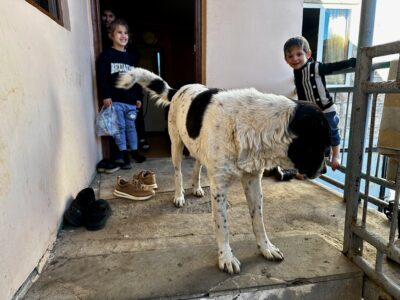
Two of Lusine and Mher's children at their home in Tegh. (Marut Vanyan photo)

Artsakh Refugees in Syunik Live So Close to Home Yet Cannot Return

289
0

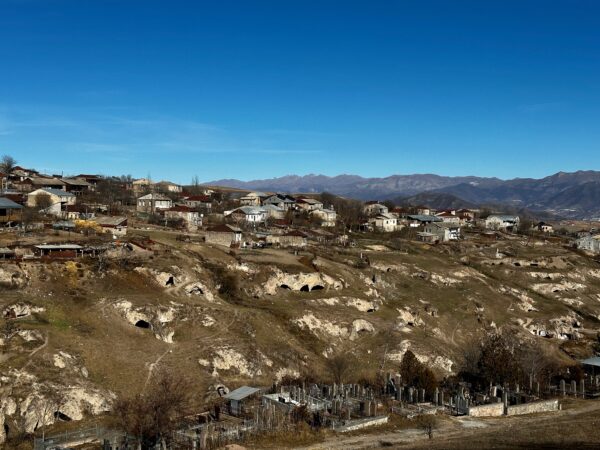
TEGH, Armenia — The village of Tegh, in the municipality of the same name, in Syunik Province, feels cut off not only from Armenia but from the entire world. Public transportation is nonexistent. Villagers negotiate with the local taxi driver, share the cost, and get to Goris when they need to go shopping or to the hospital. There’s not much talk about the church-government relationship that has so poisoned Armenia’s domestic political life, and when talking to locals, one doesn’t feel like Syunik itself, where they live, has long been a geopolitical issue, or that the issue is primarily about them. Villagers are not aware of the arrival of Azerbaijani fuel in Armenia, nor of the 15 million euros allocated by the EU. A group of women sits in front of a little grocery store discussing household matters, men plow their gardens, burn dry leaves left over from autumn, or do housework. It’s unclear what kind of atmosphere prevails here: is it peace or indifference? Life is different here.
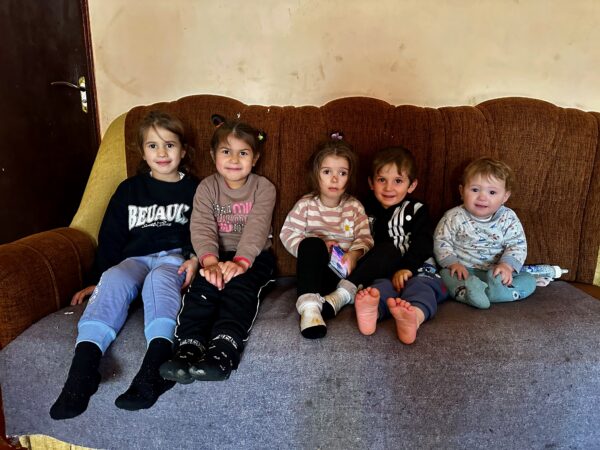
Lusine and Mher’s children in their rented house in the Tegh community. Lusine doesn’t want to be photographed, nor do her older daughters. “When we go to Artsakh, you’ll take pictures of us there,” she says. (Marut Vanyan photo)

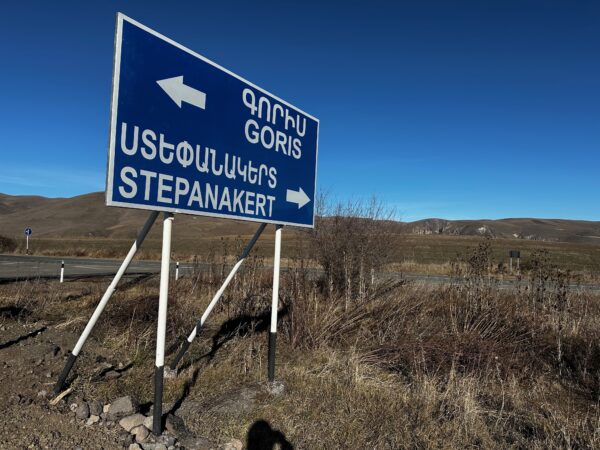
Imagine you are standing in front of your house, but for some reason you can’t get in; you haven’t lost the key. It is in your pocket, but you can’t get it. This is exactly the feeling that arises for any Artsakh Armenian who is in Tegh. They can be home in two hours, but they can’t. The once-busy highway is now empty; only rare military vehicles pass by. All the businesses along the highway have gone bankrupt. Just a little further from the Artsakh and Stepanakert signs, barbed wire and cement blocks cut off contact with Artsakh.
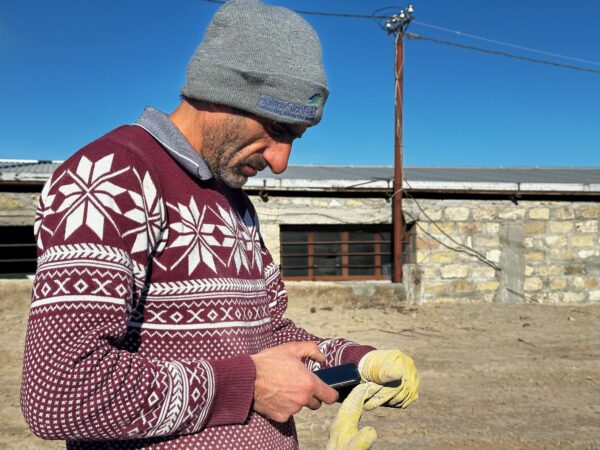
Mher works as a construction worker (Marut Vanyan photo)

Lusine

Lusine, a mother of seven (and expecting her eighth), says she asks her daughter to hang out the laundry so she does not have to see the mountains of Artsakh, which are clearly visible from the balcony of the village home she is renting in Tegh.

“I don’t want to get out of the house, I don’t talk to anyone. My children are my friends, neighbors and relatives. I don’t even use the Internet or TV. I ask my eldest daughter to hang the laundry so that I don’t see the Artsakh mountains, which are right in front of me. It’s better not to see them than to see them but not be able to go to my native Astghashen and Martakert. The children also miss Artsakh very much; even the little one remember it. One day, I noticed that one of my kids had started wearing school clothes and shoes. When I asked him where he was going, he replied that the Azerbaijanis were now driving his baby walker, and he was going to take it back. He saw it on the Internet, how Azerbaijanis were riding the abandoned children’s bicycles and baby walkers. My older children are full of hope, they say the day will come when the road will open and we will go home. They don’t adapt here, no matter how much Armenia is their homeland,” she says.
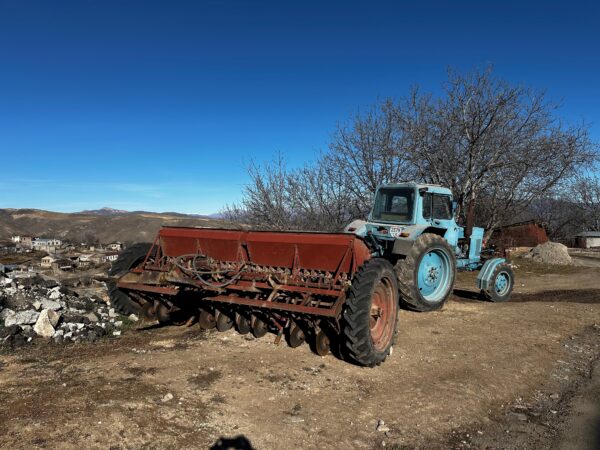
Tegh (Marut Vanyan photo)

Lusine is from the village of Astghashen in Askeran region. Her husband, Mher, is from Martakert. As a large family, they got an apartment in Martakert, but lived there only for two years before fleeing like everyone else in 2023.
Get the Mirror in your inbox:

“How terrible it was? The local authorities said, “Wait, someone is coming to evacuate you,” but no one came, everyone left as best they could. Anyway, a military Ural [off-road vehicle] arrived. We boarded it and after two days of wandering on the roads, hungry and thirsty, we finally reached Goris. I felt like a war was about to break out. The teacher from school called me and asked why I hadn’t sent the kids to school and whether they were sick. No, I replied, I felt like something bad was going to happen, and that I wouldn’t have time to gather my kids in a panic. Then, when everything happened, as I had predicted, they asked how I knew that. Even though after the 2020 war, the government started paving roads and building apartments, I felt that danger was approaching,” Lusine recalls. “

Lusine and Mher are planning under the Armenian government’s housing program to buy a house in Goris or in Sisian and start everything from scratch. “We are tired of paying rent already, at least we should have our own corner. My husband works hard all month long. We add to his salary from the children’s pension and pay rent. And sometimes when we’re late, the landlord says leave the house. I don’t want to live in big cities. I need to raise livestock and have my own garden,” she says.

Tegh (Marut Vanyan photo)

Lusine is very smart. Despite all these difficulties, she keeps going. She even manages to make a little extra money when there is an event in the village, by baking zhingalov hats and pakhlava for the guests.

“I don’t ask anyone for help, I’m grateful for what they’ve done for me. They’ve given me a refrigerator and a washing machine. The Red Cross has helped. That’s enough, I’m grateful, I’ll do the rest myself. I don’t even take children to the hospital, I treat them with folk medicine. That day, the teacher from the kindergarten called and said that the child was coughing, take him to the hospital right away. I didn’t, I just put two pieces of plum lavash, one on the child’s chest and the other on his back, wrapped him up and look, he doesn’t have a single cough now!” Indeed, the child was playing with dog actively (barefoot).

Speaking about today’s reality Lusine says she doesn’t believe peace is possible between Armenia and Azerbaijan. “There won’t be any peace,” she says, “I see the same signs here as in Artsakh then. At that time, we were also attracted by new roads, construction, and Russian ‘guarantees,’ but in the end we saw what happened. If this continues, the process of ‘demilitarization’ will reach Yeraskh and don’t be surprised if one day we find ourselves, at best, in America or France,” she says.

Tegh (Marut Vanyan photo)

Seda

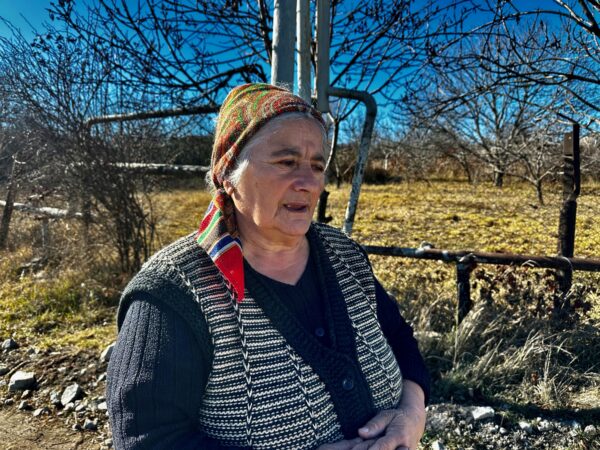
The locals also describe the situation vaguely. Sometimes they say everything will be fine, sometimes they predict a possible war. “Maybe [Prime Minister Nikol] Pashinyan will be able to do something, maybe not,” says Mrs. Seda and tells a tragic story that happened to her son-in-law.

“He went and didn’t come back…,” says Seda as she wipes away her tears. “We got the news of his death on October 13 in 2020. Before that, he had called and urged: ‘Take care of my children.’ That was his last exhortation. They brought a closed coffin and a flag, they said the DNA matches him, but we don’t know. At that time, soldiers would exchange letters with each other so that if one was killed, his relatives would find it in his pocket. So many young guys died. If they were going to hand him over, why did they kill so many young people?,” she asks. “My daughter now lives alone in Goris with four children. How can she take care of four children alone, one of whom has health issues? Yes, she is young, she can work, but who should look after the children? Or here is my neighbor Varduhi, she is also the mother of two disabled children. We live in a border village, you can see the Azerbaijani trenches from here, but there is no proper attention to taking care of people’s social needs,” Seda adds.

Mrs. Seda (Marut Vanyan photo)

What Is Happening in Syunik?

“Peace is a reality now,” Pashinyan posted on Facebook sharing a report of Azerbaijani fuel arriving in Armenia via Georgia. The US Ambassador to Armenia Kristina Kvien announced another step in the Trump Route for International Peace and Prosperity (TRIPP) project.

“Another implementation achievement is the recent U.S.  announcement of $145 million in new assistance funding for Armenia.  The bulk of these funds will go toward advancing the TRIPP project and enhancing border security and management,” she wrote.

Russian Deputy Prime Minister Alexei Overchuk recently arrived in Armenia and announced that the “Trump Route” is impossible without Russia and that Armenia must choose between the EU and the Eurasian Economic Union (EAEU). Back in April, European Commission President Ursula von der Leyen announced the opening of the borders between Armenia, Turkey and Azerbaijan, calling it a “game changer.” “After three decades of closure, the opening of the borders of Armenia with Turkey and Azerbaijan is going to be a game changer and it will bring Europe and Central Asia closer together like never before.”

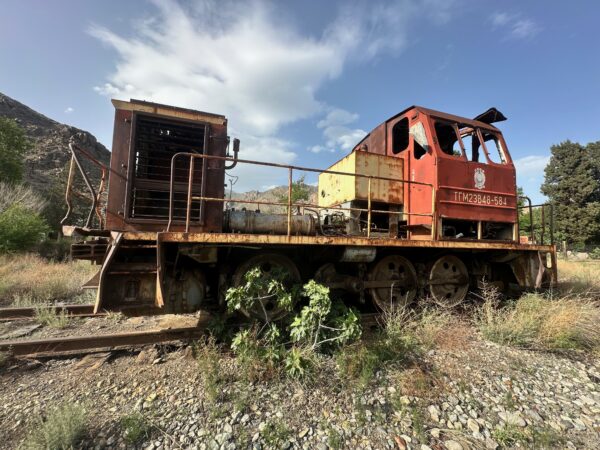
Meghri railway station, which has already received many names: TRIPP, “Zangezur Corridor”, “Part of the Middle Corridor”, “Syunik Gates”, “Crossroads of Peace”, etc. (Marut Vanyan photo)

On December 15, Ali Akbar Velayati, senior advisor to the Supreme Leader of Iran, stated (again) that Iran opposes the TRIPP project, describing it as a serious threat to regional security arguing that the plan is merely a renamed version of the “Zangezur Corridor.”

However, what is happening on the ground is that today, in the south of Armenia, there are many parties with a vested interest. The Armenian-Iranian border is guarded by the Russian security services, Iranian fuel tankers are coming and going, Iranian construction companies are involved in road construction work in Syunik, the EU Monitoring Mission is stationed there, Turkey and Azerbaijan have extended the railway tracks to the Armenian borders, in the Armenian part, rusty train cars have been parked since Soviet times and it seems that assurances about Armenia’s sovereignty no longer convince anyone. How will so many superpowers find common ground in this small province? It is difficult to say what eclectic picture, if any, will emerge from all this in the future.

Ms. Seda’s neighbor, Varduhi, is from Artashat, married and has been living in Tegh for 11 years. (Marut Vanyan photo)

Get the Mirror-Spectator Weekly in your inbox: