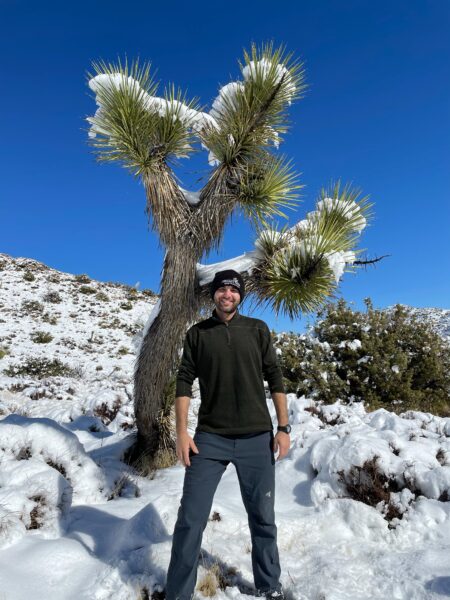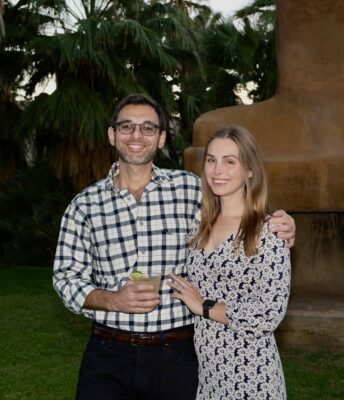


Paul Chakalian and his wife, Hana

Chakalian Throws His Hat in the Ring for Congress

13
0

YUCCA VALLEY, Calif. — Paul Chakalian is running to represent the 23rd Congressional District in California and replace the current representative, Jay Obernolte, a Republican. The election is slated to take place in November 2026.

In a recent interview, Chakalian, a Democrat, spoke about why he has decided to enter the race as well as how he ended up in the mostly rural district, which includes a good portion of the Mojave Desert and the Joshua Tree National Park and encompasses most of San Bernardino County, a portion of Kern County and a small part of Los Angeles County.

Michael and his wife, Hana, live in Yucca Valley with their two young sons. His wife is a physician who works at San Gorgonio Memorial Hospital in Banning. He is the founder and CEO of Joshua Tree Distilling Company.

The 33-year-old has just been endorsed by the Southern California Armenian Democrats.

He first came to the area in 2005, when his uncle bought a house in the Morongo Basin. “We took it down to the studs and rebuilt it,” he said.

Chakalian said the district is an “R plus 8” according to the Cook Partisan Voting Index. That means that the district skews a little Republican.

Get the Mirror in your inbox:

“It’s a really interesting district. By registration it is one third, one third and one third – Democratic, Republican and independent,” he said. “Neither major party can win without getting a plurality of the independent vote. Historically we have tended to elect Republicans.”

He added, “That does not mean that it is a safe Republican district. That means the Democratic party has not been fielding candidates that can speak to those independents.” Otherwise, they would have registered as Republicans.

“What really unites us out here is lowercase-conservative frontier culture. There are thousands of 40-acres-and-a-mule homesteads, thousands of families on hauled water,” he explained.

Another part of the district, however, he explained, is an exurb of Los Angeles. The Victorville/Hesperia area behind Los Angles. Yet another part is the Redlands/Loma Linda district.

The recent redistricting measure adopted in California has not affected the district much, he explained.

“Our district was kind of ignored, as is often the case in Sacramento [the capital]. Some of the lines changed block by block,” he added. “But the macro numbers haven’t changed much.”

Background in Academia

Chakalian, who was born in Pasadena, earned a graduate degree from Columbia University, and a PhD from Arizona State University in environmental sciences, before working at the National Oceanographic and Atmospheric Agency (NOAA) in Norman, Okla, located on the campus of the University of Oklahoma. He ended up there because his wife was attending medical school in nearby Arkansas.

“My reason for going in academia was to try to improve my community and society,” he explained, saying that “environmental justice” was very important to him. He wanted to see “how we can build a fairer, more equitable and more functional society that worked better and delivered better outcomes for everyone.”

He added, “I hoped to help create that world through scientific research. The longer I was an academic the clearer it became to me that people who had the power to effectuate change were either policymakers directly or very wealthy individuals who could fund that kind of change and had sway over policymakers.”

Chakalian said he realized that by the time most people got into office, they had a solidified position on the issues and did not consult experts like him at NOAA.

“They would come to us and say ‘this is what we want to do, and what does your science have to say about that?’ If the science supported what they wanted to do, great, but if it didn’t, they just kind of moved on,” he explained. “It didn’t really seem like it was an effective way to make a positive impact.”


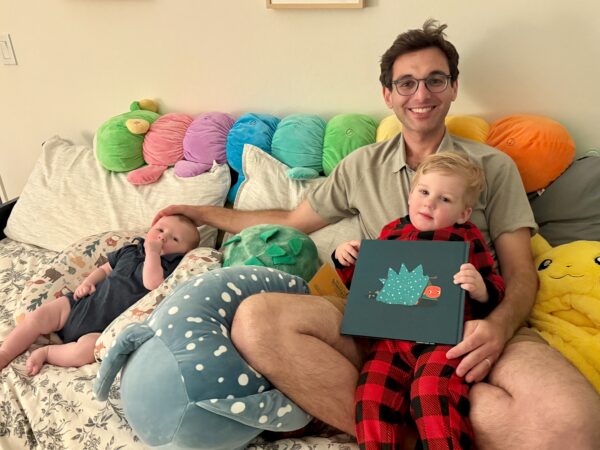
Paul Chakalian and his young sons

At the same time, he said, being in academia was very competitive and bruising, with fewer and fewer tenured positions available.

“That wasn’t going to work for me and my family,” he said.

Norman was “a bad cultural fit,” he said, especially during Trump’s first administration. As a result, after a few months there, he quit on the spot.

One of the issues was his political beliefs, which he revealed with a Bernie Sanders pin during his time there, during the first Trump administration.

He explained, “Part of the issue with the Bernie Sanders pin was that I asserted I had academic freedom as a research faculty member of the university and they said it was a violation of the Hatch Act because I was in a federal workspace,” he said. “I said when I took this job I didn’t sign any paperwork that said I was going to be subject to the Hatch Act. Not to mention this was Trump’s first term and he had already put the Hatch Act in the shredder in every way.”

Other colleagues, he said, had pro-life posters, with six-foot-high pictures of dead babies, but they were never reprimanded. He stressed he did not have an issue with the others expressing their viewpoints but was unhappy that the sentiment was not mutual.

Then he decided to focus on his growing family, making sure to have a flexible enough job that could balance that of his wife, who had a rigid schedule as a new doctor, allowing for childcare. The ideal solution was starting his own company.

“When I decided to leave NOAA, this is the place that made the most sense because it was where I had resources and connections and it was somewhere I could afford. The cost of living is incredibly reasonable compared to California,” he said.

He comes from a long line of entrepreneurs, he said. His paternal grandparents were both descendants of Genocide survivors, immigrants who came to the US in the 1940s from German Displaced Persons camps. His paternal grandfather was born outside of Moscow and after WWII ended up in Germany. That grandfather’s mother, in turn, had taken her son to Russia after the Genocide. His paternal grandmother was born in Kiev, Ukraine, again taken by her mother in the wake of the Genocide.

During World War II, the families slowly moved further and further west, until they arrived in Stuttgart, Germany and went into the DP camp. Both families were sponsored to come to the US. His grandmother came through Philadelphia and grandfather through New Orleans but eventually moved to California.

“In a relatively few years, they made their way to Montebello, where they got married. They knew each other in the camps but were apart for several years,” he said.

The couple, Mike and Susan Chakalian, eventually had three kids and bought a burger joint, Basket Burger, in East Los Angeles. All the kids worked for the restaurant, he said, getting up before dawn to peel potatoes.

“My grandfather did that for decades and sold that business,” he recalled. After he sold the business, he and his wife did catering for several years.

The income was good enough to provide them with a comfortable life and luxuries like a second home in Hawaii. They would take the kids to Palm Springs monthly for fun.

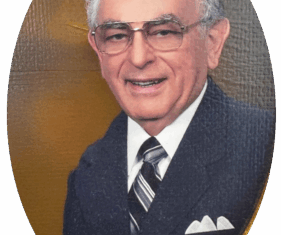
His mom’s side of the family has been in the US since the late 1800s. She is half Armenian and half Italian. Her parents met in New York and came out to Fresno. Her father, George Mason, started the California Courrier newspaper. He had a knack for business and eventually ended up on the board of MGM. He eventually sold the paper and moved to Encino.

Mason worked as an executive for Kirk Kerkorian’s Tracinda Investment Co. for several years in the 1970s before joining Bear, Stearns & Co. in Los Angeles in 1973. Mason was a senior managing director at Bear, Stearns & Co. from 1973 until his death.

Paul’s parents, now divorced, are Ralph Michael Chakalian and Dina Mason Chakalian Amado. They are on very good terms and even run a bookstore (Alexandria II) together in Pasadena, he said. They divorced when Ralph came out of the closet.

He also has a younger sister.

“My younger sister was adopted from Yerevan in 2002. That was an interesting experience. That is when I discovered my dad spoke Armenian,” he said. Because of his grandfather, they got “significant hospitality” from the upper echelons. “We pulled off the adoption in two weeks, which was unheard of.”

His father lives in Yucca Valley and his mother has a second home in the area. Other family members are also living in the area.

His stepfather, David Amado, is a Guatemalan immigrant. The Immigration and Customs Enforcement (ICE) raids, Chakalian said, “strike really close to home. He has been anxious and scared for months” even though he is a citizen.

Paul Chakalian in his district

Political Positions

Chakalian has details about his political positions on his website. One of the statements on his website notes that he intends to “vote with constitutents and not with party.” When asked what that means, he explained, “Even the Democrats here don’t want big government. They don’t want the government to tell them how and where to dig their wells. Culturally, most of the people here, regardless of party preference, don’t want anyone to tell them what to do. They want to be left alone.”

He also singles out foreign influence and big money as negatives he wants out of the government.

“There is a lot of fact-based reporting about the way Russia has meddled in our elections, as well as China. But there is a lot of influence that happens though the DC blob. The Gulf States are big examples of this, such as Qatar giving Trump a gold-plated jet,” he said.

“All these countries have outfits whose whole purpose is to finance a lot of the thinktanks and provide grants and get their own people to write op-eds to influence our foreign relations,” he added.

“A lot of people are upset in this country, myself included, with the unchecked consolidation across industry. It is one of the biggest reasons for the affordability crisis,” he said. “It doesn’t matter if it is grocery stores or pharmacies. That drives up prices and makes it harder for small businesses to succeed and increases the ability of those private interests to have a very large influence on our government.

“Obviously the fact that minimum wage hasn’t been raised is an issue” as well, he added.

He also expressed his dissatisfaction with the job the incumbent, Obernolte, is doing.

“Our current representative isn’t doing the job. Nobody has literally seen him in about a year. He doesn’t respond to calls or letters. He hasn’t delivered anything in the seven years he has been in office,” he said. “There is a lot of needs here. I often say this is one of the most unique districts in the country. It is where two deserts meet with alpine lakes and two large military bases and a huge national park and huge exurbs and urban areas and rare flora and fauna. Yet we have one of the most generic representatives who does anything unique.”

He concluded, “I think the reason to vote for me is we deserve somebody who is going to show up and listen and try to make an effort to represent us and deliver all the things we need,” he said, including “a lot of infrastructure, flood control and wildlife and fire  control and four-year universities,” he added. The only four-year universities are in Loma Linda which cannot serve people in further parts of the geographically large district. At least half live at least an hour from any hospitals or any medical offices. “There are a lot of needs in this community,” he added.

“That’s the reason to vote for me. The current guy doesn’t deserve the job.”

The general election will take place on November 3, 2026.

Get the Mirror-Spectator Weekly in your inbox: