

STUTTGART, Germany — From October 15 to 25, Stuttgart will become a hub for Armenian art, literature and music. The Armenian Cultural Days Stuttgart is organized by the Armenian Community of Baden-Württemberg. It is one of the largest Armenian cultural initiatives in Germany. Twenty events will take place at leading cultural venues across Stuttgart, ranging from an exhibition and literary readings to theatre, concerts, a documentary film, workshops and the Divine Liturgy (Surb Patarag).
The festival’s motto is taken from the Book of Revelation: “See, I am making all things new” (Revelation 21:5). The verse is the 2026 Annual Watchword (Jahreslosung), which accompanies Christian congregations in Germany throughout the year. The Armenian Cultural Days read it as a guiding principle for the program: not a ceremony of remembrance, but an encounter with Armenian culture as it lives today.
This year’s festival also marks an important anniversary. Thirty-five years ago, on September 21, 1991, the citizens of Armenia voted in a referendum for the independence of their country. Tigran Paskevichyan’s documentary, “Our Road to Independence,” to be screened on October 18 at the Lutherkirche in Bad Cannstatt, tells the story of the struggle between 1988 and 1991 and invites reflection on what that awakening means today.
“The name of the festival does not speak of a fresh coat of paint, but of transformation,” says Rev. Dr. Diradur Sardaryan, pastor of the community and director of the festival. “Renewal begins with the individual, in the willingness to examine what has become habitual and to take on responsibility. It needs a country that fills its freedom with justice, education and hope. And it lives from relationships in which people listen to one another, dare to trust and meet each other anew.”
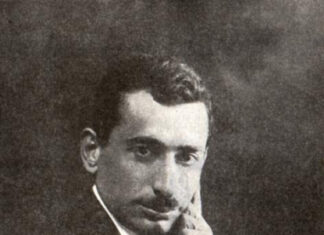
The festival opens on October 15 at BW-Bank with the exhibition “Images Across Borders.” Paintings and miniatures by André “Darvish” Sevruguin tell the story of a family of artists between Persia, Armenia and Stuttgart. The following day, Dr Yvette Tajarian (Armenia) shows how script, images and ornament turned old Armenian manuscripts into works of art and witnesses to their time. The literary program features Narine Abgaryan with her novel Three Apples Fell from the Sky; Nuran David Calis with his novel Rausch (Intoxication), a book about origin and belonging, followed by a conversation with SWR journalist Anna Koktsidou; and translator Susanna Yeghoyan, who presents the German translation of Mkrtich Armen’s long-forgotten novel Yerevan, set in the Armenian capital of the 1920s.
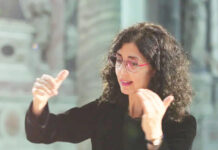
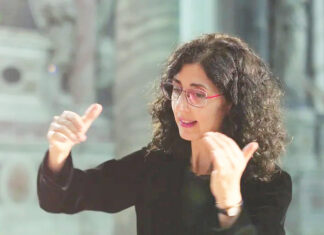
On October 22 at the Kleiner Kursaal, actress Narine Grigoryan will perform a one-woman play based on Hrant Matevosyan’s story “Gomesh” (The Water Buffalo). The music program includes the Dan Gharibian Trio, taking the audience on a musical journey between Armenia, the Balkans and Paris; piano trios by Rachmaninoff and Arno Babajanian performed by Diana Sahakyan, Anush Nikoghosyan and Vache Bagratuni; and a concert by the Yerevan indie rock band NEMRA in the Silcher Hall of the Liederhalle. On 16 October, Lilit Kärcher-Sargsyan gives a benefit concert in support of the restoration of Holy Cross Church (Surb Khach) in Göppingen-Bartenbach. The festival closes on October 25 at the Lutherkirche in Bad Cannstatt, where the Tübingen choir Camerata Vocalis, conducted by Philipp Amelung, performs works by Bach, Silcher and Vahram Sargsyan under the title “From Ancient Sound to New Light.”
The Armenian Cultural Days also make room for active participation. On October 17, at the Youth Day, young people meet prominent compatriots, share their experiences and jointly develop a concrete project for 2027. On the same day, the Family Day introduces children and parents to Armenian letters, dances and creative forms, while a walk through Stuttgart’s Main Cemetery (Hauptfriedhof) with Rev. Dr. Diradur Sardaryan and Inge Nowak tells of flight, arrival and Armenian life in Stuttgart. On October 18, the Divine Liturgy is celebrated at the Lutherkirche; guests without knowledge of Armenian are warmly welcome.
In the workshops, composer Vahram Sargsyan invites participants to discover unusual sounds of the human voice, Elmira Torosian introduces Armenian cuisine and its customs in cooperation with VHS Stuttgart, and artist Tereza Sargsyan explains the language of Armenian ornament. On October 21 at the StadtPalais museum, guests from culture, media and society discuss how origin and identity shape our life together.
Bringing together artists from Armenia, creative voices from the diaspora and German cultural institutions, the festival builds bridges between Armenia and Germany, and between the Armenian community and Stuttgart’s wider public. It presents Armenian culture not only as a heritage of the past, but as a living, contemporary presence.
“The biblical word reminds us that what is new is not our work alone. It is promised. That is precisely why we may take part in it with courage,” Sardaryan emphasizes. “So that remembrance may become future.”
To see a list of the full program, visit www.armenische-kulturtage-stuttgart.de.