

Bishop Abgar Hovakimyan

Separation of Church and State Is Unnegotiable: Pashinyan’s Feud with the Church

183
0

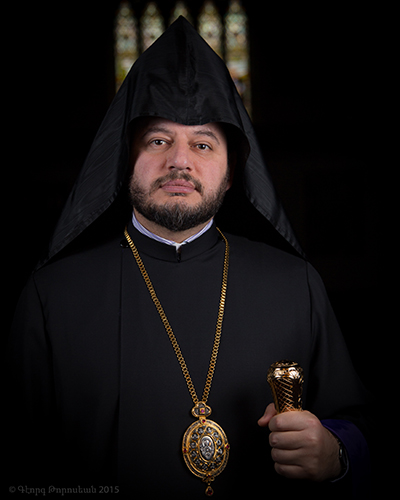
By Bishop Abgar Hovakimyan, Primate of the Armenian Diocese of Canada

On September 24, 2026, a report circulated online discussing the “crisis” facing the Holy Armenian Apostolic Church, its “appropriation,” and the need for Church reform, while simultaneously raising the issue of the removal of the Catholicos of All Armenians and the election of a new Catholicos.

However, the issue is no longer merely about the person of Catholicos Karekin II.

The question is where does the authority of the state end and where do the Church’s rights begin?

According to Article 17 of the Constitution of the Republic of Armenia, “Religious organizations are separate from the state.”

This means that the Church is not a body attached to the government and is not governed by secular authority. In other words, the parliament is not the Church Synod, and the prime minister is not the catholicos of the Church.


Get the Mirror in your inbox:

Of course everyone is equal before the law and the law must be applied to everyone. If crimes have been committed, they must be adjudicated in court. If there are financial irregularities, the procedures prescribed by law must be followed. However, if there are ecclesiastical and canonical issues, their resolution falls exclusively within the competence of the Church’s authorized bodies.

Restructuring the Church’s internal life by government decree is a different matter.

Article 9 of the European Convention on Human Rights protects freedom of conscience and religion.

The European Court, especially in the case of Hasan and Chaush v. Bulgaria, has emphasized that state interference in the internal organization and leadership matters of a religious community can violate freedom of religion.

Therefore, the issue is very clear. On what legal grounds does the state authority arrogate to itself the right to determine who should lead the Holy Armenian Apostolic Church?

If some declare that the Catholicos of All Armenians must step down and subsequently initiate a new election process, a natural question arises: to what extent would such an election represent an expression of the free and independent will of the Church?

Church reform must originate from within the Church through its canonical and conciliar systems rather than through a political decision in collaboration with a group of immoral individuals, thieves, bandits, drunkards, and extortionists, as well as the excommunicated Koryun and the degenerate Khoren.

No one is demanding that the Church be placed above the law. The demand is much clearer: the authorities themselves must remain within the bounds of the law.

One may demand accountability, raise issues, and call for reforms. However, none of this makes the prime minister a canonical body of the Church.

The words of our Lord Jesus Christ apply to all times: “Render to Caesar the things that are Caesar’s, and to God the things that are God’s.”

This is not a call against the state, but a reminder regarding the limits of authority. The prime minister is the last person who could interfere in the Church’s internal affairs, as he is neither a member of a parish council, a diocesan council, nor any other body associated with the Church.

The Church is not the enemy of the state. But the state is not the Church’s superior, either.

The state is accountable before the law.

And here lies the fundamental issue. If you declare that the state does not appoint the Catholicos, then why is the government demanding the Supreme Patriarch’s departure?

If the election of the head of the Church is an internal Church matter, why does the government decide in advance who should step down and who should undertake the “reform”?

And finally, which law of the Republic of Armenia grants the government the authority to alter the Church’s internal canonical structure?

These questions must be answered not with political slogans, but by means of the Constitution and the law.

The Holy Apostolic Church of Armenia predates modern political parties and current state institutions.

This does not mean that the Church is above the law. However, it does mean that no political authority has the right to alter the Church’s sacred course, established over centuries. Therefore, the state is not the Church, nor is the Church the state. And neither of them should undertake the responsibility to replace the other.

Let matters concerning the Church be resolved within the Church, through canonical and conciliar processes.

Let crimes be investigated in the courts. Let the authorities respect the Constitution. “Render therefore to Caesar the things that are Caesar’s, and to God the things that are God’s” (Matthew 22:22).

Montreal, September 25, 2026


(Translated from the original in Armenian, which will appear in the Armenian press in the coming week.)

Get the Mirror-Spectator Weekly in your inbox: