

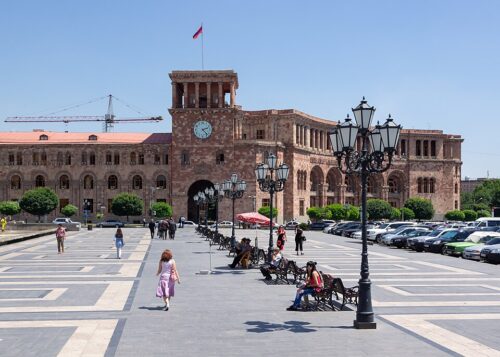
Yerevan's Government House, Republic Square

The Republic and the Diaspora: A Future to Build Together

18
0

By Berge Jololian

On September 21, Armenia marked 35 years of independence. After generations in which so much of our future was decided elsewhere, we have a republic in which to help shape it ourselves. That is an extraordinary inheritance. What will we build with it?

David Muradyan, a young man from Alaverdi, offers one answer. He enrolled in a programming course at the Children of Armenia Fund (COAF)’s SMART Center. In a recent profile, COAF describes him as a software engineer pursuing a master’s degree in artificial intelligence at the French University in Armenia. He credits the program with helping him gain confidence, friendships and a scholarship.
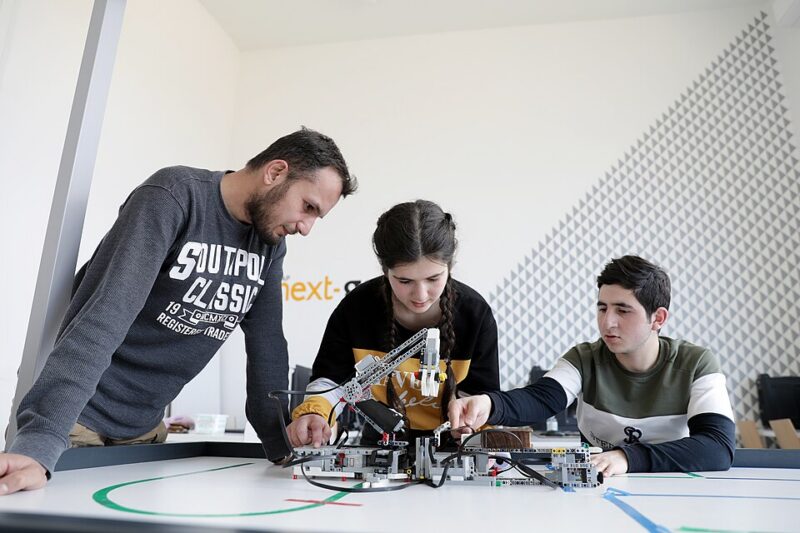
COAF Smart Mechanics Program

His story gives the anniversary a human meaning. An opportunity reaches a young person, who discovers how much more he might do. Imagine that possibility extending across a generation: young Armenians gaining the skills and confidence to pursue their ambitions at home.

For Armenians abroad, there is something familiar in that hope. Across the Diaspora, families built new lives, educated their children and established businesses, churches and community institutions. They became part of the countries they called home while finding ways to remain Armenian. That experience is a source of pride — and of possibilities still unfolding.

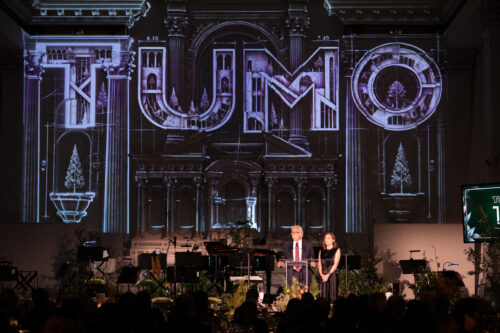
TUMO offers one example. Founded by Sam and Sylva Simonian, whose lives took them from Lebanon to the United States, it developed an educational model in Armenia that later reached Paris through cooperation with TUMO Yerevan. Armenian creativity had become something others wanted to learn from.

Get the Mirror in your inbox:

These achievements belong to founders and supporters, teachers and local teams, and the students themselves. They show what becomes possible when international experience meets the knowledge and initiative of people in Armenia. Independence Day is an occasion to renew the trust that allows this partnership to grow.

Foreign Minister Ararat Mirzoyan recently emphasized a point that should frame every serious Armenian political debate: the world has more than 8 billion people, but only about 195 countries. Armenia, with only about 3 million people, is one of those states.

That state must be protected.

This is not a small observation. It is the foundation of serious Armenian statecraft. For Armenians, the Republic of Armenia is not simply a government, a party, or one political leader. It is the rare and irreplaceable institutional vessel of Armenian survival in a world where statehood is precious and not guaranteed.

Families still carry the grief of war. Armenians displaced from Artsakh face the work of rebuilding their lives. Building Armenia’s future also means helping families meet today’s needs for housing, healthcare, employment and dignity. Celebrating independence does not diminish those losses. It reminds us why the country in which so many hopes now rest must become stronger.

That shared concern leaves room for serious disagreement. Armenia’s citizens must remain free to challenge their government and choose another. Armenians abroad can contribute to public debate while respecting those democratic choices. Our responsibility is to help ensure that the country remains strong and free enough to continue making them.

Making Room for Each Other

Trust begins with how we speak to one another.

On September 11, Prime Minister Nikol Pashinyan called for a relationship organized around development, with neither Armenia nor the Diaspora acting as the other’s mentor. He cited TUMO and COAF among the examples. Yet his blunt dismissal of further second-hand goods risked overshadowing his acknowledgment that earlier assistance had mattered.

The invitation to partnership deserves a hearing. It will travel further when the prime minister speaks with appreciation for the people he hopes to engage. On subjects involving loss, identity and belonging, the government must explain its intentions carefully and listen to concerns. People who helped Armenia through difficult years deserve to feel that their experience still has a place in its future.

Readers have a responsibility too. Before reacting to an alarming claim, we should examine the original statement, its context and the evidence. A headline can turn an awkward remark into an accusation of betrayal. Official explanations deserve the same scrutiny.

Some disagreements concern policy itself and require debate. Diaspora strength, for example, can grow through education, cultural life and effective institutions without another family leaving Armenia. Recognizing that strength helps communities feel valued even when they disagree with the government.

A doctor abroad and colleagues at a hospital in Armenia can improve patient care while disagreeing about the prime minister. A government can welcome an engineer’s expertise while accepting that engineer’s criticism. The country benefits when such cooperation becomes ordinary.

We can ask a shared question of government policy, public commentary and our own contributions: Does this strengthen the Republic of Armenia?

The Strength to Choose

Armenia’s effort to broaden its diplomacy, diversify defense cooperation and develop wider trade connections is a direction worth supporting. Its purpose is to build capability and give the country more room to act. For a small state, strategic autonomy does not mean needing no one; it means never being left with only one choice.

Every compromise must be judged by what it means for Armenia’s sovereignty and security. Some demands must be refused. But a refusal needs a strategy for withstanding the pressure that follows. The government must explain what its decisions secure and what they risk. Critics advocating another course should explain how it could produce a better outcome.

Stronger defenses, a more resilient economy and dependable partnerships give Armenia greater freedom to negotiate, resist coercion and defend its choices. Building that capacity takes sustained work — and deserves support across political differences.

The European Political Community gathering and the first EU–Armenia summit, held in Yerevan in May, show how Armenia is widening its relationships. The EU meetings advanced cooperation in transport, energy and digital connectivity. That engagement is continuing. Yerevan is scheduled to host the first Armenia–UK Business Forum on October 5–6, creating another opportunity to connect Armenian businesses with international investment and expertise.

Defense cooperation offers another example. Armenian personnel trained alongside American, French and Greek forces in Eagle Partner, while cooperation with India includes military education and technical capacity. The value lies in the skills Armenia develops and its wider choice of partners. Armenian servicemen are also studying at Poland’s War Studies University. A British-supported course completed in July helped Armenian personnel qualify as military instructors. Such cooperation strengthens Armenia’s ability to educate its own forces and retain knowledge within its institutions.

Armenia’s partnership with the United States and the TRIPP framework for regional transport, energy and communications links offer further possibilities for investment under Armenian sovereignty. Success should reach Armenian businesses and workers through new customers, useful infrastructure and opportunities to develop their own expertise. The peace process can create time for this work, while lasting security still requires capable defenses and dependable institutions.

The government’s work in widening these options deserves recognition and scrutiny of its results. The capabilities Armenia builds should endure through changes of leadership. A stronger country is an inheritance every future government—and every young person like David — will need.

A Partnership That Lasts

The Diaspora can help turn these openings into lasting relationships. A professional can mentor an Armenian colleague. A university can sustain an exchange. A business owner can help an Armenian producer find customers abroad. These relationships can begin modestly and deepen over time.

Because it exercises public power, the government has a particular responsibility to make participation fair and accessible. An offer of expertise deserves serious consideration and an understandable answer. Useful work should survive a change of minister. People in Armenia must help set priorities; their knowledge is essential to making a partnership succeed. Fair treatment gives people a reason to return with their next idea.

Belonging cannot depend on wealth, relocation or loyalty to a politician. Time, experience, advocacy and steady attention all have a place.

The Republic should also take a lasting interest in Armenian life abroad. Western Armenian education, community schools and cultural institutions have worth beyond their immediate usefulness to a government program. Teacher exchanges, shared research and cultural cooperation can help sustain them while respecting the independence of Diaspora organizations. Reconciliation grows through that respect and through work whose value people can see.

The objective is not to keep any particular government in control of Armenia.

It is to keep Armenia in control of Armenia.

David’s story reminds us of what working together can accomplish. A programming course helped open a path toward work and further study. Our ambition should be to make such opportunities available to many more young Armenians, wherever they grow up.

At 35, the Republic gives us a country in which to help make that happen. We can honor those who brought it this far by helping the next generation inherit a stronger Armenia, with more opportunities to build a life and greater freedom to shape its future.

That is a future worth building together.

Berge Jololian

(Berge Jololian is an Armenian-American IT and cybersecurity specialist based in Yerevan, Armenia. He writes on Armenian statehood, sovereignty, regional security and the geopolitics of the South Caucasus, with a particular interest in the strategic challenges facing small states in a changing international order.)

Get the Mirror-Spectator Weekly in your inbox: