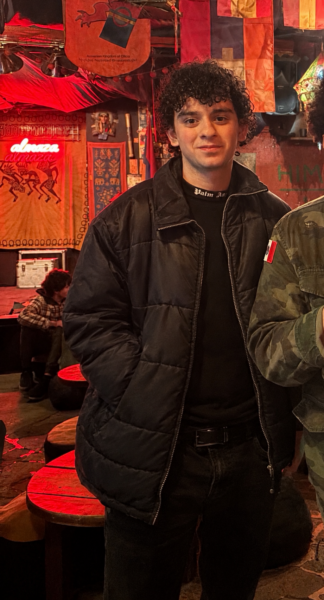



Anna Keshishian, 19, a repatriate from the United States and student at the American University of Armenia (AUA).

Still Armenian: Inside Yerevan’s Shifting Gen-Z Culture

89
0

By Diana Grigoryan

Special to the Mirror-Spectator

YEREVAN — Walking along the intersection of Saryan, Pushkin and Parpetsi streets, where Soviet brutalist blocks tower over the vibrant hum of Armenian cafes and bars, the city feels both rooted in history yet unmistakably new.

Generation Z — the transformative generation born between the late 1990s and early 2010s — in Yerevan walks freely along the city center well past midnight with little fear, the city remaining one of the safest in the world.

“Armenia is one of the safest countries in the world,” said Anna Keshishian, 19, a repatriate from the United States. “You can go drinking, stay out late with your friends, then walk home 99% of the time without worrying. The nightlife is larger these days — a lot more diverse events and themes. That seems to be growing.”

Yet beneath the seemingly endless nightlife, Armenian youth navigate a more complicated terrain: societal expectations that linger from generations past, family pressures that never fully loosen their grip, and a gendered divide that places a heavier burden on young women than their male peers.
Get the Mirror in your inbox:

A sense of inherited misogyny places extra burdens on young women. While young men move through Yerevan’s social scene with relative freedom, their female peers contend with a different set of rules, ridiculed by older generations and male peers alike for seeking the same enjoyments. The age-old marriage expectation falls disproportionately on women, a pressure that, while less suffocating than before, has not disappeared. Men are rarely met with the same sense of urgency to settle down.

“Society expects me to kickstart my career. I’ve personally never been told I should be getting married by now — that would be more in relation to women my age,” explained Vahagn Sefilian, 20, a Yerevan native.

Despite the persistence of these expectations, the traditional social fabric is unraveling. Armenians now question the rigidity of the world in which they were raised. Slowly, broader structures are being forced to reckon with a generation that refuses to accept the terms it was handed.

“There isn’t as much pressure to get married anymore — the purity culture is slowly eroding,” noted Keshishian. “It’s less like meeting someone and getting married instantly, and more like mingling and exploring. That’s way more accepted these days.”

These softening cultural attitudes extend far beyond marriage. Raised on worldwide media and unfiltered access to the world beyond their borders, Armenian youth are absorbing new ways of thinking and carrying them home. Compounding that shift is Yerevan itself, a city visibly revamped by waves of migrants and tourists, whose presence has altered not only how the capital looks, but how it moves, speaks and behaves. Since 2022, migration and tourism have surged alongside the country’s westward political turn.

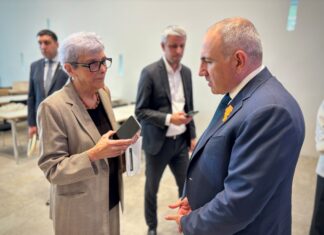
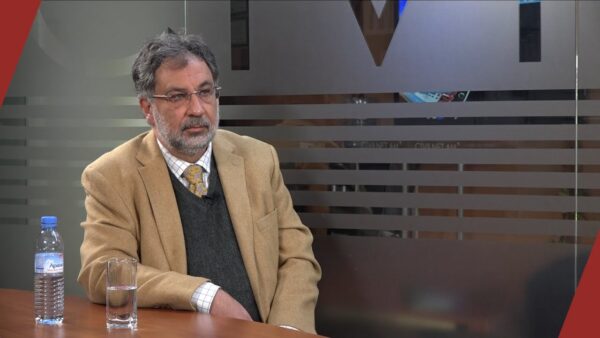
Georgi Derluguian, sociologist of the Caucasus and post-Soviet transformation

“It was a big surprise to me when Russians began touring Armenia in large numbers starting in 2022,” notes Georgi Derluguian, a sociologist of the Caucasus and post-Soviet transformation. “Many arrived with almost no knowledge of the country or its culture — a striking gap, given how central Armenia once was to the Soviet cultural imagination.”

The internet has reshaped Armenia psychologically more than any internal force. News, movements and cultural moments that once took years to reach Armenian consciousness now arrive instantaneously.

“Trends used to take a year or two to reach here,” said Keshishian. “But now with Instagram and TikTok, things are up to date at all times.”

Scrolling the same feeds as their peers in Los Angeles, Paris, and Beirut, Armenian youth increasingly measure their own society against a global benchmark and continuously push for progressive change.

This exposure is no longer strictly virtual. Increasingly, Armenian parents are sending their children abroad for university, a decision that would have been unthinkable or unaffordable a generation ago.

“Lots of students are studying abroad after high school, especially with international programs like International Baccalaureate (IB) and Erasmus. We can see how people live in other countries and compare our own lives,” noted Ani Danielyan, 18, a Yerevan native. The IB and Erasmus (the European Union’s flagship student exchange program) have become increasingly common pathways for young Armenians seeking education abroad.

However, the same connectivity that opens worlds of possibility may also narrow it. Armenian youth now navigate two overlapping systems of judgment: the global one they scroll through daily, and the domestic one that has always defined life in a country where everyone knows everyone.

“In Armenia, people and families are very connected; it feels like everyone has an opinion about what you’re doing. Online, you’re already comparing yourself to people around the world, then in real life you’re compared to people your family knows,” said Danielyan.

That overlapping scrutiny arrives alongside something her parents’ generation never had to manage: an overwhelming number of options.

“My parents’ generation had a fixed idea of what being an adult was supposed to look like — study, get a job, get married, have a family,” added Danielyan. “My generation has more options, but that doesn’t make things easier. There are more choices, but more pressure to make the right choice.”

Vahagn Sefilian, 20, a Yerevan native, is pursuing a career in IT.

For all the outside influence, what emerges is something distinctly Armenian. Trends arrive from abroad and are absorbed and reshaped into something unique.

“The way people dress, the music they listen to, the places they go, even the way they talk online can look the same as teenagers in Europe or America,” Danielyan said. “But when it comes to family and expectations, Armenian culture is still there. We’re creating our own version of Armenian culture, not copying other countries.”

If Armenian youth are united in reshaping their culture, they are far less united in imagining their country’s future. Where their parents’ generation was bound together by a single, clear goal, this one has inherited a far more fractured political landscape.

“For my parents’ generation, their whole thing was gaining independence. For our generation, we lived through the Velvet Revolution,” said  Keshishian. “Our parents were all united, going to protest for independence together — our generation protested against corruption. Today, there’s a crazy 50/50 split in the country. People will refuse to talk to others with different politics.”

That division sits atop decades of accumulated weight — the residue of Soviet rule, the trauma of a war lost within living memory, and the arrival of thousands of Armenians displaced from Artsakh (Karabakh) whose presence is a daily reminder of what was taken.

Ani Danielyan, 18, a Yerevan native and recent graduate of Anania Shirakatsy Lyceum

“There’s this group cynicism in Armenia that I think comes from being a post-Soviet country,” said Sefilian. “And then on top of that, we’re also a recent post-war country — people from Artsakh were forced to come here, and that adds to it. People are kind of uptight. You feel it.”

Yet that same weight coexists with something less often noted. “Compared to other republics of the former Soviet Union, Armenian political attitudes are quite different,” explained Derluguian. “People are rather fearless. They speak their minds, often heatedly, in a way you don’t see elsewhere in the region.”

Where previous generations absorbed hardship as fate, this one treats it as something to be mended. The instinct is inward first — repairing morale, loosening the rigidity, reimagining what daily life in Armenia can look like — before turning outward to the harder questions of policy, security, and the country’s place in the world. Uncertainty remains, but so does the conviction that it can be met.

This generation is not defined by what it has inherited so much as by what it intends to do next.

“My biggest hope is to build a life that I actually enjoy, not just one that looks good from the outside,” said Danielyan. “The definition of what success looks like has changed. Success is about having the freedom to create your own.”

Get the Mirror-Spectator Weekly in your inbox: