

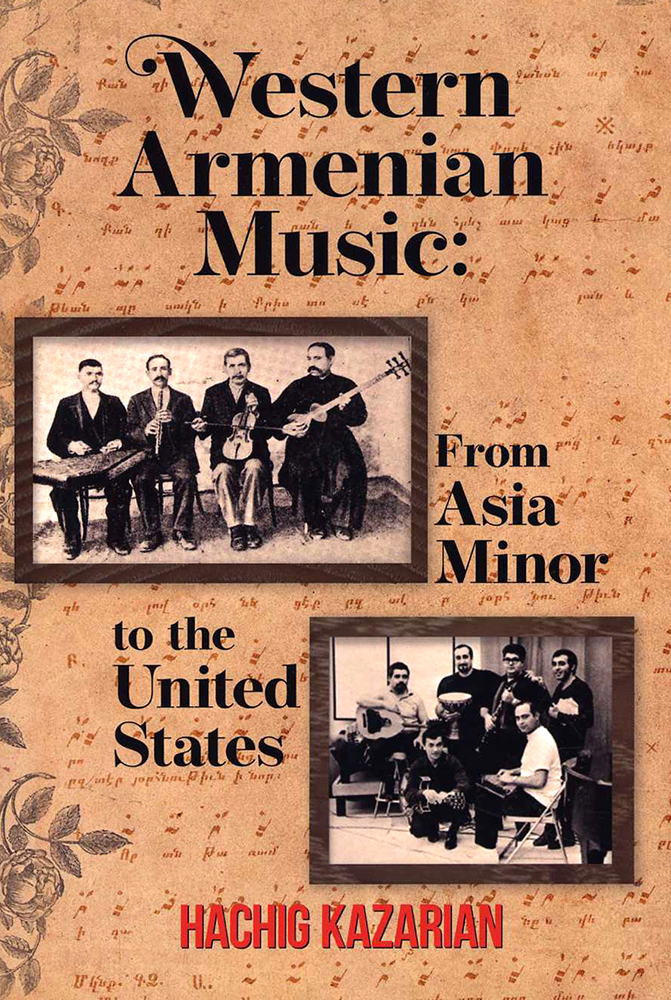
Hachig Kazarian’s Western Armenian Music: From Asia Minor To The United States (The Press at California State University, Fresno, 2023) is a valuable contribution to the debate over the notion of “authenticity” in ethnic music. The book is largely a response to allegations that the folk and dance music performed by Armenian immigrants to the United States from Historic Armenia/Asia Minor following the Hamidian Massacres of 1894-1896 and the 1915 Armenian Genocide — disparagingly referred to as deghatsis — is not authentic Armenian music. At the heart of the massive undertaking is Kazarian’s profound love of his people and their traditions. Without proper documentation and printed scholarship material, avers Kazarian, this music is “destined to be lost forever.”
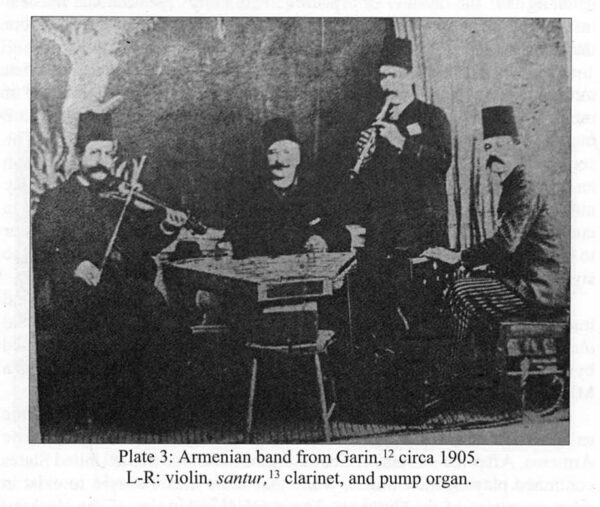
Historic Armenia has ceased to exist and what is dismissed as deghatsi music — which is different from much of the electronically generated music that imitates the Western pop/rock genre and sounds the same globally — is indeed the only surviving authentic Armenian folk music in the diaspora, notes Kazarian. The survivors who landed in the United States formed bands that played the traditional acoustic musical instruments, such as the oud, kanon and dumbek — considered to be key indicators of authenticity — of their villages. The music these bands performed helped preserve a whole tradition of folk dance and music that would otherwise have been lost, writes Kazarian.
Yet, the explicitly Middle Eastern character of this music — still performed today — prompts critics with the colonial mindset of privileging everything Western and European to characterize it as inauthentic. While Kazarian concedes the detractors’ overpowering desire “to separate their musical culture from the music of their oppressors” — Turkish lyrics played a part in fueling the opposition — “this music is absolutely not Turkish,” he states emphatically. It was Armenian music that was appropriated by the Seljuk Turks, not the other way round, he argues. Denying the Armenian roots of this music would throw it into the hands of other ethnicities, specifically Turkic ethnic groups, and rob Armenian culture and traditions of a key component of its riches, he avers.
Kazarian reproduces over a hundred folk songs and melodies with his own notations and explanatory notes as evidence of the distinctly monodic nature of the music of the rural villages of Historic Armenia. And while he does not deny the profound respect for Armenian folk and dance music of Gomidas (Komitas) Vartabed Soghomonian, hailed by all — Kazarian not excepting — as the “founding father of Armenian music,” he wonders why the esteemed ethnomusicologist “never commented on the vast difference between folk music and his polyphonic compositions.” That Gomidas’s music is folk music is “a misconception,” he asserts.
To further argue his point, Kazarian quotes the Hungarian composer Bela Bartok who collected his native folk songs and “raised them,” in his own words, “to the level of art songs by providing them with the best possible piano accompaniments.” Gomidas “never called his music art music; he always referred to his music as Armenian folk song or music,” deplores Kazarian. Because of his Western training the Vartabed preferred Western polyphonic/harmonic music over monodic Oriental music, he adds. Surely aware of the odds (and perhaps apologetically?) Kazarian notes that he chose “traditionalism” over “modernization” — synonymous for many with Westernization — because of his desire to be faithful to “the true persona of Armenian music.”