

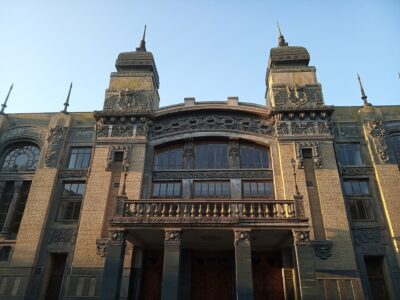
Baku Opera and Ballet Theater or “Mailov Theater” (photo Wikimedia Commons, uploaded by Interfase)

Armenian Architects of the Azerbaijani Capital: Video Report

235
0

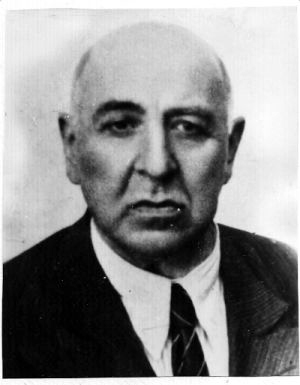
What is the common link between the building of the Central Bank of Armenia in Yerevan and the Opera House in Baku? Those familiar with the profound Armenian contribution to this Caspian city know the answer: both structures were designed by the same architect, Nikoghayos Bayev.
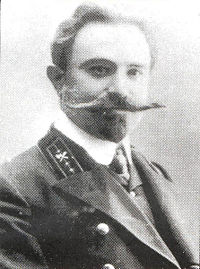
Nikoghayos Bayev

Born in 1875 in Astrakhan, southern Russia, Bayev graduated from the Civil Engineering Institute of St. Petersburg (then the capital of the Russian Empire) in 1901. Among his classmates was Vardan Sarkisov. Together with another Armenian alumnus of the institute, Gabriel Ter-Mikelov (class of 1899), they would, over the coming decades, make a significant contribution to shaping Baku’s urban landscape.

A Russian researcher, Tatyana Speranskaya, citing two Azerbaijani sources, provides an impressive list of buildings designed by these Armenian architects in Baku: the opera house, railway station, clubs, hospitals, financial and commercial buildings, and residential areas across Armenian, Muslim, and other quarters of the city.

In 1911, roughly a decade after settling in Baku, Nikoghayos Bayev was appointed chief architect of the city. At that time, Baku was not a predominantly Muslim-Turkic city as it is today, and the appointment of an ethnic Armenian to such a senior post was not unusual. Armenians played a prominent role in Baku’s administration, culture, business, and humanitarian institutions during that historic period.

In 1911, Bayev completed the construction of the city’s prominent opera and ballet theater. Financed by the Mailian (Mailov) brothers — Hovhannes, Yeghia, and Daniel, successful entrepreneurs in the black caviar and oil industries, the theater became known as the Mailov Theater. Sources suggest that even today, more than a century later, many Azerbaijanis continue to refer to it as the “Mailov Theater,” indirectly acknowledging the Armenian identity behind this architectural jewel of the capital.

Baku’s Mayilov Theater’s blueprint and the building in 1911

Between 1914 and 1916, Bayev designed a hospital that continues to operate as one of Azerbaijan’s main — and arguably most prominent — medical institutions. After the Caucasus became part of the Soviet Union in 1922, Bayev remained in Baku for another five years, notably completing the railway station of the former Lenin district, now known as the Sabunchu railway station.
Get the Mirror in your inbox:

In 1927, Bayev relocated to Soviet Armenia, where he designed the bank building (now the Central Bank of Armenia), the courthouse (currently housing the Prosecutor’s Office of the Republic of Armenia), the Youth Theater (still functioning today), and the first printing house of Soviet Armenia (co-authored with Aleksander Tamanian and now partially serving as the Ani Grand Hotel Yerevan), among other projects. In 1941, Bayev joined the Union of Architects of Armenia. He passed away in 1953.

Because his surname does not immediately sound Armenian, some Azerbaijani sources still credit Bayev as the designer of the opera house while omitting his Armenian origins and the Armenian sponsors behind several of his projects. For instance, the Azerbaijani news agency Trend notes that “the theater was built by a prominent engineer-contractor Nikoghayos Bayev in 1910–1911,” without providing further detail. A reporter from Caliber.az even mentioned the patronymic of the architect, Grigor, yet did not elaborate beyond that.

“The statement that Armenians built Baku is not groundless, as the living evidence is the buildings that still stand in the city,” noted Narek Sargsyan, former chief architect of Armenia. “Baku would not be what it is today without the countless residential and public buildings designed by Armenian architects such as Bayev, Mirzoyan, Kajaznuni (the first prime minister of independent Armenia in 1918–1920), Ohanjanian, Sargsyan, Ter-Sargsyan, Zurabian, Chislian, and others—many of them sponsored by wealthy Armenians like Aramian, Ter-Ghukasian, Mantashian, Budaghian, Adamian, and others,” he stated in one of his interviews.

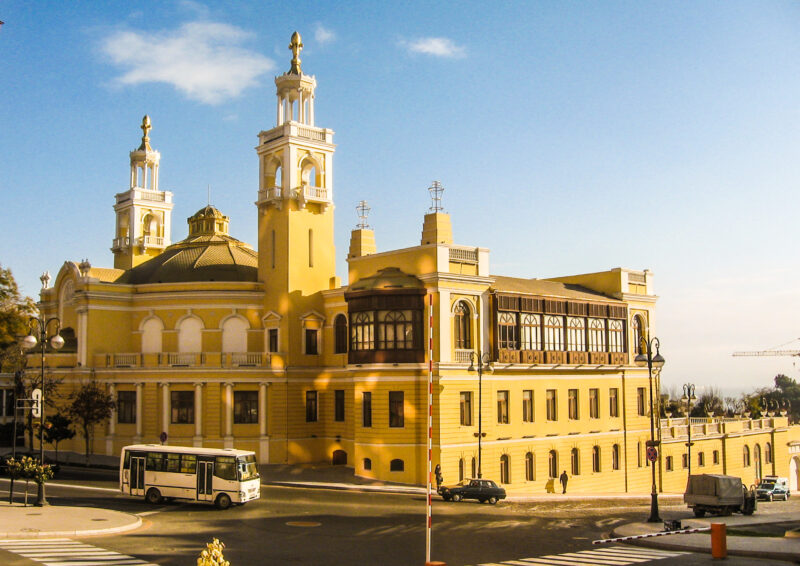
Azerbaijan State Philharmonic Hall, designed by Gabriel Ter Mikelov (photo Wikimedia Common, uploaded by Shmuliko)

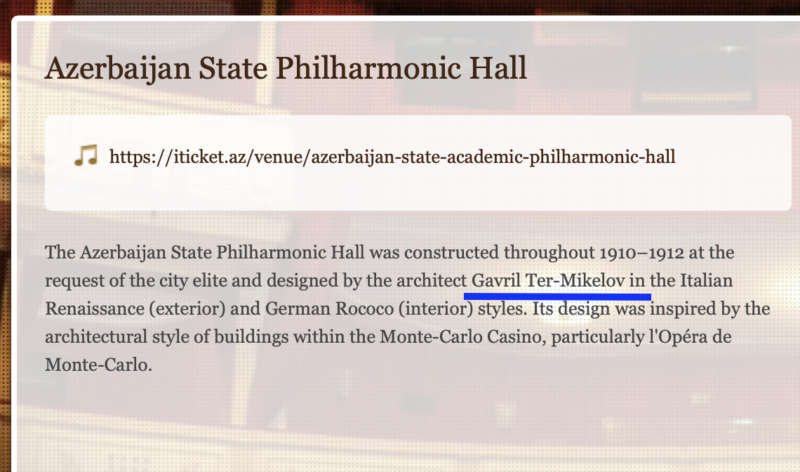
Another Armenian architect, Gabriel Ter-Mikelov, also born in southern Russia, later moved to Baku and remained there for two decades. In 1912, he completed the Summer Public Club of Baku, which today serves as the Azerbaijan State Philharmonic Hall. The website WorldConcertHall.com, dedicated to international concert venues, lists the architect of the Baku Philharmonic as “Gavril Ter-Mikelov.” However, I was unable to locate any contemporary Azerbaijani website that explicitly mentions the Armenian architect of their philharmonic hall.

Worldconcerthall.com recognizes Armenian architect Ter-Mikelov as the designer of Azerbaijan’s Philharmonic Hall

As is widely known, Armenian church architecture often features a central dome rising over a cross-shaped plan — the distinctive “cross-dome” or “cross-in-square” design developed over centuries. In 1909, Nikoghayos Bayev and Hovhannes Kajaznuni built the Armenian Church of St. Thaddeus and St. Bartholomew in Baku, designed in this cross-dome style. In 1937, the church was demolished, and Azerbaijan’s main music academy — the Conservatory — was built on its foundations. Because the original foundations were preserved, the conservatory retains the shape of an Armenian cross even in the 21st century.

Gabriel Ter-Mikelov

Among other notable works by Hovhannes Kajaznuni are a hospital and a hotel in the Balakhani district of Baku. Another building, which today houses the Writers’ Union of Azerbaijan, was designed by Vardan Sarkisov, originally from Shushi. Moving between Moscow and Baku, Sarkisov also contributed to the construction of Moscow’s Metropol Hotel and the former Polytechnic Museum of the USSR. In 1932, he became chairman of the Union of Architects of Azerbaijan.

Hovhannes Kajaznuni

Armenian architect Edmond Tigranian, the son of composer Armen Tigranian, conducted extensive research on the contribution of Armenian architects to the urban landscapes of Caucasian cities. According to Narek Sargsyan, this research was first published in the 1990s with the support of Armenian-American benefactor Armik Hakobian and later republished in 2003. The volume contains invaluable documentation of the significant Armenian contribution to the architecture of Azerbaijan.

Get the Mirror-Spectator Weekly in your inbox: