

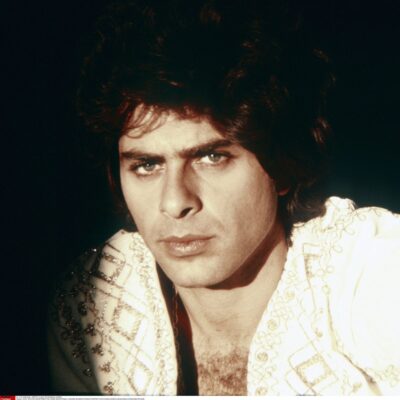
Ricky Shayne

Ricky Shayne and His Mamy Blue Hasmik Ballarian

488
0

Last year, on November 8, the world lost one of the pop music icons of the late 1960s and early 1970s — Ricky Shayne, who passed away in Berlin at the age of 80 after a long illness. Shayne’s most famous song, Mamy Blue, was sung all over the world in the 1970s — even in remote villages of Soviet Armenia, isolated from the rest of the world.

And yet, neither then nor now have Armenians known that Ricky Shayne had an Armenian “Mamy,” who was herself once a well-known figure in Egypt — the painter Hasmik Ballarian, also known as Yasmin Tabet.

This fact is absent from online sources about Ricky Shayne (the English Wikipedia, for example, refers to his mother as a Frenchwoman without mentioning her name), even though contemporary press at the time often wrote about it.

On the anniversary of Shayne’s death, it seems fitting to revisit the nearly forgotten artistic legacy of this mother and son.

Fair-haired, with blue-green eyes, delicate and charming, the Marylin Monroe-lookalike Hasmik Ballarian was born in 1922 in Alexandria. She was the niece and student of the Egyptian-Armenian painter Ashot Zorian. At just 12 years old, she held her first solo exhibition at the Grégoire Gallery in Alexandria.

After settling in Cairo, Hasmik studied painting at the Leonardo da Vinci Art School. Starting in 1943, she regularly participated in the annual exhibitions of the Women Painters and Sculptors’ Club of Cairo. That same year, she married Lebanese oil engineer Albert Tabet, and thereafter went by the name Jasmin Tabet, while in Arab circles she was known just as Yasmin.

Get the Mirror in your inbox:

At first, she mostly painted still lifes and nudes, later turning to abstract compositions — becoming one of the prominent representatives of Egyptian abstractionism. Her art was widely discussed in both the Egyptian-Armenian and Egyptian press (including Al-Ahram), and she received high praise from noted Egyptian-Armenian intellectuals such as Mikael S. Goorjian, Seti Kochounian, and Yervand Msrlian.

From 1963 to 1966, Hasmik Ballarian-Tabet ran her own art gallery in Cairo, called Akhenaton. The gallery officially opened on December 7, 1963, with an exhibition titled “First Winter Salon,” featuring works by 55 Egyptian artists, each presenting one piece. Among them were eight Egyptian-Armenians, including Rose Papasian, Ashot Zorian, Nora Ipekyan, Buzant Kojamanian, and Alexander Saroukhan. Alongside well-known artists, Ballarian also presented painters who had never before taken part in any exhibition, thereby helping to reveal new talents.

In 1966, while in Beirut, she learned that her Cairo gallery had been flooded, and she decided to not to return to Egypt. She continued her artistic career in Beirut for about a decade and, in 1967, received the Lebanese Said Akl Prize for her abstract paintings. Later, due to the Lebanese civil war, the painter moved to Paris. Her later life and the date of her death remain unknown.

Information and bibliography about Ballarian’s artistic career can be found in Haig Avakian’s book Materials on Egyptian-Armenian Painting and Sculpture (up to 1970) (Cairo, 2023, in Armenian, pp. 169–176).

Ricky Shayne

Tall, handsome, with curly hair, green eyes, and striking features, Ricky Shayne became one of the symbols of beauty and sensuality for Western youth of the 1960s and 1970s. His photographs often appeared on the covers of European magazines and on television screens, and he toured throughout Europe giving solo concerts.

Topics: Pop music
People: Ricky Shayne

Born Georges (Joe) Albert Tabet in Cairo in 1944, Shayne began singing in childhood — his mother taught him songs — and by the age of 11 he was already playing the guitar. At 15, he moved to Lebanon, performing in clubs with his voice and guitar. Later, he and his mother relocated to Paris, where he studied music, and then to Italy, amid the wave of British pop music sweeping the continent.

In Italy, Shayne was discovered by music producers Sergio Bardotti and Alberigo Crocetta, who signed him with the ARC record label. It was under the stage name Ricky Shayne that he released his first recordings. His debut hit, Uno dei Mods (“One of the Mods”), written especially for him by Gianni Meccia and Franco Migliacci, became a defining anthem of the beat era and topped the charts. Set against the backdrop of Liverpool and inspired by the rivalry between London’s youth subcultures — the Mods and the Rockers — the song was featured in the 1966 Italian-German musical film “The Battle of the Mods,” directed by Franco Montemurro, where Shayne played the role of a disillusioned singer, Ricky Fuller. The film, much like “West Side Story,” captured the rebellious spirit of the 1960s youth.

Uno dei Mods enjoyed a revival in 1990, when Shayne performed it on Red Ronnie’s television program “Una rotonda sul mare” (“A Round Dance by the Sea”).

Building on the success of this song, Shayne and his collaborators created a second piece inspired by the Mod movement — Vi saluto amici Mods (“Farewell, Mod Friends”) — the theme of which was the protagonist’s departure from Liverpool. The song had a slower rhythm and classical instrumentation, accompanied by spoken passages, violins and drums; however, it did not achieve the success of its predecessor.

Shayne then moved away from the beat style and, starting in 1966, began recording cover versions of songs by other well-known artists such as Elvis Presley and Tom Jones. After relocating to Germany in 1967, he replaced Italian with German and recorded Ich sprenge alle Ketten (“I Will Break All Chains”), which became a nationwide hit, as well as the singles Das hat die Welt noch nicht gesehn (“The World Has Never Seen Anything Like It”), Es wird ein Bettler zum König (“A Beggar Becomes a King”), and Ich mache keine Komplimente (“I Don’t Give Compliments”). He was awarded the Otto Singer Prize, regarded as the “Oscar” of German popular music.

In 1967, Ricky Shayne was seriously injured in a car accident in Rome. Journalists wrote that, fortunately, he did not become a second James Dean — the life of the talented young artist was saved. While recovering in the hospital, he received hundreds of letters from all over Europe, South America, and even Cuba. After a brief hiatus, in 1969 Shayne presented “The Ricky Shayne Show” on German television, and in 1970 won first place at a hit parade in Luxembourg, receiving the Golden Lion Award. Yet his greatest success was still to come.

In 1971, Shayne released the German-language version of Mamy Blue. The song’s lyrics and music had been written in 1970 by French composer and songwriter Hubert Giraud. Originally performed in French, the song became an international hit through various versions, including the English rendition by the Spanish band Pop Tops and Shayne’s own German version. His recording sold half a million copies within a week, reaching the 7th position on Germany’s national charts. Its English version ranked 8th in France, entered the top ten in French-speaking Belgium and Japan, and reached first place in Argentina and Brazil.

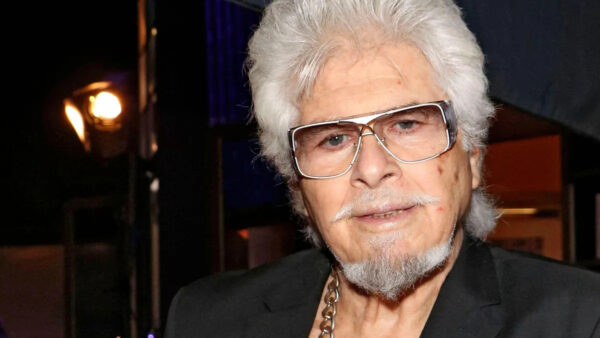
Ricky Shayne in his later years

As an actor, Shayne mainly appeared in Italian musicarelli and German musical films, including Enzo Trapani’s Massima pressione (“Maximum Pressure,” 1965) and Sedici anni e bionda (“Sixteen and Blonde,” 1966), Mariano Laurenti’s Una ragazza tutta d’oro (“A Girl Made of Gold,” 1967) and I ragazzi di Bandiera Gialla (“The Boys of the Yellow Flag”), Kurt Wilhelm’s Olympia, Olympia (1971), Harald Philipp’s Hurra, wir sind wieder gesund (“Hooray, We’re Single Again,” 1971), and an episode of the German TV series “Derrick” titled “Calcutta” (1976). In 1971, he created a photo novel in Beirut for the German weekly Bravo, and later that year was invited to the United States by the renowned singer Ray Charles to collaborate and perform together with Dean Martin on the latter’s television shows.

After settling in the U.S. in 1975, the former idol of Western youth went into business but occasionally returned to Germany for professional projects and nostalgic concerts. In 1989, he made a modest comeback, recording Once I’m Gonna Stay Forever with the famous German singer Dieter Bohlen for the ZDF TV series “Rivalen der Rennbahn” (“Rivals on the Racetrack”). The soundtrack became the most successful album ever created for a German television series.

In 1984, Shayne and his wife Gina opened a boutique in Düsseldorf selling clothes of their own design. Later he ran a small shop in Düsseldorf’s Flingern district, which he closed in 2010 after a year and a half. As a hobby, Shayne created drawings, and in 2009 held an exhibition titled “Ricky Shayne: The Outsider” in Düsseldorf. In 2012, he appeared in a small role as a street musician in the TV movie “Und weg bist du” (“And You’re Gone”).

In 2019, at the Berlin International Film Festival (Berlinale), as part of the Forum Expanded program, filmmaker Stefan Geene premiered the documentary “Shayne,” in which the singer’s sons, Tarek Shayne Tabet and Imran Shayne Tabet, recreated their father’s image in dramatized sequences. (Incidentally, Tarek is a Berlin-based filmmaker, cinematographer, and photographer.)

In 2021, the white-haired, bearded 76-year-old Shayne made his last public appearance on Germany’s Second Television Channel (ZDF) in “50 Jahre ZDF-Hitparade – Die Zugabe” (“50 Years of the ZDF Hit Parade – The Encore”), performing Mamy Blue. In 2022, Stefan Geene published the book Freiheit 71: Ricky Shayne, Music and the Materiality of the Postwar Era, which situates the singer’s work within the context of postwar Berlin’s cultural revival.

Although Ricky Shayne once said, “I don’t belong to any nation. I belong to Mother Nature,” in interviews he sometimes mentioned his Armenian roots and once confessed — not to sound too prosaic — that he loved eating Armenian tolma with garlic. According to his son, Tarek, Shayne used to speak Armenian with his mother and maternal grandparents, also visited Armenia in 1990s.

In his later years, Shayne never spoke about his illness and wished for his death to remain private; he told his former partner to say that he was living in Canada after his passing, thus, she revealed news of his death only eight months later, in June of this year…

Get the Mirror-Spectator Weekly in your inbox: