

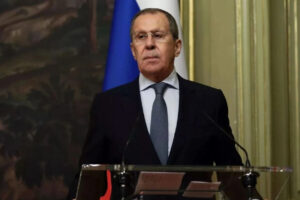
Sergei Lavrov (photo Ministry of Foreign Affairs of Russia)

Russian Officials Issue Contradictory Statements on Armenia–Azerbaijan Washington Summit

181
0

By Arshaluys Barseghyan

Russian Foreign Minister Sergei Lavrov and Russian Deputy Prime Minister Aleksei Overchuk have offered contradictory statements regarding the outcomes of the US–Armenia–Azerbaijan summit in Washington on August 8.

The Washington summit saw the initialing of the peace treaty between Armenia and Azerbaijan, as well as an agreement to establish a route between Azerbaijan and its exclave of Nakhichevan through Armenia called the Trump Route for International Peace and Prosperity (TRIPP).

On September 6, Overchuk told Russian state-run media TASS that he had discussed the roads issue during his recent visit to Armenia in August, and “during meetings with Azerbaijani colleagues in Astrakhan.”

“The construction of such a road will contribute to the formation of a common transport framework for Eurasia. And if such a road appears, it will also contribute to the connectivity of Armenia with Russia. According to our estimates, this will probably be the main road for transporting goods between our countries,” Overchuk said.

Shortly after this statement, Lavrov offered a skeptical remark regarding the Washington summit outcomes.
Get the Mirror in your inbox:

On Monday, September 8, he said that it still “remains to be seen” how the initialed peace treaty between Armenia and Azerbaijan would work. At the same time, he assessed the Washington location as “the sovereign right of our neighbors.”

“We need to see how [the agreements] will work, because all the enthusiastic reviews that were heard in the first few days after the meeting in Washington then somehow changed to skeptical assessments when the document was published,” Lavrov said, adding that “it turns out, not everything has been agreed upon there.”

TASS quoted Lavrov as assessing it as a foreign policy tactic by which “you need to do something bright, to play it up in the information space.”

“I believe that such a method has the right to exist, but if nothing follows it, then it will simply remain a flash in the pan, and we are interested in a real peace treaty being concluded,” Lavrov said.

Aside from Russia, skeptical assessments of the Washington deal were offered by ex-US official James O’Brien, who served as assistant secretary of state in former US President Joe Biden’s administration.

O’Brien’s comments, published on August 14, argued that the Armenian–Azerbaijani agreements signed in Washington would not bring Armenia a ‘substantial peace dividend,” might not resolve the conflict with Azerbaijan, and could leave Armenia exposed to further risks.

(This story originally appeared on www.oc-media.org on September 8.)

Get the Mirror-Spectator Weekly in your inbox: