
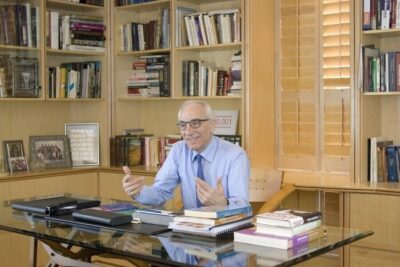
K. M. Greg Sarkissian

Statehood, Authority, and the Role of the Church in a Sovereign Armenia

23
0

By K. M. Greg Sarkissian

For any sovereign state to function effectively, authority and responsibility must be clearly defined. Institutions must have distinct roles, and those roles must operate within a coherent constitutional framework. In Armenia, particularly when viewed from the perspective of the Diaspora, this clarity is sometimes blurred-most notably in discussions surrounding the relationship between the Armenian state and the Armenian Apostolic Church.

This is not an argument in support of any current government, nor is it a critique of the Church as a spiritual institution. Rather, it is an examination of how modern statehood functions and why the separation of church and state is essential to Armenia’s sovereignty and long-term stability.

The confusion is understandable. For centuries, Armenians lived without statehood, and during that time the Church played an extraordinary role in preserving national identity, faith, language, and culture. In the absence of a state, the Church often acted as a surrogate national authority. That historical experience has deeply shaped Armenian collective memory, especially in the Diaspora, where community life has frequently revolved around church institutions.

As a result, some Diaspora Armenians continue to view the Church and the state as parallel or equivalent centers of authority. This perception is reinforced by the transnational nature of the Armenian Apostolic Church and the fact that the Republic of Armenia is a relatively young modern state. When church leadership based in Armenia speaks on matters of state, it may therefore appear natural or even necessary to some. However, this understanding does not align with how sovereignty functions in the modern world.

The Core Principle: The State Is Supreme

Get the Mirror in your inbox:

Armenia is a sovereign republic. Sovereignty means that ultimate authority over national affairs rests with the state and is exercised through constitutional institutions and the rule of law. Within a single territory, there cannot be two equal centers of authority without undermining governance, accountability, and national coherence.

It is important to distinguish between the state and the government of the day. Governments are temporary; they are elected, replaced, or removed. The state, by contrast, is permanent. Its responsibility is to ensure continuity, security, and order regardless of who holds political power at a given moment. Elected governments act as administrators of state authority, coordinating national security, foreign policy, economic regulation, public administration, and the legal framework within which all institutions operate.

This coordinating role applies equally to every sector of society. Military, economic, political, cultural, and religious institutions all operate within the legal and constitutional order of the state. Their role is to support statehood, not to compete with it or exist alongside it as an alternative authority.

Why Separation of Church and State Is Necessary

The separation of church and state is therefore not an expression of hostility toward religion, nor does it diminish the moral or spiritual importance of the Armenian Apostolic Church. On the contrary, separation protects both institutions. When a church becomes entangled in political authority or competes with the state in decision-making, faith risks becoming politicized, society risks division, and both spiritual credibility and state legitimacy are weakened.

This issue becomes even more sensitive when the supreme seat of a transnational church is located within Armenia itself. A global religious institution cannot simultaneously function as an authority equal to the Armenian state within Armenia’s borders. Ultimate authority over state affairs must rest with civilian governance exercised through law and constitutional order.

The Diaspora experience offers a useful point of comparison. Armenians living abroad are citizens of other sovereign states where this principle is clearly understood. Even in countries with strong religious traditions, religious institutions remain subordinate to civilian law and public authority. The same applies in the case of the Catholic Church, whose spiritual center is the Vatican, itself a sovereign entity, yet whose institutions elsewhere do not supersede state authority. Diaspora Armenians accept these norms as citizens abroad; the same logic must apply to Armenia.

Conclusion

A sovereign Armenia cannot function with competing centers of authority. The Armenian Apostolic Church remains a vital spiritual, cultural, and moral institution, but it cannot hold power equal to that of the state—particularly when its supreme leadership is seated within the country. This is not about endorsing or opposing any particular government. Governments change; statehood must endure.

For Armenia to remain stable, resilient, and sovereign, all institutions—religious, political, military, economic, and cultural—must operate within a clear framework where the state holds ultimate authority. Defined roles, mutual respect, and institutional separation are not threats to Armenian identity. They are essential to preserving it in the modern world.

(Op-ed by K. M. Greg Sarkissian, Founder and President of the Zoryan Institute published by Armenpress originally at https://armenpress.am/en/article/1238273. The views expressed in this article are solely those of the author and do not represent the official position of the Zoryan Institute.)

Get the Mirror-Spectator Weekly in your inbox: