


BOSTON — The Goethe-Institut Boston presents Cemetery of the Nameless, a powerful site-specific installation by Berlin-based Turkish artist Pınar Öğrenci that uncovers a chilling connection between environmental collapse, forced migration, and forgotten histories of violence. Installed in the ornate nineteenth-century Grand Hall of the Goethe-Institut’s Back Bay brownstone, the exhibition transforms the historic building into a landscape of memory and disappearance. Drawing on years of research in and around her hometown of Van in eastern Turkey, Öğrenci explores how a rapidly changing environment can reveal long-hidden stories of human suffering.
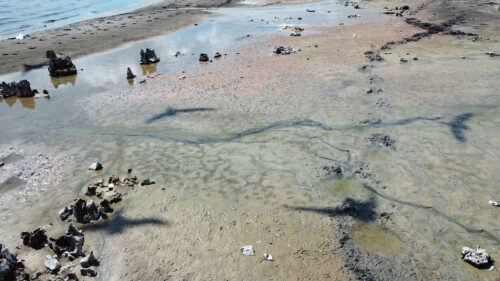
At the center of the exhibition is Lake Van, whose receding waters, caused in part by climate change, have exposed extraordinary underwater formations known as microbialites. Resembling giant corals, stalagmites, or fossilized monuments, these rare mineral structures have become the starting point for Öğrenci’s unsettling investigation into what landscapes remember and what societies choose to forget.
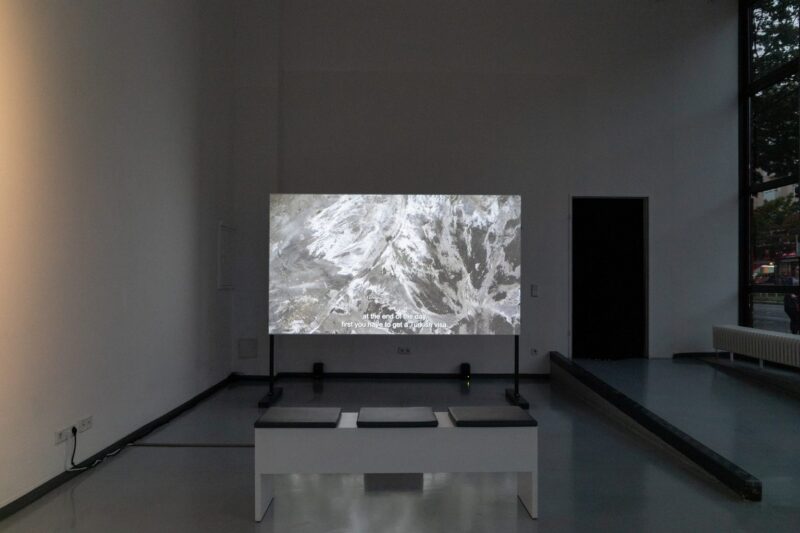
The exhibition’s title refers to cemeteries along the Turkish-Iranian border where refugees and Kurds are buried anonymously, often identified only by forensic registry numbers. Through film, photography, and installation, Öğrenci traces stories of people who vanished while fleeing conflict, persecution, and economic hardship. Their stories intersect with earlier histories embedded in the region, including the Armenian genocide, border violence, and decades of displacement.
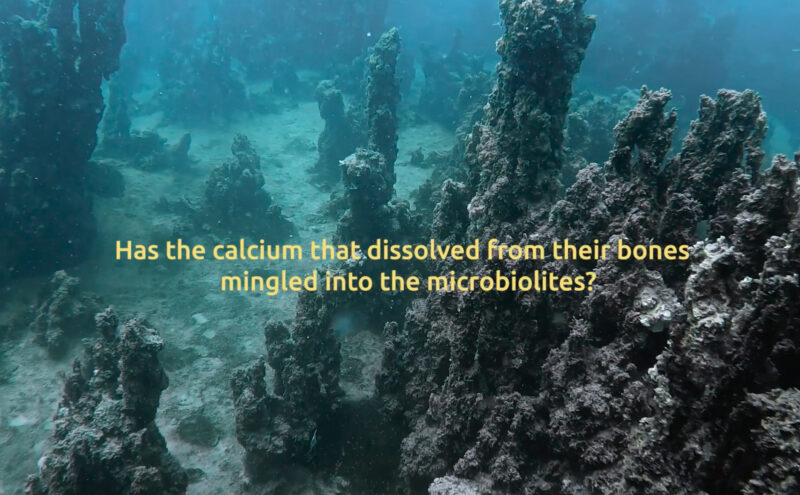
In a provocative artistic gesture, Öğrenci asks a question that is both poetic and disturbing: Could the minerals released from generations of unburied bodies lost in and around Lake Van have become part of the very microbialites now emerging from its waters? The lake becomes not simply a body of water, but an archive of collective memory, where environmental change exposes layers of human history that have long remained hidden.
Another striking dimension of the project is its use of drone and aerial imaging technology. The same tools increasingly associated with surveillance, border control, and AI-assisted warfare are repurposed by the artist as instruments of witnessing. Rather than tracking targets, Öğrenci uses these technologies to document fragile ecosystems, migration routes, and landscapes marked by violence and loss. In doing so, she transforms technologies of surveillance into acts of remembrance.
At a moment when climate-driven migration, border politics, and the ethics of emerging technologies dominate global headlines, Cemetery of the Nameless offers a powerful and deep human perspective on how ecological crises and human displacement are inextricably linked.