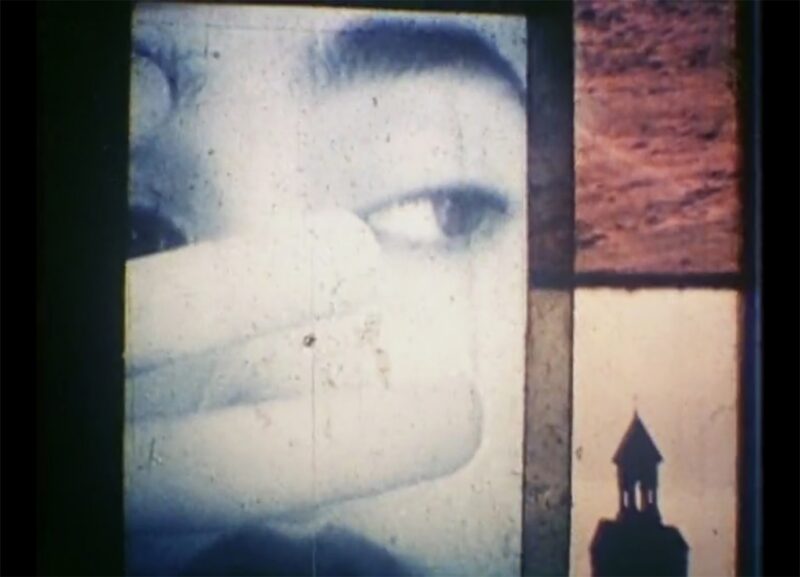


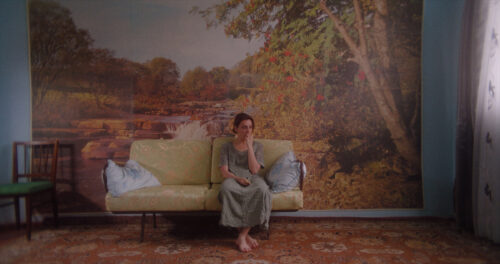
A still from Christine Haroutounian’s “World”

Garod Collective Brings Rare Armenian Films to Brooklyn

277
0

By Garen Torikian

Special to the Mirror-Spectator

BROOKLYN, N.Y. — Five short films by Armenian women, made between 1994 and 2026, screened at the Brooklyn Academy of Music (BAM) Cinema on Wednesday, September 16, under the title “Posthumous Traces.” The roughly ninety-minute program was assembled by Garod Collective, the New York Armenian duo Cynthia Nahhas and Nanor Vosgueritchian. Its premise, in the collective’s own words, was family, parenthood and identity seen through loss. Four of the five treat loss as something which occurs within a family, while the fifth goes looking for Armenia itself.
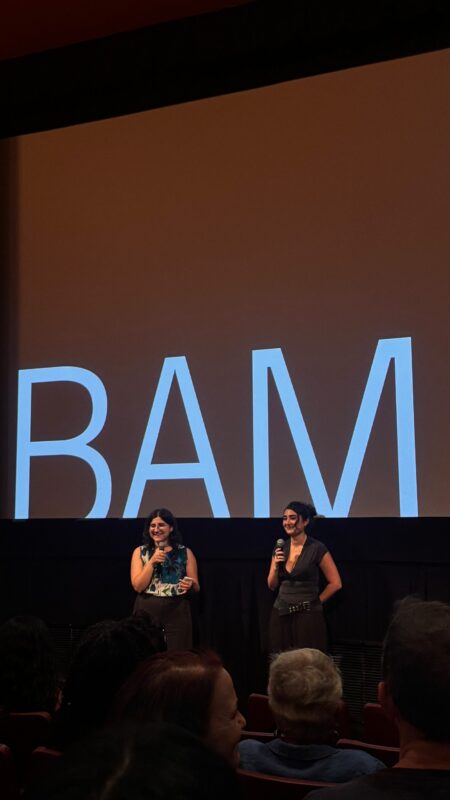
Nahhas and Vosgueritchian met as students at the American University of Beirut, moved separately to New York in 2021 for graduate school, and reconnected there. They started the collective in early 2025, after a run of Genocide commemoration events that struck them both as too large and too impersonal to resemble anything relatable. Since its founding a little over a year ago, Garod has run photo-archiving workshops, backgammon socials, listening parties, and language classes. Wednesday’s screening was their first at the illustrious BAM Cinema in Brooklyn, to an audience of over 140.

The program notes suggest that the films offer “mythical images of a homeland constantly out of reach” — a familiar promise in diasporic films. However, what made this programming unique was their experimental nature, as well as their diversity in style. Across thirty years the films range from grain to pixel and from muted tones to full color; some are scratched and hand-spliced, while others are clean, bright, and flatly digital.
Get the Mirror in your inbox:

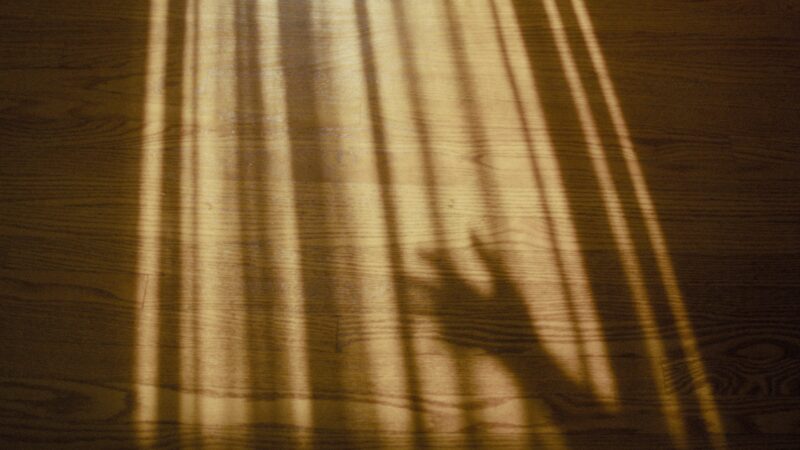
It is Anahid Yahjian’s piece, “Domestic Demon” (2026), which opened the evening. It is a beautiful and dizzying array of pictures, arranged with a frontality that recalls Parajanov. Each shot is meticulous, ranging from the intimate, the grotesque, the bizarre, and the amusing, as Yahjian narrates the way others see her not long after giving birth to her first child.

A still from Anahid Yahjian’s “Domestic Demon”


In the middle of the event, acting as its fulcrum, was Gariné Torossian’s “Girl From Moush” (1994). It is the oldest film in the program and the shortest: six minutes of photographs and film stock hand-spliced into a homeland the filmmaker, born in Beirut and raised in Toronto, had never seen. Here, an unnamed narrator speaks to another person, narrating their experiences of being Armenian, in Armenian. She pleads her desires to have someone (anyone!) hear her words, and to acknowledge her feelings. The imagery, detached from the narration, is a series of stills of various Armenian monuments and landscapes, acting as if they were a personal home movie.

A still from Gariné Torossian’s “Girl from Moush”

“World” (2020), by Christine Haroutounian, was a masterclass in subtlety. It explores the relationship between a young, lonely woman and her dying mother. Much was unsaid between the two, yet the entire history of their relationship was deftly communicated. Similarly, Naira Sargsyan’s “General Cleaning” (2020) focuses on a specific family’s interpersonal relationships, as they clear their home and prepare for a move. The protagonist, the grandfather, is a caretaker at a graveyard, and while the film is permeated with sadness, there are moments of levity that make it feel like one is inhabiting a real Armenian home.

The last film of the evening was “Farewell” (2004) by Maria Saakyan, who trained at Moscow’s prestigious VGIK and graduated in 2003; “Farewell” is her final student work. She died of cancer in 2018, at thirty-seven, making this viewing a truly rare treat. What little dialogue that appears in the film is in Russian, but it’s not a prerequisite for enjoying the piece, which has a young child imagining the life of her recently deceased father. Saakyan spent her working life trying to build an Armenian cinema, and she is the only filmmaker here for whom “posthumous traces” is a literal description.

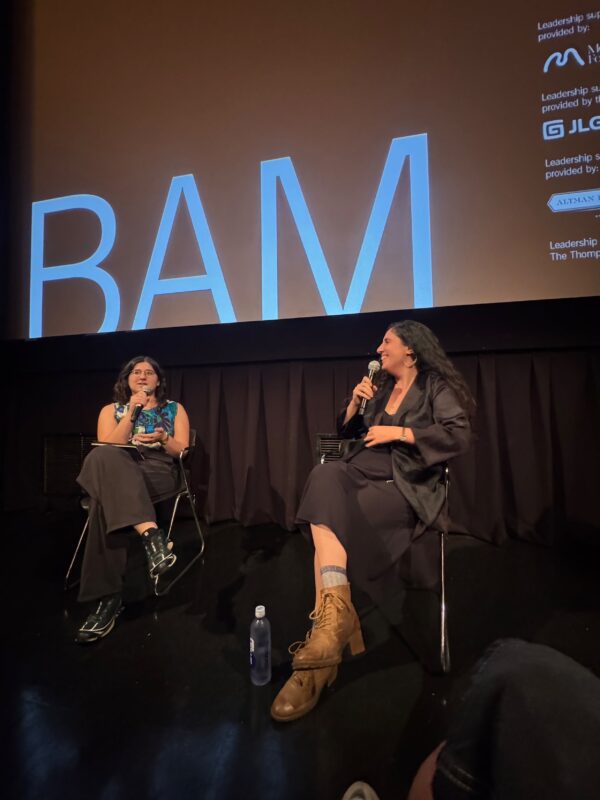
As it was the New York premiere of “Domestic Demon,” Yahjian was present for questions after the screening. She described the piece as being her interpretation of two terrible events in 2020: the COVID-19 pandemic, and the birth of her first child, after which she suffered post-partum depression. Trapped indoors as a result of the virus and the requirements of domesticity, the film went through many cuts, both visually and aurally, until it resulted in a piece which, as Yahjian put it, was both personal and meant to be general enough for other mothers to relate to. It was crucially vital to her that the film’s dialogue be spoken in Western Armenian, as it’s a language woefully underrepresented in cinema.

A homeland constantly out of reach turns out, in these five films, to be a domestic condition. What screened was mostly interiors: a bright suburban home in Los Angeles, a grandfather’s half-packed house, a room where a daughter waits out her mother’s death. These films show that the Armenian homeland in these films is not far away: it is in the next room, behind a door nobody opens.

Get the Mirror-Spectator Weekly in your inbox: