

By Avedis Bakkalian
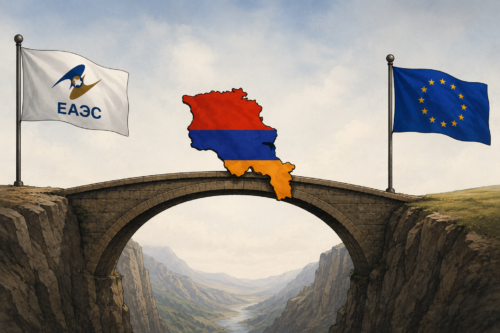
In recent years, Armenia’s foreign policy trajectory has moved increasingly toward deeper cooperation with the European Union. The government presents this course as a pathway to reforms, development, and new opportunities. Yet state decisions cannot be assessed solely through political slogans or ideological aspirations. Above all, they must be measured against sober economic calculations, strategic realities, and the national interest.
Today, Armenia is a member of the Eurasian Economic Union (EAEU), through which it has benefited for years from free trade arrangements, customs preferences, and access to large markets. Over time, this framework has become one of the pillars of Armenia’s economic structure.
The numbers are telling. According to data published by Armenia’s Ministry of Economy, trade turnover between Armenia and EAEU member states exceeded $11 billion during the first ten months of 2024. A significant share of Armenia’s exports continues to be directed toward these markets, particularly Russia, which remains the country’s principal economic partner.
Data from the Eurasian Economic Commission indicate that a substantial portion of Armenia’s foreign trade is directly tied to the EAEU economic area, while the overwhelming majority of exports within the bloc are concentrated in the Russian market. This reality suggests that economic reorientation is not a simple political declaration but a complex, lengthy, and potentially costly process.
Energy Factor