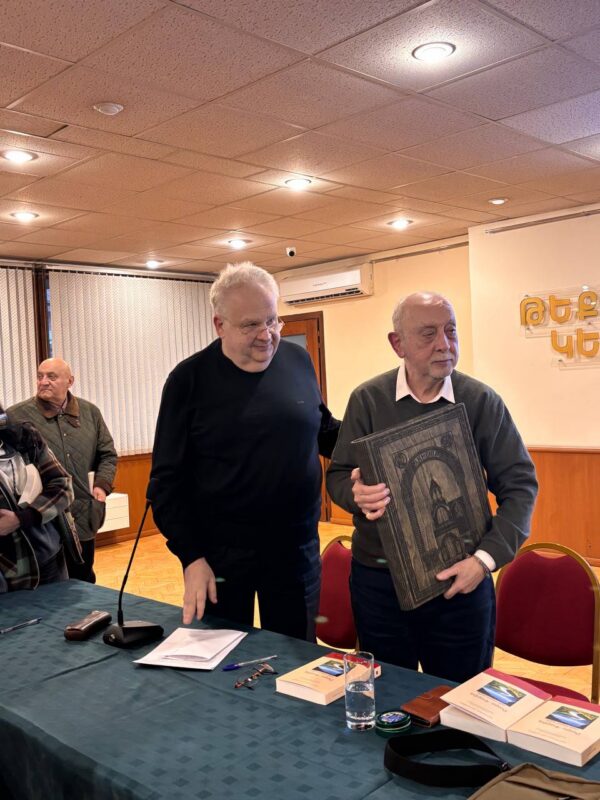


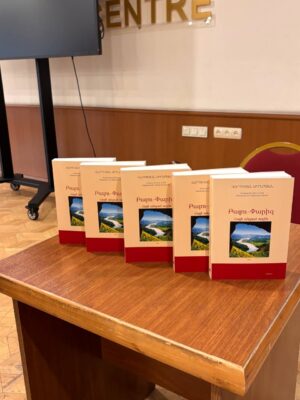
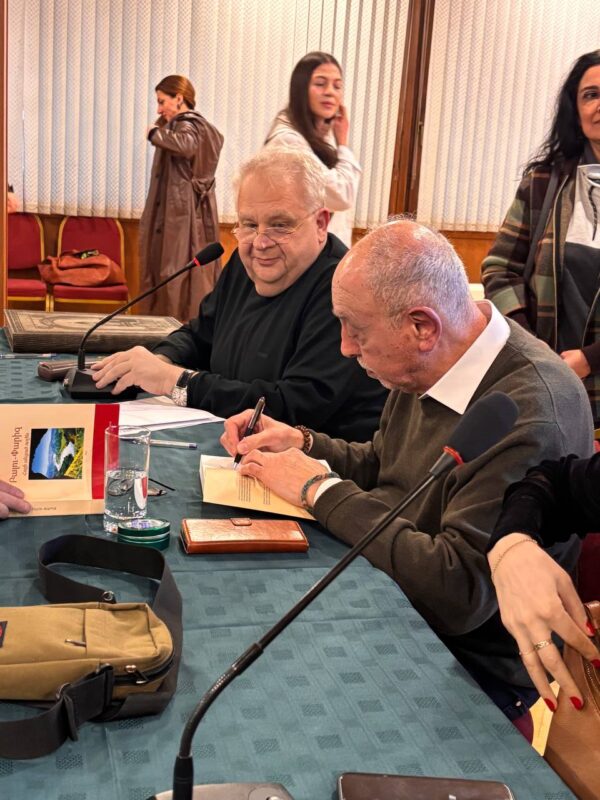
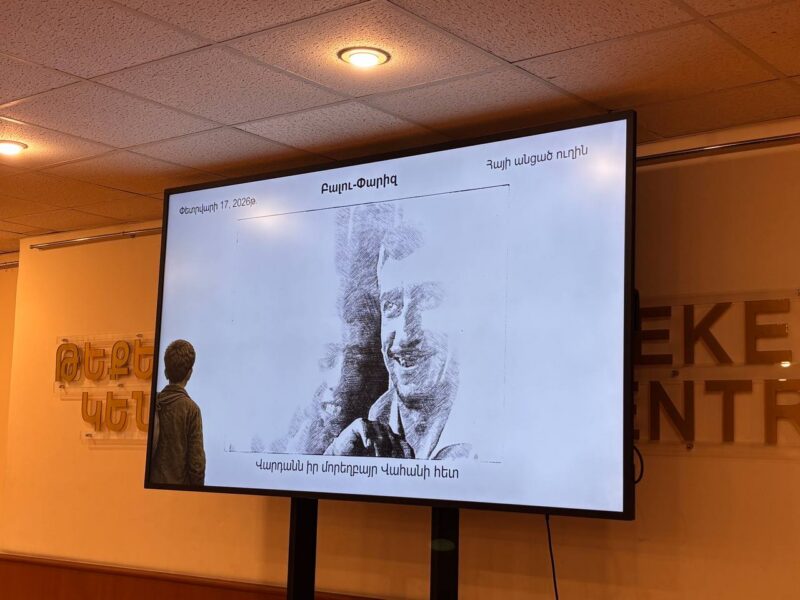
YEREVAN — On February 17, at Yerevan’s Tekeyan Center, the book launch of the Armenian translation of public figure and publicist Jean-Varoujan Sirapian’s Palu–Paris: An Armenian’s Journey took place. The event evolved from a literary occasion into an intellectually substantial forum, where national memory and historical self-consciousness stood at the center of discussion.
The book presents the life journey of Vartan, who becomes a voluntary exile, tracing his path from the remote town of Palu (Kharpert) in Western Armenia to Paris. The author has crafted a destiny shaped by unexpected yet internally coherent turns, trials, and stages of self-discovery. However, the work does not confine itself to an individual narrative; it transforms into an artistic testimony of collective memory, addressing the fundamental issues of dispossession, exile, the preservation of identity, the transmission of cultural heritage, and the spiritual bond between generations.
In the opening remarks, it was emphasized that the book constitutes a significant contribution to contemporary interpretations of diasporan Armenian themes, harmoniously combining historical fact with artistic narrative.
Doctor of Historical Sciences, Professor, and President of the Tekeyan Cultural Association of Armenia Ruben Mirzakhanyan noted that he read the book from cover to cover in one sitting, highlighting its harmonious integration of artistic conception with historical layers.

Corresponding Member of the National Academy of Sciences of the Republic of Armenia, Doctor of Philology and Professor Aelita Dolukhanyan stated that she read the book with great enthusiasm and expressed her gratitude to the author for writing such a work.

According to Associate Professor Knarik Abrahamyan, the novel is noteworthy both for its thematic choice and its structure; it offers a comprehensive artistic portrayal of Constantinopolitan Armenian life, while synthesizing the historical and the fictional. Addressing the journey that begins in Palu and extends to France and Armenia, the author reveals the complex process of searching for national identity, demonstrating how the protagonist ultimately rediscovers himself on Armenian soil. The novel is intellectually dense, rich in historical and political layers, and aligns with the traditions of Constantinopolitan Armenian literature, while opening possibilities for a new, more candid discourse.