

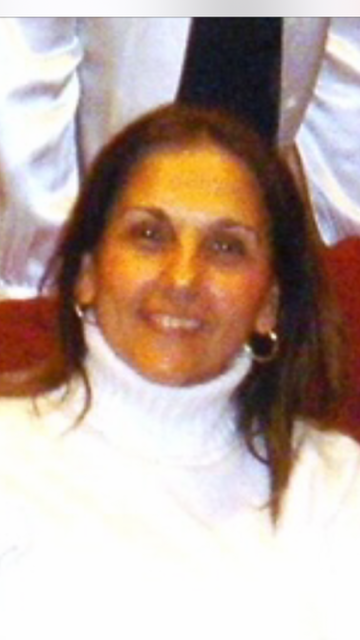
Arpi Sarafian

Writers on Writers: Aris Janigian Interviews Arpi Sarafian

10
0

LOS ANGELES — Recently, author Aris Janigian, the author of several books, including Something from Nothing, Bloodvine, Waiting for Lipchitz at Chateau Marmont and Riverbig: A Novel, interviewed fellow writer (and one of the book reviewers for the Armenian Mirror-Spectator) Arpi Sarafian about her latest book, a collection of essays titled The Second Endless Crossings: Reflections on Armenian Art and Culture.

Janigian: In reading these essays, I am reminded of how expansive Armenian artistic production has been over the last five or so years — the approximate time span these reviews and essays cover. But I made the same observation in my last interview with you in 2020, when the first volume of Endless Crossings was published. I don’t think I am just imagining this continuing flowering of the arts among our people, but you would know much better.

Sarafian: The Armenian people have always taken their creativity and their beauty for granted. Our millennia-old legacy deeply rooted in its unique language, alphabet and faith is not something that we feel we need to take the trouble to showcase. It is just there for the world to witness and to appreciate. Our contributions to world civilization from the earliest days of history have in fact earned us the title, “the Cradle of Civilization.” While it is true that there is an outpouring of creativity at milestones like the Centennial of the Armenian Genocide, the unusual productivity of these past few years must be an indication that something has changed.

It is perhaps true that the darker the skies the more visible the stars, yet I see the extensive Armenian artistic production of the past five or so years—the first-ever exhibit of Arshile Gorky’s oeuvre by an Armenian museum (Watertown’s Armenian Museum of America), special concerts featuring Armenian composers, the Armenian State Symphony touring Germany, soprano Asmik Grigorian, named Best Female Singer at the International Opera Awards, joining other stars for a Christmas gala at the prestigious Carnegie Hall, and so much more—as perhaps an attempt to affirm our continuing presence. On August 31, 2023, the prestigious French music and art talk show Le Grand Echiquier featured a stunning special highlighting Armenian culture and drawing attention to the challenges faced by our nation. The upsurge may just be an effort to mask that deeper angst, the fear of extinction, following the shock of the tragedy of Artsakh and the ongoing threats to Armenia’s security.

What in 2015, the Centenary of the Armenian Genocide, was a celebration of “Rebirth from ashes” seems to have morphed into the expression of an existential fear. Despite multiple concerns, survival was not an issue in 2015. We honored the memory of our victims and celebrated our excellence with peace of mind. Nothing could shake the powerful sense of identity our history and our rich artistic and cultural heritage had given us. It was still possible to believe in the advancement of the cause of justice for our people, notwithstanding Turkey’s ongoing denial of the horrendous deed. Artists involved in the centennial observations boldly demanded justice with the “I remember and demand” slogan.

The recent flowering of the arts may also be an indication of the need for more urgent relief from pain in this new dark chapter in our history. As the celebrated philosopher Friedrich Nietzsche has famously observed, “We have art in order not to die of the truth.” The numerous initiatives—the recent CivilNet series on the House Museums in Armenia, the unprecedented efforts to revive Western Armenian, or to introduce our uniquely talented composers — Alan Hovhaness and Arno Babajanian among others — and a myriad award-winning musicians performing in the most prestigious Halls internationally — might just be a frantic attempt to showcase our beauty, the subtext being, beauty deserves to survive. We are too beautiful to die.

Get the Mirror in your inbox:

Culture has always been our forte but in a morally bankrupt world, where brutal force is flaunted and when even the holiest of institutions is willing, for monetary compensation, to renege on ethical and moral principles and compromise its mission of spreading love and justice, to continue to spread beauty may just not be enough to keep us afloat. When “take, take, take” is the mode, when occupying and dominating is the norm, to cling to our revered poet Vahan Tekeyan’s, “What remains to me [of life is], strange enough, only what I gave away,” may just be delusional, even if some of us, like Arousyak Sahakyan, the ethnographer folklorist from Armenia, the very embodiment of her culture’s values and aspirations, should prefer to remain marginalized and be perceived as powerless rather than join in the bullying and the hoarding.

The Armenian people will always rejoice in uncovering an unpublished medieval hymnal. We shall never stop reviving our ancient wine legacy or stop weaving a 3,500-year-old Dragon Rug back to life to preserve a millennia-old weaving tradition. In the words of Arman Nshanian, producer of the recent Echoes of Our Ancestors, a show illuminating Armenian History and Culture, and director of Armenia’s official entry for Best International Feature at the 93rd Academy Awards, Songs of Solomon (the movie that depicts the life of the musical genius Komitas Vartabed), it may simply be true that “Our culture is really what defines us.” The words of the celebrated Armenian writer Kostan Zarian are worth quoting at length: “Culture is not wealth, civilization or state power, but pure spirituality, a light that enlightens and enriches life. So, if you study our history in detail, you will see that from the beginning, from the mythical days, we have run after the light.”

Janigian: Over the past five years, we’ve also had to watch our ancient culture in Artsakh extinguished and a people who had lived there continuously since antiquity exiled, perhaps forever. December 10, 2025 would have marked the thirty-fourth anniversary of the Artsakh Independence Referendum whereby the people of Artsakh expressed their right to self-determination. Yet, on September 19, 2023, following a lightning attack by Azerbaijan, the entire population of Artsakh was ethnically cleansed from the land they have been inhabiting for millennia, in just three days. The exodus set a new standard for trauma, contended the participants at the November 2, 2024 “Artsakh Uprooted: Aftermaths of Displacement” Symposium of the University of Southern California’s Dornsife Institute of Armenian Studies. In what way did this loss register among our artists and scholars?

Sarafian: With the loss of Artsakh preserving our identity as Armenians has taken on a new urgency. Our academicians are meeting the challenge valiantly with groundbreaking research and publications that focus on what needs to be done in the present and the future so new genocides can be prevented. Their innovative approaches to the research of our past extend the documentation beyond state archives to include personal accounts, letters, diaries — thus far untapped sources —  as trusted historical sources and as irrefutable evidence of the truth. The goal is to reach out to the international community and expose the falsities in order to combat Turkish denialism, avers Dr. Bedross Der Matossian, author of the highly acclaimed The Horrors of Adana.

The unimaginable loss has also triggered an unusual flowering of the arts. Especially eye-catching are the creative projects that deal with the trauma more specifically. French Armenian photojournalist and documentary filmmaker Astrig Agopian digs into questions of cultural heritage and identity with her timely exhibit, Like There’s No Tomorrow. “What would you take if you had to leave home immediately?” asks Agopian. The coffee jars and the family heirlooms Artsakh Armenians carried as they fled the war are all that remain. Equally powerful are the award-winning feature length documentaries, such as Sweet Land and There Was, There Was Not, by Armenian filmmakers, that deal with the emotional toll of the tragedy on the inhabitants of Artsakh.

While it is true that the world stood by and watched in indifference, it is also true that there has been a powerful human reaction to the inhumanity of the horrendous deed. If humanity is to survive mankind will need to change course. The transformative role women can play in renouncing violence as a primary solution to resolving our conflicts has in fact been frequently evoked. One can only hope that the desire that frees history from the mentality that glorifies the conqueror will prevail beyond the newspaper editorials. The focus on the need for a new path brings to mind the Igbo people’s proverb, “Until the lions have their own historians, the history of the hunt will always glorify the hunter.”

The fear cannot be dismissed. The existential threats are real. Azerbaijan’s systematic destruction of Artsakh’s cultural heritage, its continuing threats to Armenia’s sovereignty and unimpeded access to the new transit corridor through Armenia’s Syunik region are worrisome. It is indeed getting more and more difficult to reconcile our creativity with the new reality of oppressive governments that have a greater power to destroy what has taken decades, sometimes even centuries or millennia to accomplish.

Nonetheless, programs that highlight the role of our heritage in preserving our identity as Armenians abound. Armenians will always take pride in having survived the attempt to exterminate them. To quote director/producer Arman Nshanian once again, “We are so much more than the genocide,” the subtext being, once again, we are too beautiful to die. We deserve to survive.

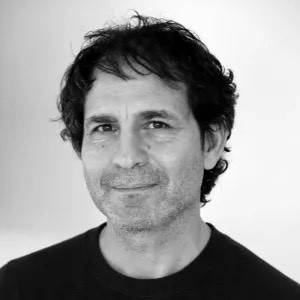
Aris Janigian

Janigian: Many of your essays cover artists or associations that use contemporary, academic language and themes — as if they are appealing for the attention of American cultural elites — and yet want to be rooted in the much older artistic ethos of our own culture. Sometimes they straddle these two worlds with success, other times not so much. Can you comment on this?

Sarafian: I have always been an advocate of simplicity and accessibility and was in fact well aware of perhaps an excessive use of contemporary academic language and themes in my “The Common Reader: The Case of William Saroyan” piece. Yet, I felt I needed to go to some length to clarify my meaning to “the common reader” who would have little or no familiarity with the various “critical perspectives” or “theoretical approaches” the more elitist (yes!) academic readership thrives on. My essay may just be an attempt to expose the elitism and also to bring attention to Saroyan’s work.

I took on the case of William Saroyan, a writer who we both feel has been largely excluded from literature departments, partly because of the prevailing mentality in academia in the years around 1930-1960, roughly the period when Saroyan’s work was being published, that privileged authors whose writing is more complex. Saroyan’s writing is “simple,” not requiring the close textual analysis that texts with more complicated structures and imagery do to interpret. Yet, I contend, Saroyan’s work has the “complexity” of human truth, arguably the greatest virtue of any literary work.

At times the work itself may invite some academic language. For example, in A Book, Untitled, Shushan Avagyan alternates between different narrators, a strategy which often confuses the reader used to a more traditional linear narrative style. Placing the novel within a more contemporary theoretical framework and approaching it as “a postmodern experiment of mixing multiple voices” might help illuminate the reader and make the experience of reading the book more pleasurable. Another instance where academic language might be helpful would be Ara Iskandarian’s Godless Hour—A Yerevan Tale where the stone statues in the Rose City of Yerevan come to life and give an account of their part in Armenian history and culture. Familiarizing the reader with “magical realism,” a literary style that blends the world of facts with the world of the imagination to explore the “facts” of our complicated existence would, again, make the novel more accessible. Someone always learns something.

It is true that the focus on theory sometimes detracts from the simple joy of reading. Yet, theory can also enhance the reading experience. Approaching a literary text with a specific critical perspective in mind, for example, such as a feminist or a psychoanalytical perspective, would place the author’s writing within larger concepts that might give insights into a deeper understanding of the work.

The problem is not as much with the theory or the language used as it is with the creation of an opposition which inevitably leads to a hierarchy that excludes an extraordinary writer like Saroyan. I am hopeful that the trend to contextualize in more recent literary theory will steer Saroyan back into the canon.

Mine is not an apology for the use of academic language. It is simply a desire to bridge the gap between the two separate worlds. I should think that evoking the title of Virginia Woolf’s 1932 second collection of essays, The Second Common Reader, in my own The Second Endless Crossings shows where my allegiances are. There is “another kind of criticism, the opinion of people reading for the love of reading, slowly and unprofessionally, and judging with great sympathy and yet with great severity,” writes Woolf in her essay ”How Should One Read A Book?”

Whatever the strategy used, my focus has always been on the value of the work in promoting and preserving our rich literary and cultural legacy.

Janigian: In concrete ways, how can the Armenian American Museum and Cultural Center in Glendale, which is scheduled to open in 2026, contribute to supporting contemporary artists, particularly those outside of the visual arts.

Sarafian: Having lived at the crossroads of geographies throughout our long history, I believe we are uniquely equipped to fulfill the museum’s mission of promoting “understanding and appreciation of America’s cultural and ethnic diversity by sharing the Armenian American experience.”

Stating missions, as in “inclusive and meaningful projects,” or “educational programs exploring their history” is easy and all too abstract. Yet, making specific recommendations may not be very useful either as, ultimately, the artists themselves provide the specifics in producing the material with their vision and their creativity. Which is not to say that a museum committee made up of experts with extensive knowledge of the arts cannot be helpful in providing guidelines.

I would think that the best way to support our artists is to give them visibility. The aesthetic appeal of the more traditional visual arts—paintings and sculptures—has always attracted audiences of all backgrounds and ages.  Focusing on newer voices could further attract younger audiences and have the added advantage of ensuring the continuity of the culture. Regularly scheduled screenings of films—also visual—by ethnic filmmakers, with discussions to follow, could promote dialogue and make the viewing experience meaningful. Luring audiences to come back is key, as attending the exhibits is the best way to support our artists.

Much in line with the museum’s stated mission of “appreciation of America’s cultural and ethnic diversity,” music, a non-visual art form, can be a powerful bridging device. While it promotes awareness of the individual culture, music also transcends borders. Concerts featuring solo artists or bands and larger orchestras have been known to attract audiences across ethnic backgrounds.

The greater challenge for me is the showcasing of the literary output. I have attended poetry readings with just three attendees. Lectures seem to alienate. The ongoing book presentations, with brief introductions and questions to follow, by ABRIL Books would perhaps be a good model to follow. I would like to add that choosing to focus on the Armenian — clearly on the radar of an Armenian American museum—rather than the Korean or the Mexican writer should not be perceived as exclusionary, as the ensuing discussions would inevitably highlight the relevance of our own cultural legacy to the common concerns of the various ethnic groups. The challenge is educating the public by making the museum into a forum where ideas are freely exchanged, not simply “taught.”

Larger community events like festivals that focus on tasting the food, listening to the music and appreciating the artistic heritage and other traditions of the various ethnicities have proven to be very effective ways of engaging with different cultures, always central to the museum’s mission of promoting diversity and inclusiveness. Hands-on workshops also help engage the community.

Fundraising galas are certainly not to be ruled out, especially given their recent unprecedented success. Among other things, they would help provide the much-needed financial support to the artists who often juggle full-time jobs with their artistic careers.

My hope is that understanding the “other” will contribute to the creation of a more harmonious society. Tolerating differences helps unite, rather than separate and divide, and could be the best tool to combat the violence and the wars that have put humanity on the edge of the abyss.

Much will depend on the extent to which the noble mission statements are fulfilled.  To what extent, one wonders, has the mission of the Holocaust Museum LA, “to educate and inspire a more dignified and humane world” been accomplished? Bringing attention to the ongoing atrocities is essential. Our future is at best unpredictable.


Janigian: Would it ever be possible to have a nationwide symposium of the Armenian arts, one that would bring together artists in many mediums, so that we can learn from one and better support one another? Relatedly, how can we start another publication like the old ARARAT magazine, a place where we can publish and appreciate each other’s work.

Sarafian: “The Armenian arts” covers too broad a spectrum to allow an in-depth exploration of the topics addressed. Even with focus on a single creative medium, such as literature or music, the theme would still need to be narrowed down to make meaningful in-depth discussions possible — which is what a symposium typically aims to accomplish. For example, rather than the broader Contemporary Fiction or Poetry topic, a literary symposium could focus on the impact of forced displacement in the work of Contemporary Armenian Writers, etc.

It is always exciting for a group of experts, artists or scholars to come together and exchange views, share their research and their work and learn from each other, perhaps even learn to support one another. That, however, may be a luxury we cannot afford at this historical moment when matters of greater urgency are at our door.

Even if one should adhere to the notion that beauty is what defines art, the social relevance of the symposium would still be key. The inherently critical stance of artists invites reflection on social issues and could play a key transformative role, without being preachy. Addressing our current concerns would in fact enhance the impact of the symposium. The recent USC Institute of Armenian Studies daylong Artsakh Uprooted: Aftermaths of Displacement, although not a symposium of the arts per se, did an excellent job of highlighting the trauma of the Artsakh tragedy with a lineup of panels of scholars, film screenings, a photo exhibit, cooking demonstrations and a rap performance.

Armenians are known for their creativity and, as mentioned earlier, our creativity has kept us going in the darkest chapters of our history. The emotional appeal of the music of Komitas or of the song of Gohar Gasparyan has always been a powerful connecting device. Most recently, Artsakh’s own Vahram Papazyan Drama Theater and the Artsakh State Dance Ensemble toured internationally (US, Europe, Russia) in the unimaginably difficult days following the mass exodus of the Armenian population of Artsakh. That we are our culture must be true.

It could be argued that if we could bring artists and scholars together for a symposium of the arts, we could also bring together our community leaders to discuss our current problems, such as the Church/State divide which has acquired a worrisome course at a time when staying unified is key to overcoming the greater existential threat to our homeland. The challenge is bringing different voices into the same space so ideas can be shared and discussed.

Whatever the scope, outlining the goals of the symposium clearly is paramount.

A choice of venue that maximizes attendance would also assert our presence and, once again, reaffirm our art/culture as our most effective political tool.


Get the Mirror-Spectator Weekly in your inbox: