

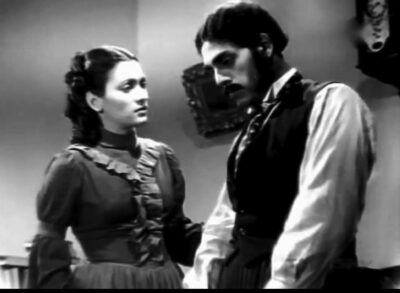
Grace as a young actress in Calcutta

The Woman Behind the Sherlock Holmes Museum: Remembering Grace Aidiniantz with Linda Riley

44
0

YEREVAN–LONDON — Grace Aidiniantz (1927-2015), the late London-based businesswoman of Armenian descent, is best known for her founding of the Sherlock Holmes Museum on Baker Street in 1990, a landmark that has since attracted visitors from around the world.

Aidiniantz spent her early years in Iran and India. Under the stage name Miriam Stark, she appeared in Indian films such as “Michael Madhusudhan” by Modhu Bose (1950) and “Vidyasagar” by Kali Prasad Ghosh (1952). Moving to London, she served as director and secretary of AID Armenia Limited and AID Armenia International Limited organizations.

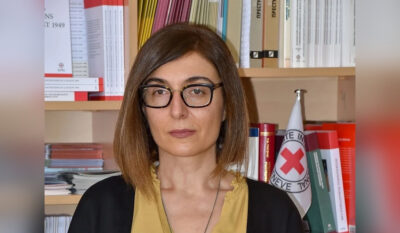
To learn more about this remarkable woman, I reached out by email to her daughter, Linda Riley, a British journalist, publisher, and LGBTIQ+ rights advocate, who kindly agreed to this interview.

Dear Linda, I am delighted to share with our readers my admiration for your mother’s personality and work. Her obituary mentions uncertainty about whether Grace Aidiniantz was born in Armenia or London, noting that her family moved to London to escape persecution—first by the Ottoman Turks and later by the early Soviet regime that came to include Armenia. Given the “-iantz” ending of the surname, it is clear that her roots were in Eastern Armenia. What can you tell us about her ancestors?

Yes, my mother’s family was from Eastern Armenia. Grace was born in Iran. As a small child, she trekked from Iran to Kolkata, India. Unfortunately, Grace’s birth certificate was destroyed in an arson attack at the church in Iran. In 1956, Grace traveled to London on a one-year visa from India. When that visa expired, she received a deportation order and spent approximately fifty years living in England as an undocumented immigrant. In the late 1990s, she decided to apply for British citizenship and was officially recorded as having the longest-known deportation order at that time for someone applying for citizenship. Due to the lack of a birth certificate, she ultimately received leave to remain.

My younger brother, sister, and I were all named Riley because our mother had to change her name to Riley to avoid being detected as an illegal immigrant. Only later in life did my elder brother change his name from Riley to Aidiniantz. Despite this, we have always considered ourselves Armenian, as our mother insisted that we never lose our Armenian identity.
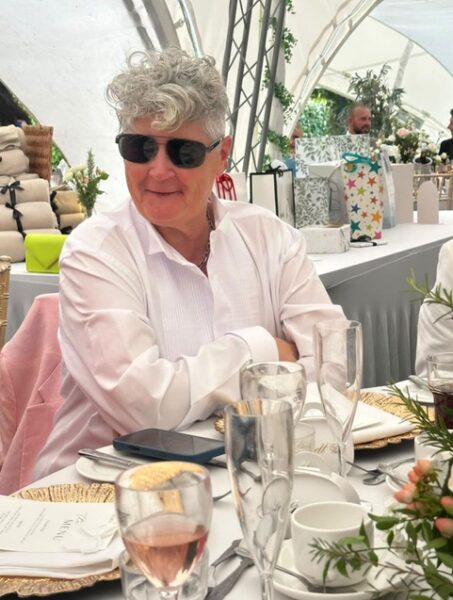
Linda Riley

Get the Mirror in your inbox:

In 1990, when your mother sold her house and invested most of her savings in establishing the Sherlock Holmes Museum, how did the family react to such an unusual and bold undertaking?

The family was very happy. Grace immersed herself in every Sherlock Holmes novel she could find, carefully noting every detail of each room described. She then traveled to the UK’s finest auction houses, collecting Victorian memorabilia and furniture to recreate the rooms, all of which, I believe, remain in place nearly forty years later.

I assume that many tourists believe Sherlock Holmes was a real person and ask amusing questions when visiting the Museum!

Yes, they did, back when I was a director and worked there. Grace used to say it was like telling children that Father Christmas isn’t real, as visitors were often so disappointed to learn that Sherlock Holmes was a fictional character. I no longer have any involvement with the Museum due to a significant falling out with my brother John Aidiniantz, which is well documented.

Could you please share some information about the Armenian organizations in which Grace Aidiniantz was involved?

Grace did not share many details with me, but I know she donated to numerous Armenian charities and contributed significantly to Armenia’s Earthquake Fund. She once mentioned that, in recognition of her donations, the government had granted her an honor, though I do not have further details about this.

Was there something distinctly Armenian in your mother — her character, language, or cuisine?

Yes, everything about my mother was distinctly Armenian, as it was deeply rooted in her culture, and she passed this on to her children. She sent my brother Stephen, my sister Jennifer, and me to the Armenian Saturday School at Gulbenkian House on High Street, Kensington, and also had us baptized there. Although being raised first in India and then in the UK created a certain sense of separation, the moment she finally received her leave-to-stay passport, the first thing she did was arrange a trip to Armenia. I vividly remember her dropping to the ground, kissing the soil, and crying when we set foot on Armenian land.

Yes, it was exciting that you replied to my English greeting with “barev.”

We all consider ourselves Armenians and part of the diaspora. Grace always celebrated Armenian Christmas on January 6th, and when we were younger, we would all go together with her to the Armenian Church on High Street, Kensington, to join in the celebrations. I have visited Armenia several times, and it was my mother’s wish that her ashes be scattered over Mount Ararat when she passed away.

Thanks for your answers, Linda! I hope the Sherlock Holmes Museum visitors, alongside enjoying Conan Doyle’s characters, will also learn about its founder, the passionate and charismatic Armenian émigré lady!


Get the Mirror-Spectator Weekly in your inbox: