

BEIRUT — As families continue to arrive in Beirut and surrounding areas following the recent escalation of conflict, World Central Kitchen (WCK) is expanding food relief operations to support people displaced from their homes.
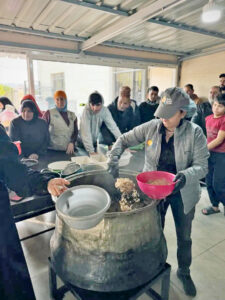
Over the past ten days, WCK has served over 200,000 meals across shelters and communities hosting displaced families. Working with local restaurant partners and volunteers, WCK teams are preparing and delivering tens of thousands of meals each day, ensuring people have access to hot, nourishing food while also supporting small businesses that have seen customers disappear as the crisis deepens.
To reach families who are living outdoors or inside their cars, WCK teams are also distributing thousands of freshly baked croissants with cheese each day, providing food that is easy to eat and can be saved for later. During Ramadan, meals have included soup, salads, and dates so families can break their fast with dignity.
On the streets of Beirut, the humanitarian situation is visible everywhere. Areas that once welcomed visitors and families out for evening walks are now lined with cars and makeshift shelters. Along several kilometers of the city’s waterfront, families are sleeping in their vehicles or beside them, improvising small living spaces with blankets and belongings they managed to carry with them. Public spaces and parking lots that usually serve restaurants, hotels, and businesses are now filled with displaced people.
The scale of displacement is significant. This week, the United Nations High Commissioner for Refugees (UNHCR) reported that nearly 700,000 people in Lebanon have now registered on the government’s online displacement platform. WCK teams on the ground are seeing a steady flow of families arriving in Beirut every day, many after long journeys from southern communities.
Chef Aline Kamakian, a WCK Chef Corps member who is leading the WCK response in Lebanon, says: “The official figures likely don’t capture the full scale of displacement. Many families are staying with relatives or friends rather than in shelters, while others face barriers to registration—they may not have internet access or a mobile phone, which makes it difficult to complete the online process.”