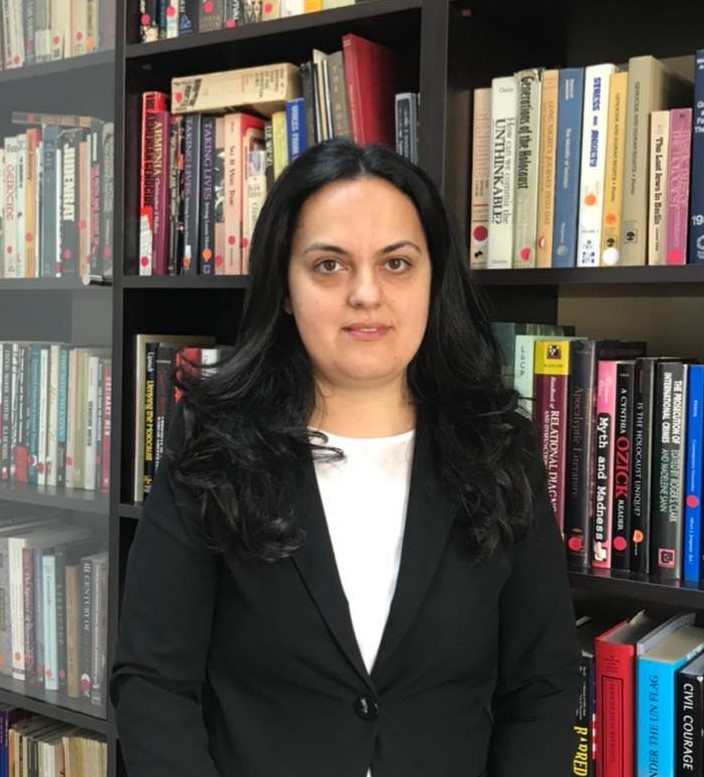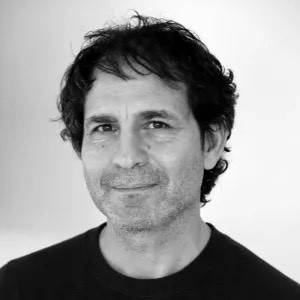


LOS ANGELES — Recently, author Aris Janigian, the author of several books, including Something from Nothing, Bloodvine, Waiting for Lipchitz at Chateau Marmont and Riverbig: A Novel, interviewed fellow writer (and one of the book reviewers for the Armenian Mirror-Spectator) Arpi Sarafian about her latest book, a collection of essays titled The Second Endless Crossings: Reflections on Armenian Art and Culture.
Janigian: In reading these essays, I am reminded of how expansive Armenian artistic production has been over the last five or so years — the approximate time span these reviews and essays cover. But I made the same observation in my last interview with you in 2020, when the first volume of Endless Crossings was published. I don’t think I am just imagining this continuing flowering of the arts among our people, but you would know much better.
Sarafian: The Armenian people have always taken their creativity and their beauty for granted. Our millennia-old legacy deeply rooted in its unique language, alphabet and faith is not something that we feel we need to take the trouble to showcase. It is just there for the world to witness and to appreciate. Our contributions to world civilization from the earliest days of history have in fact earned us the title, “the Cradle of Civilization.” While it is true that there is an outpouring of creativity at milestones like the Centennial of the Armenian Genocide, the unusual productivity of these past few years must be an indication that something has changed.
It is perhaps true that the darker the skies the more visible the stars, yet I see the extensive Armenian artistic production of the past five or so years—the first-ever exhibit of Arshile Gorky’s oeuvre by an Armenian museum (Watertown’s Armenian Museum of America), special concerts featuring Armenian composers, the Armenian State Symphony touring Germany, soprano Asmik Grigorian, named Best Female Singer at the International Opera Awards, joining other stars for a Christmas gala at the prestigious Carnegie Hall, and so much more—as perhaps an attempt to affirm our continuing presence. On August 31, 2023, the prestigious French music and art talk show Le Grand Echiquier featured a stunning special highlighting Armenian culture and drawing attention to the challenges faced by our nation. The upsurge may just be an effort to mask that deeper angst, the fear of extinction, following the shock of the tragedy of Artsakh and the ongoing threats to Armenia’s security.
What in 2015, the Centenary of the Armenian Genocide, was a celebration of “Rebirth from ashes” seems to have morphed into the expression of an existential fear. Despite multiple concerns, survival was not an issue in 2015. We honored the memory of our victims and celebrated our excellence with peace of mind. Nothing could shake the powerful sense of identity our history and our rich artistic and cultural heritage had given us. It was still possible to believe in the advancement of the cause of justice for our people, notwithstanding Turkey’s ongoing denial of the horrendous deed. Artists involved in the centennial observations boldly demanded justice with the “I remember and demand” slogan.
The recent flowering of the arts may also be an indication of the need for more urgent relief from pain in this new dark chapter in our history. As the celebrated philosopher Friedrich Nietzsche has famously observed, “We have art in order not to die of the truth.” The numerous initiatives—the recent CivilNet series on the House Museums in Armenia, the unprecedented efforts to revive Western Armenian, or to introduce our uniquely talented composers — Alan Hovhaness and Arno Babajanian among others — and a myriad award-winning musicians performing in the most prestigious Halls internationally — might just be a frantic attempt to showcase our beauty, the subtext being, beauty deserves to survive. We are too beautiful to die.