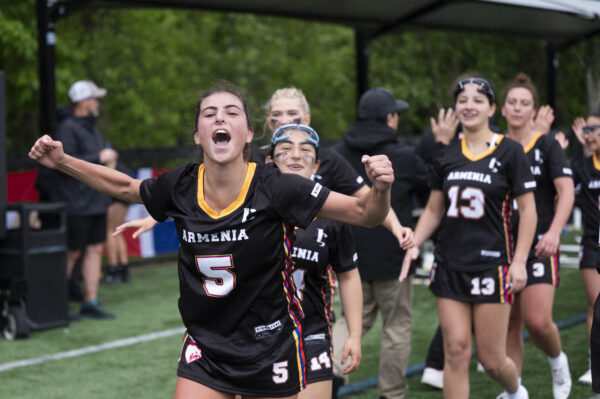


The Armenia Women’s National Lacrosse Team wins its first game at the 2025 Heritage Cup on Saturday, May 24, 2025 in Weston, Massachusetts. (Photo by Joyce Naltchayan Boghosian)

Armenian Resilience: Nearly 50 Years After ‘The Proud Armenians,’ a Legacy of Identity and Pride Continues

87
0

By Joyce Naltchayan Boghosian

Special to the Mirror-Spectator

WASHINGTON — In the June 1978 issue of National Geographic magazine, Armenians were featured for the first time in a story titled “The Proud Armenians.” My father, Harry Naltchayan, an award-winning photographer for the Washington Post, initiated the story with the support of the Armenian General Benevolent Union and philanthropist Alex Manoogian.
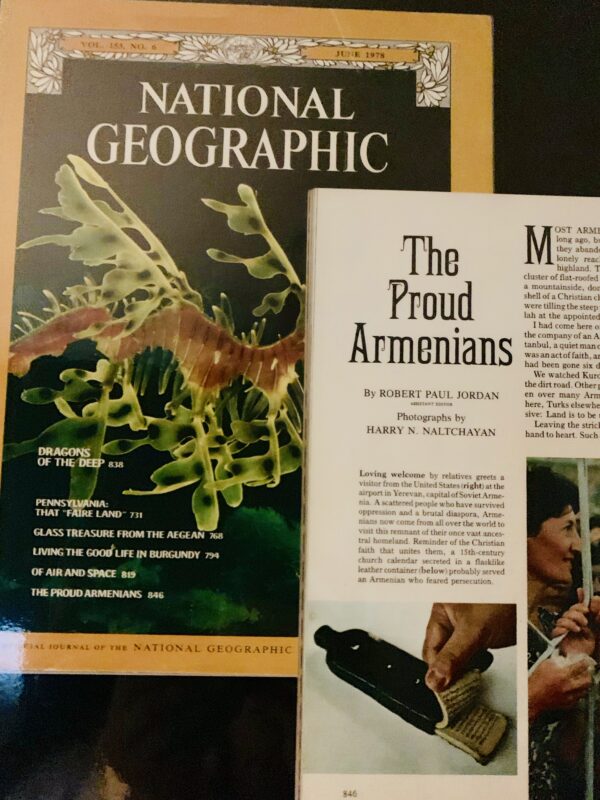
My father traveled with writer Robert Jordan to Soviet Armenia, Lebanon, the Armenian monastery on the island of San Lazzaro in Venice, and throughout the United States, highlighting the resilience and success of Armenians in their homeland and throughout the diaspora.

This particular issue sold out completely and found its way into almost every Armenian household. In fact, I still meet people today who proudly tell me they have kept their June 1978 issue, its pages perhaps dusty with age, but still treasured in their libraries. The story was a phenomenon. Until then, very few people were familiar with Armenians. The publication generated such great excitement that my parents, my brother and I went on the road with my father’s storytelling slideshow, visiting Armenian church parishes throughout the United States.
Get the Mirror in your inbox:

Today, at 58, I find myself looking back at that story as I reflect on our past and present with a new perspective, one shaped by a deeper appreciation of how far we have come.

What was once defined by survival has, in so many ways, become a story of endurance, renewal and flourishing. I cannot help but celebrate in my heart the extraordinary strength of our Armenian identity and the cultural legacy we continue to carry forward, nearly 50 years later, as proud Armenian Americans.

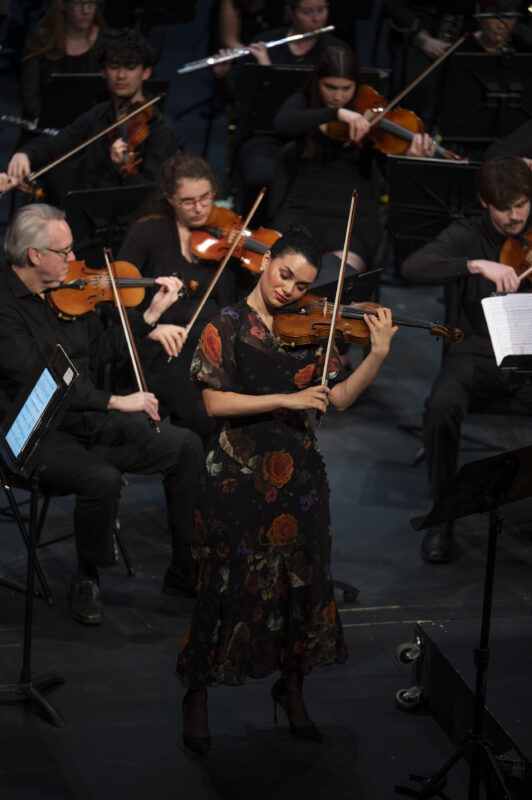
Siberian-born Armenian violinist and author Nuné Melikian performs Arno Babadjanian’s Violin Concerto with the Albemarle Symphony Orchestra, Saturday, March 28, 2026, in Charlottesville, Virginia (Photo by Joyce Naltchayan Boghosian)

As I reflect on 2025–2026, more than a century after the Armenian Genocide, I am struck by how deeply Armenian identity continues to resonate across generations and borders. Throughout this period, I have experienced moments that stirred a familiar sense of pride, nostalgia and belonging. I listened to Siberian-born Armenian violinist and author Nuné Melikian perform Arno Babadjanian’s Violin Concerto with the Albemarle Symphony Orchestra in Charlottesville, Virginia. In Boston, I watched the Armenian Lacrosse Team, a group of Armenian American women from across the United States, win its first game at the 2025 Heritage Lacrosse Cup, with the dream of one day representing Armenia at the Olympic Games.

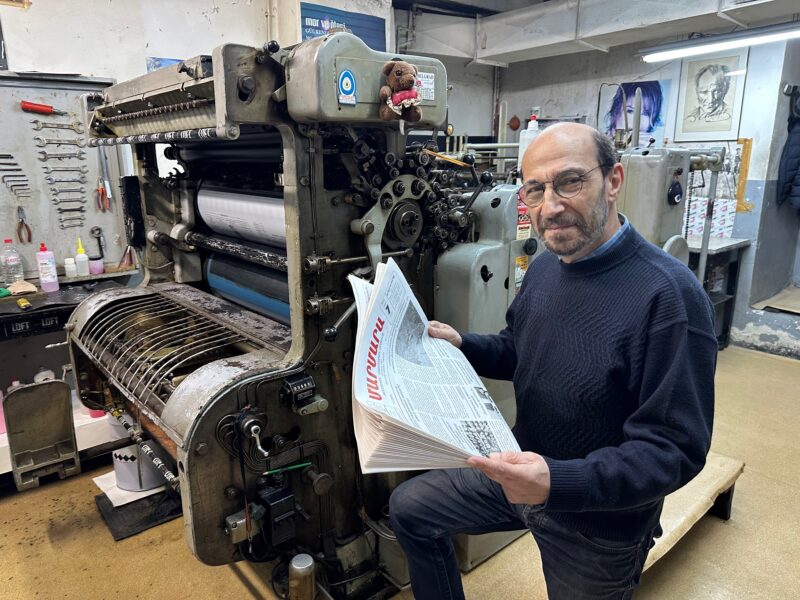
Administrator and co-director Ayk Haddeciyan of Marmara newspaper holds a newly printed copy as the daily paper is printed on Saturday, March 7, 2026 in Istanbul, Turkey. The Armenian-language daily newspaper is published since 1940. (Photo by Joyce Naltchayan Boghosian)

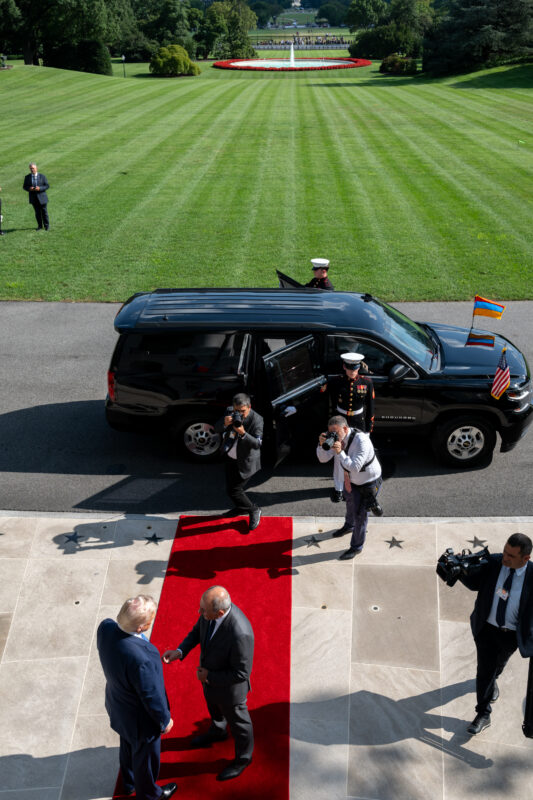
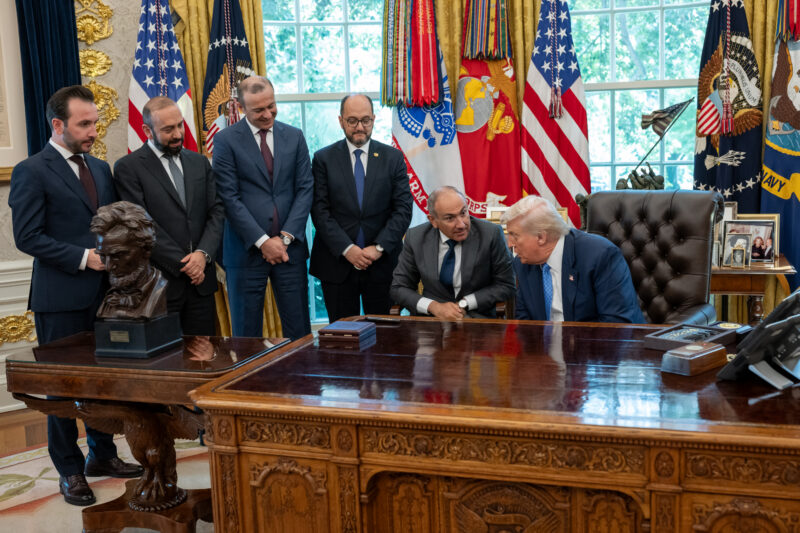
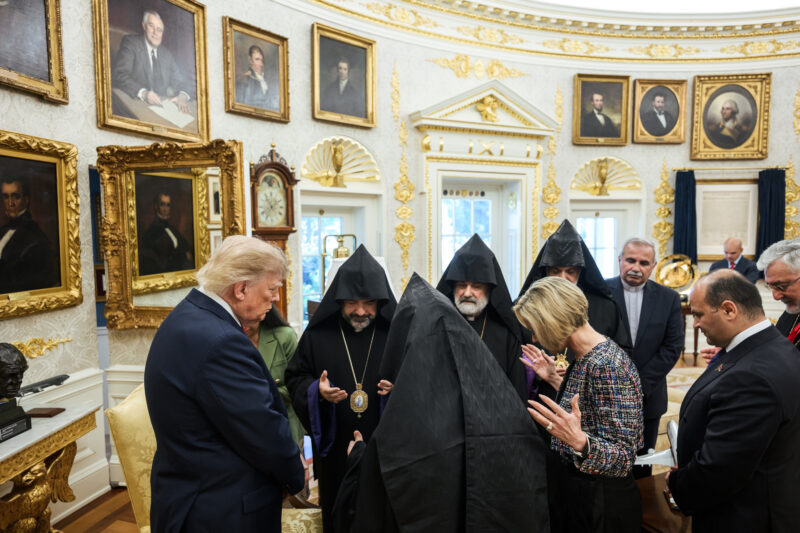
In Istanbul, Turkey, I felt a sense of home walking through the Three Horan Armenian Church with Fr. Harutyun Damadyan. Later, I stood in awe at the offices of the Armenian newspaper Marmara, founded in 1940, watching that day’s edition roll off the printing presses. In Washington, D.C., I felt a profound sense of representation when I saw the Armenian flag outside the West Wing of the White House and watched Armenia’s prime minister, Nikol Pashinyan, on the global stage. And finally, last September, I witnessed Armenian bishops representing the Diocese, Prelacy, Catholic and Evangelical churches pray the Hayr Mer in the Armenian language in the Oval Office with the president of the United States.

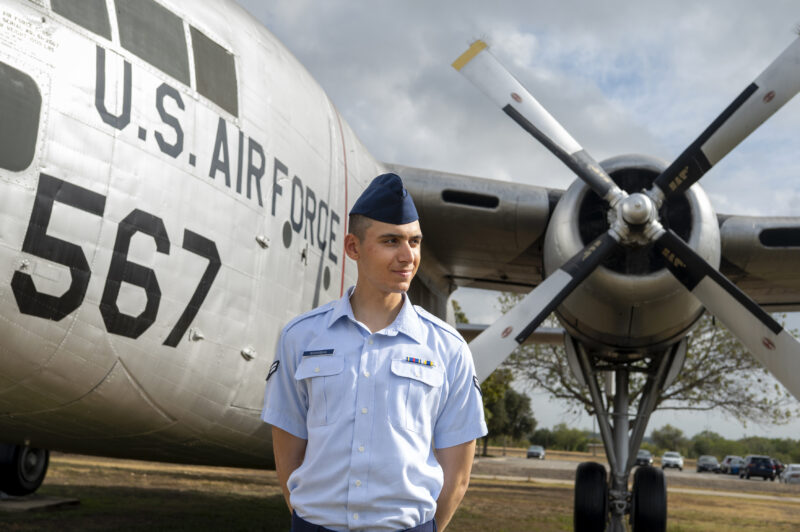
A more personal experience has inspired me to revisit “The Proud Armenians,” nearly 50 years later. In August 2025, my 23-year-old son, Nareg, enlisted in the US Air Force as an Airman First Class. He moved from the greater Washington, D.C., area to Scott Air Force Base in the St. Louis metropolitan area of Illinois, also known as the Gateway to the West. We packed his car and drove halfway across the country for his permanent change of station, taking him to a new home where he knew no one.

Airman First Class Nareg Boghosian graduates from basic training on Thursday, October 23, 2025 at Lackland Air Force Base in San Antonio, Texas (Photo by Joyce Naltchayan Boghosian)

Two hours into our journey, I cold-called a parish council member, Paul Nersessian, who lives in Belleville, Illinois. I had received his contact information from an acquaintance.

Paul insisted that I notify him as soon as we arrived in the area. Ten minutes after reaching our destination, we were already sitting with him in person, immediately feeling a sense of belonging. That single connection became our gateway to a new Armenian family at Holy Virgin Mary and Shoghagat Church, a parish whose roots reach back to one of the earliest Armenian settlements in America, dating to the mid-1890s.

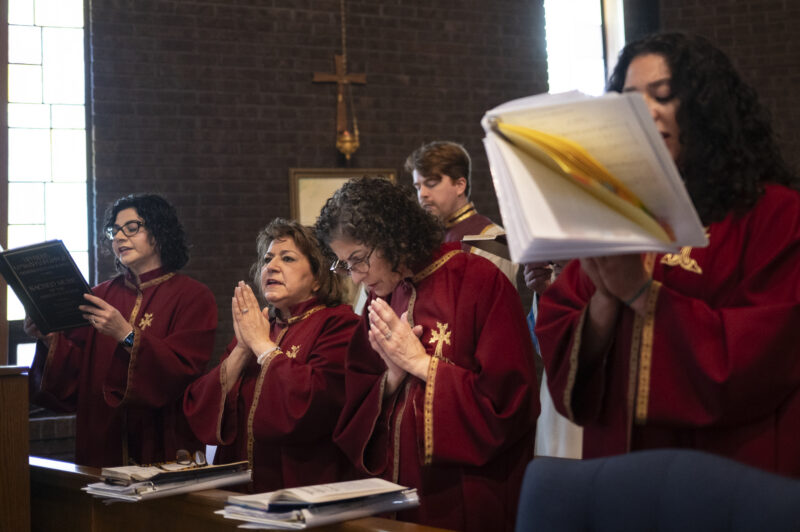
Choir members sing on Sunday, August 16, 2026 at Holy Virgin Mary & Shoghagat Armenian Church in Belleville, Illinois on the Feast of the Assumption (Photo by Joyce Naltchayan Boghosian)

A second wave of Armenian immigrants arrived in the greater St. Louis area in the early 1900s, including around 1907, driven from their homes by Ottoman persecution and massacres. Having lived on the East Coast and traveled frequently to the West Coast throughout my life, I was well aware of the vibrant Armenian communities on both sides of the United States. But I had never stopped to wonder about the approximately 400 families who make up the thriving Armenian community in the heartland of America.

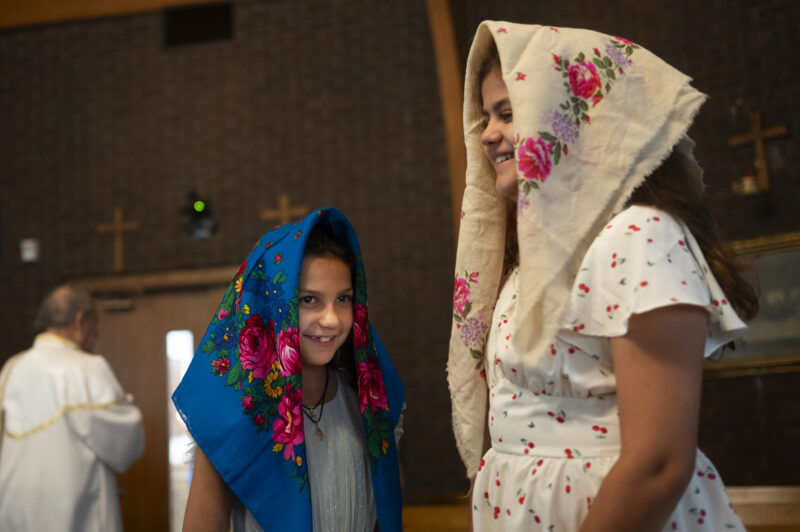
Young parishioners prepare to receive communion on Sunday, August 16, 2026 at Holy Virgin Mary & Shoghagat Armenian Church in Belleville, Illinois on the Feast of the Assumption (Photo by Joyce Naltchayan Boghosian)

Made up of multigenerational Armenian Americans, along with families whose roots trace back to Baku, Bulgaria and throughout the Middle East, this Armenian community is radiant. What once drew Armenian immigrants to the region in search of blue-collar work has evolved into a diverse community of lawyers, engineers, computer scientists, government contractors, physicians, musicians, educators, business owners and military servicemembers, including a veteran who received a Purple Heart.

It has now been a year since Nareg began living at Scott Air Force Base, just 15 minutes from Holy Virgin Mary and Shoghagat Church. During this time, the church has been anticipating the arrival of its incoming priest and his family from Armenia. In the meantime, longtime parishioner and Deacon George Marifian has faithfully led the community in prayer and worship.

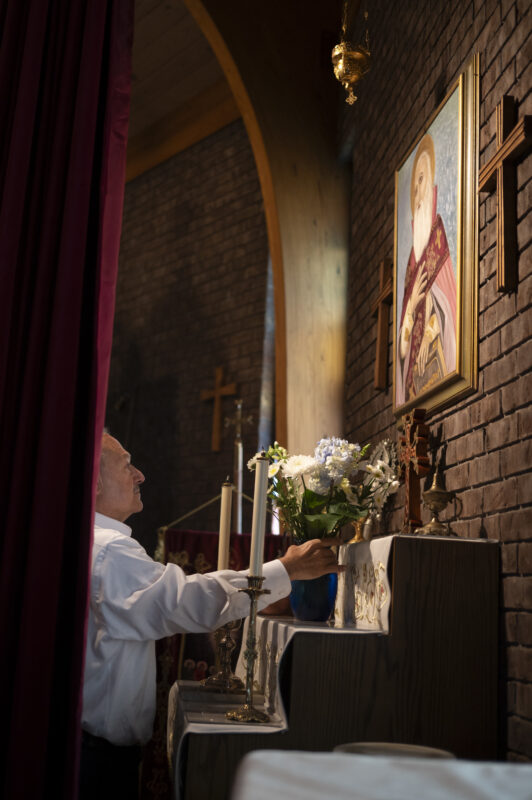
Deacon George Marifian prepares for Badarak Sunday, August 16, 2026 at Holy Virgin Mary & Shoghagat Church in Belleville, Illinois on the Feast of the Assumption (Photo by Joyce Naltchayan Boghosian)

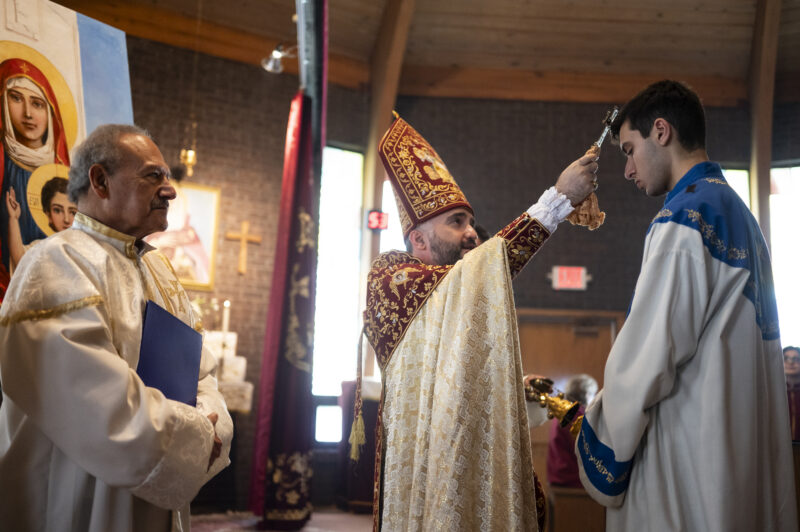
Deacon Marifian has also become a strong influence in Nareg’s life, facilitating his ordination as an acolyte by Bishop Mesrop Parsamyan on the Feast of the Assumption of the Holy Mother of God this past August.

Diocesan Primate Bishop Mesrop Parsamyan ordains Nareg Boghosian as rank of an acolyte on Sunday, August 16, 2026 at Holy Virgin Mary & Shoghagat Armenian Church in Belleville, Illinois, on the Feast of the Assumption (Photo by Joyce Naltchayan Boghosian)

What began as a cross-country drive to an unfamiliar place became something much more meaningful. We discovered that even far from home, there was a place where Nareg could feel connected to his heritage, his church and a new Armenian family.

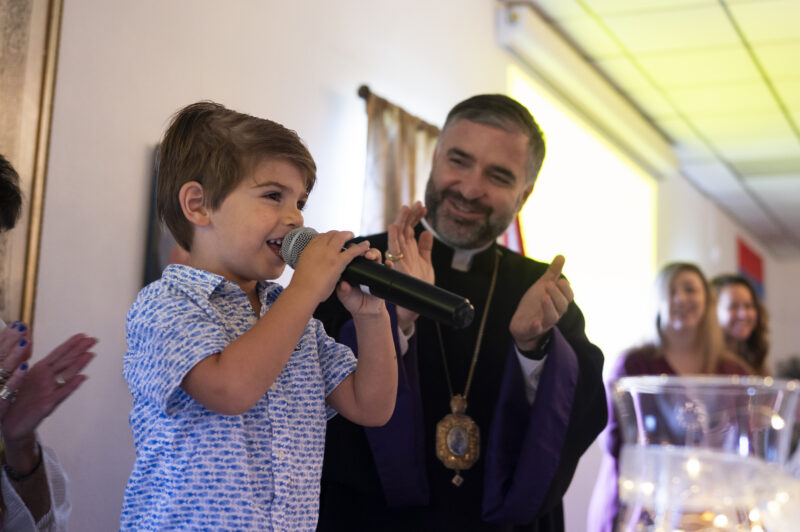
Diocesan Primate Bishop Mesrop Parsamyan presides over the Blessing of the Grapes on Sunday, August 16, 2026 at Holy Virgin Mary & Shoghagat Church in Belleville, Illinois on the Feast of the Assumption (Photo by Joyce Naltchayan Boghosian)

Nearly 50 years later, I realize that the story my father helped tell in “The Proud Armenians” is still unfolding today in communities both familiar and unexpected, in the lives of our children, and in all of us who continue to carry it forward as proud Armenians.

Joyce Naltchayan Boghosian has photographed seven sitting presidents throughout her career. Mentored by her father, award-winning Washington Post Photographer Harry Naltchayan, she currently serves as an Official White House Photographer documenting the presidency for historical record. The views expressed in this article are her own and do not represent those of the White House or the US government.

Get the Mirror-Spectator Weekly in your inbox: