
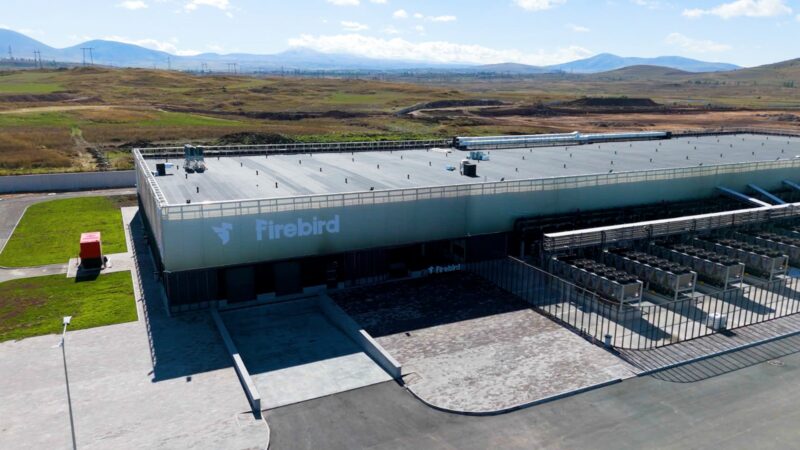
The Firebird AI factory in Hrazdan, Armenia (courtesy Firebird website)

Firebird Brings Armenia into the Forefront of Global AI

12
0

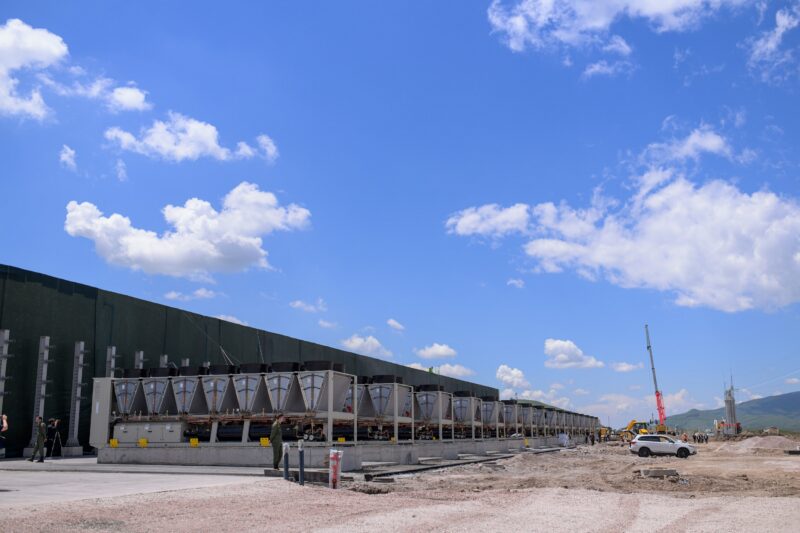
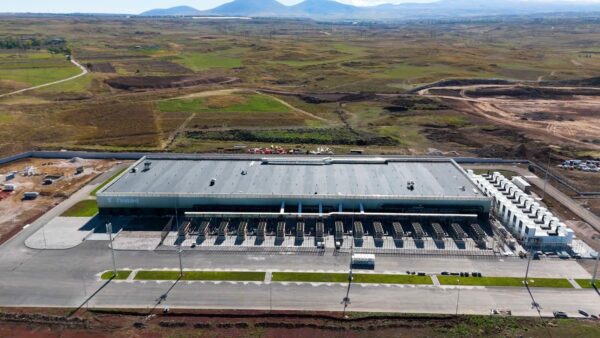
YEREVAN/HRAZDAN — As you approach the Firebird AI site in Hrazdan, you ride over uneven roads and reach a large expanse of land still raw from construction efforts. The weather is cooler than that of Yerevan, because as you travel north of the Armenian capital, though it is only a distance of some 54 km., you are also ascending to higher elevations. After you pass through a security checkpoint outside the center, you approach a huge building holding Nvidia graphics processing unit (GPU) chips, with cooling equipment extending outside. It is like a giant rectangular Amazon warehouse, but you can hear a humming or buzzing noise. Nearby, a lot of earth has been piled up from excavations as the work for a second, much larger set-up begins. Apartment buildings in the city of Hrazdan can be seen in the distance, but the Firebird complex is in an isolated area with nothing else immediately surrounding it.
The Firebird AI factory in Hrazdan, Armenia (courtesy Firebird website)

This site holds what is called an AI factory, as opposed to a traditional data center, which engages in general purpose computing. This means that the equipment at Firebird is primarily dedicated to artificial intelligence work: AI training (after data is collected for this) and inference (running AI models or products). Moreover, Firebird’s compute (computing power) is sold over the Internet.

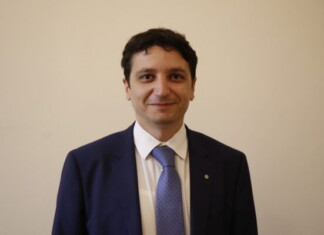
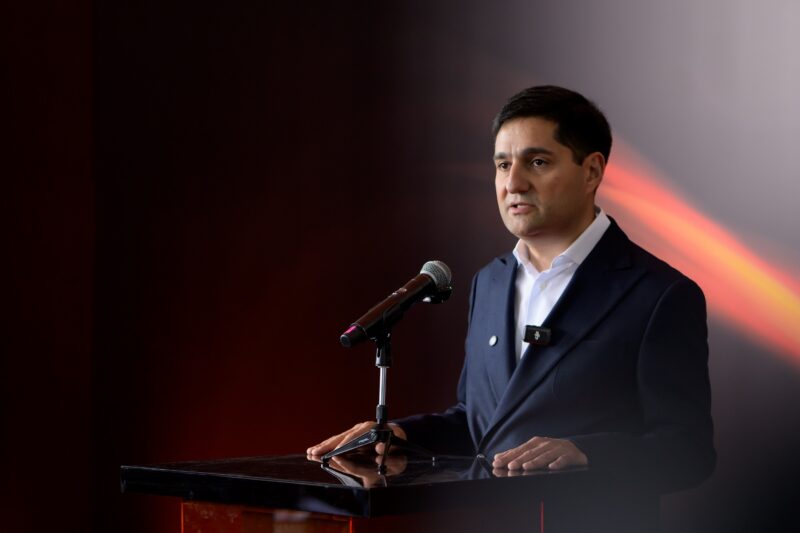
Razmig Hovaghimian (courtesy Firebird website)

Firebird CEO and cofounder Razmig Hovaghimian declared that this AI factory is per capita possibly the largest AI factory in the world and certainly already the largest in the region. It will eventually be one of the five largest AI chip clusters in the world when its second phase plans reach fruition sometime in 2027, he added. Cofounder and president Alexander Yesayan in a September 2026 press conference declared that with its three-phase expansion, Armenia would eventually rank among the top 10 countries globally in terms of relevant computing resources.
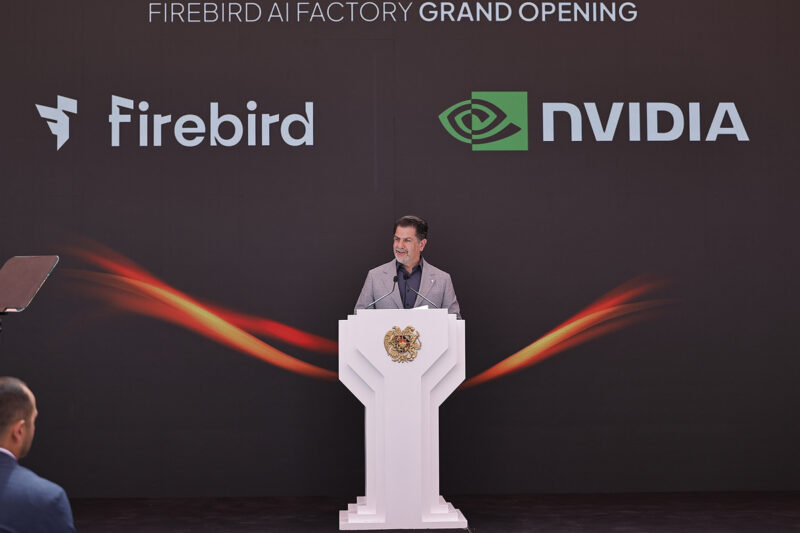
Alexander Yesayan during the visit of Minister of High-Tech Industry of the Republic of Armenia Mkhitar Hayrapetyan to Firebird on June 5, 2026 (photo by Hakob Simonyan, courtesy hightech.gov.am)

Aside from Firebird, Armenia also has a smaller-scale AI factory run by the Armenian company Eleveight AI in Gagarin (Gegharkunik Province), which opened in June 2026, with 512 advanced Nvidia chips and a power capacity of 1.5 MW. A small supercomputer and artificial intelligence center is located at Yerevan State University, using older Nvidia Hopper series chips (64 H100 computing cards) suitable for educational and scientific research and development purposes.

Firebird’s Origins and Model

Arpine Chalkian is Firebird’s chief operating officer in Armenia, which means that in addition to managing all operations currently, she is also managing the design process.

Arpine Chalkian (courtesy Firebird website)

Get the Mirror in your inbox:

Chalkian was involved in Firebird from the very start. She had worked in the field of information and communications technology, including in telecommunications (at Lycos, Orange and Ucom) since 2006. Prior to Firebird, she had worked for about ten years with Alexandr Yesayan, cofounder of Team Holdings, which operates both technology and non-technology companies. Chalkian declared that when the idea of Firebird AI emerged, Yesayan proposed that she join to help start this project together.

Vice president of Physical AI Simulation at Nvidia Rev Lebaredian at the Firebird AI grand opening on August 8, 2026 (courtesy primeminister.am)

The idea of Firebird in Armenia was finalized at the joint Digitec Expo and World Congress on Innovation and Technology (WCIT) in October 2024, in Yerevan, Chalkian related. Yesayan had been talking with Rev Lebaredian, vice president of Physical AI Simulation at Nvidia, the world’s leading supplier of hardware and software for AI and accelerated computing, about building a data center in Armenia. Armenian-American Razmig Hovaghimian, cofounder of the streaming service Viki and the news platform Ripple News, which became Hoodline, was also involved. At Digitec, the three held more extensive discussions with inventor and businessman Noubar Afeyan of Flagship Pioneering and Moderna fame. Lebaredian’s connections at Nvidia (Chalkian gave him the nickname “kavor,” which means godfather or sponsor of a wedding, due to his important role), Yesayan’s access to human resources in Armenia, Afeyan’s input as a visionary and investor (he became a founding partner), and Hovaghimian’s role of procuring off-takers (contracted buyers prior to production) came together to bring this technology to Armenia. Chalkian became involved in the discussions of how to use local resources and teams.

Noubar Afeyan, founder and CEO of Flagship Pioneering and cofounder of Moderna, is a founding partner, investor and strategic adviser to Firebird AI

Two main motivations for the project, Chalkian said, were the desire to achieve something unique and to help Armenia develop by bringing this knowledge to Armenia and from Armenia expand to reach the world. (Of course, the profit motive is also there.)

Afeyan recalled that his initial connection was around six months prior to Digitec with Hovaghimian, who knew Afeyan worked with AI at the latter’s company, Flagship Pioneering, creating a number of new AI companies every year. Crucially, Afeyan had some 20 years of experience working with the private sector and the government in Armenia, and had also worked with Nvidia in the past, so he could potentially help both with putting together a partnership with the latter as well as equity investment in a potential Armenian AI venture. Afeyan spoke with Yesayan several times in this early formative period about the same possibility. However, he confirmed that the turning point was the more extensive discussions at Digitec.

Hovaghimian, in a separate interview, recalled that during the Digitec discussions, he was thinking about energy and infrastructure possibilities in Armenia, especially with operational nuclear and geothermal sources as well as dormant plants, while Yesayan was approaching it from the fiber and telecommunications side.

Meanwhile, Nvidia’s CEO Jensen Huang, in meetings with Armenia’s Prime Minister Nikol Pashinyan, suggested that $5 million should be invested in AI for Armenia, but Hovaghimian said he thought why stop at $5 million? Why not $500 million? If they were going to build this and put Armenia on the map it had to be done at this level.

Hovaghimian said that the other part of the puzzle was if they were able to do a $500-million project, how could the US government be persuaded to give its permission for the export of the necessary technology. Firebird’s first application went in during the Biden administration, but the process moved faster after the beginning of the Trump administration. The Commerce Department began to think strategically about which markets made sense for it, Hovaghimian said.

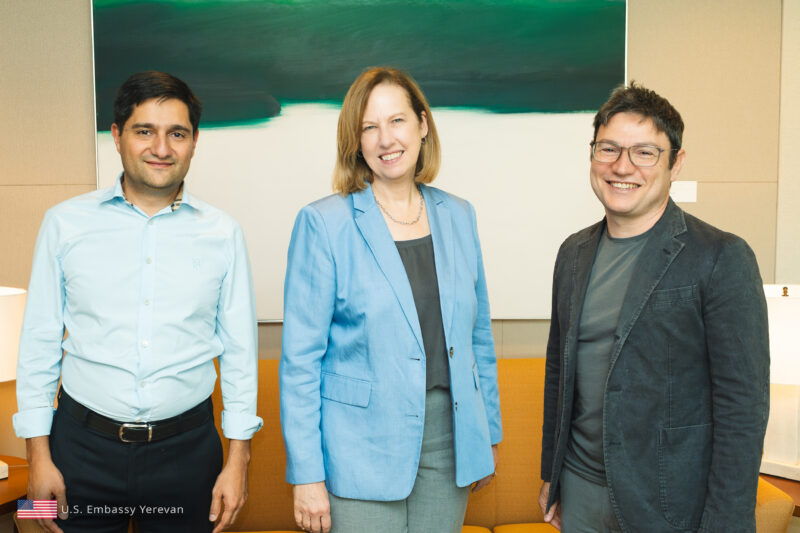
US Ambassador to Armenia Kristina Kvien meets on July 11, 2025 with US company Firebird executives Alexander Yesayan, left, and Razmig Hovaghimian, right, to discuss its plans in Armenia (photo courtesy US Embassy, Yerevan)

Afeyan praised the support of the Armenian government in this process of getting US approval.

The path for Armenian companies to obtain advanced AI semiconductor chips was paved by a Memorandum of Understanding between the US and Armenia signed on August 8, 2025. Without the geopolitical shift taking place in Armenia towards the US, this would not have been possible.

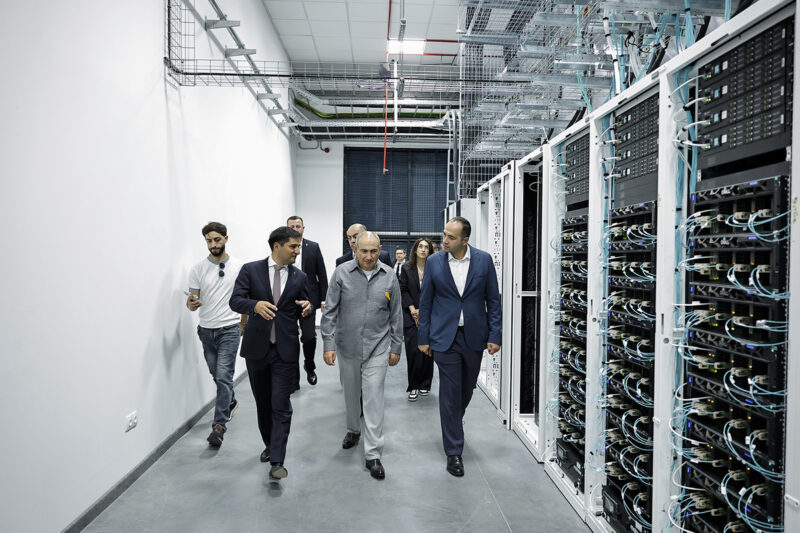
Officials tour the Firebird facility on August 8, 2026: from left, Alexander Yesayan, Nikol Pashinyan, Davit Tadevosyan (courtesy primeminister.am)

In terms of its business model, Firebird provides an alternative to traditional AI cloud companies. Both types of companies sell computing resources over the Internet (i.e. cloud services), but traditional ones are called hyperscalers, which offer all-purpose enterprise IT (storage, databases, emails, etc.) with added AI subsystems. The hyperscalers are huge companies like Google, Microsoft or Amazon that operate data centers on a global scale. Firebird’s AI factory would be considered a neocloud AI provider, which means its infrastructure (the “factory”), especially GPUs, is specialized for AI.

According to technology writer Paul Smith, the neocloud sector largely exists because Nvidia has funded it and gives its operators preferential access to the products it manufactures which are in short supply. Nvidia thus ensures a market for itself. In fact, Firebird announced in August 2026 that Nvidia itself intends to invest in Firebird.

Hovaghimian said that Firebird can provide bare metal services (meaning directly running AI workloads on dedicated GPUs without an intermediary virtualization layer, which offers greater efficiency), or it can offer virtual machines, which are basically a software layer completely isolated and protected (“ring fenced” in the AI lingo) so the client’s data is safe. Bare metal is easier to get investment-grade customers to purchase, thus helping financing the project initially, before opening up to smaller-scale customers.

For the latter customers, Firebird can provide full stack services. This means that it has set up everything from infrastructure and power all the way through the software layer and user interface. Firebird primarily uses US physical technology, including GPUs from Nvidia, Dell servers and Vertiv cooling systems. All this must be securely deployed in emerging markets like Armenia, Hovaghimian said, and operated by Firebird, itself a US-based company.

While Firebird is not therefore offering sovereign AI to countries like Armenia (i.e. it is not like the Saudi government building AI factories for Saudi Arabia and thus providing national control), it is what Hovaghimian called quasi-sovereign in that it will provide up to 20 percent of compute capacity to the local country, with perhaps 5 percent allocated to government and research universities, while another 15 percent go to local startups. The remaining 80 percent is open for sale to the rest of the world.

It may also use any unused computing power to find new applications itself to model, Hovaghimian said, which is another distinction compared to what hyperscalers do.

Hovaghimian said that the AI revolution is taking place and it needs to get decentralized to a certain extent. He said that it can’t just be in a few countries and just open to a few big companies. What Firebird is doing is thus, he said, a sort of equalizer. After understanding what is needed locally, Firebird then scales it up to bring it to the outside world and brings in foreign investment.

He said, “I think it’s a pretty unique model on multiple levels. For one, it is purely focused on the frontier markets.” It is not competing with hyperscalers for slices of the pie but is expanding the pie. In every market Firebird enters, it will be the first to set up AI supercomputing, Hovaghimian said. As first movers, Firebird works very closely with governments, both the US and the local government, and it knows how to build at industrial scale while conforming to US restrictions. Its supply chain, he emphasized, is not for the faint of heart.

Establishment and Expansion

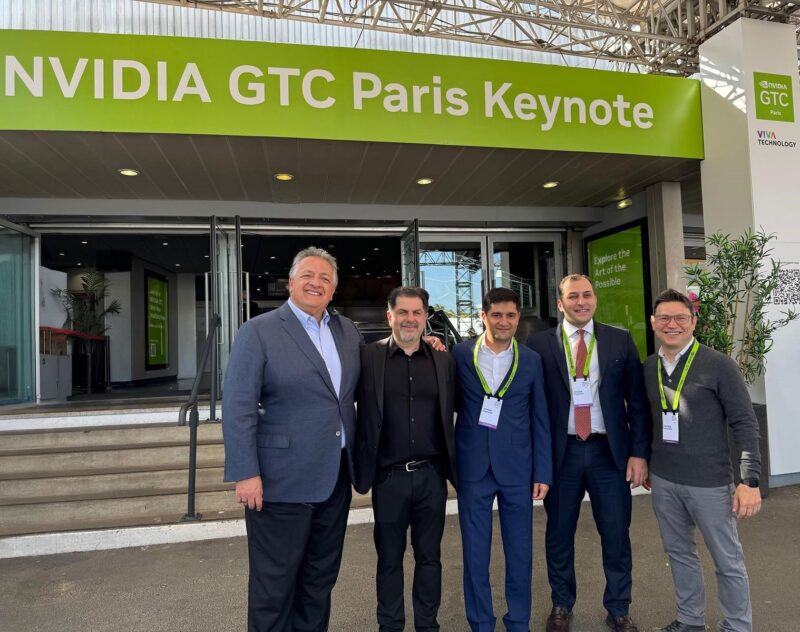
Firebird was registered in the US as a company in February 2025, headquartered in San Francisco and incorporated in Delaware. It was publicly announced at Nvidia’s GPU Technology Conference (GTC) in Paris in June 2025, and right after that, the process to register the company in Armenia began. Yesayan, CEO, became the first employee of Firebird AI, followed by Chalkian. They then began to build the Firebird team. Firebird AI Armenia was registered as a company in Armenia in August 2025.

At Nvidia’s GPU Technology Conference (GTC) in Paris in June 2025, from right to left, Razmig Hovaghimian CEO Firebird, Gevorg Mantashyan First Deputy Minister of High-Tech Industry of the Republic of Armenia, Alexander Yesayan Co-Founder Team Group and President Firebird, Rev Lebaredian Vice President at Nvidia, and Noubar Afeyan CEO of Flagship Pioneering

Firebird AI has already expanded from Armenia to a second location, Kazakhstan, where it set up a subsidiary. Each subsidiary pays taxes to the country in which it is located. It is also looking to expand to other emerging markets.

Kazakhstan is already in the design stage, Chalkian said. On October 23, Firebird announced that it has secured a US export license for 45,000 Nvidia Grace Blackwell (B300) GPUs for the first phase of its AI factory there, which is beginning construction. Launch is planned for the third quarter of 2027, and the first phase would have a capacity of 109 MW. A second future phase would create a total AI infrastructure capacity there of about 500 MW, with even greater capacities possible later.

As in Armenia, Firebird is going to allocate a percentage of its total capacity in Kazakhstan to local companies and government agencies. It will create some 130 permanent jobs, but, more importantly, as Zhaslan Madiyev, deputy prime minister and minister of Artificial Intelligence and Digital Development of Kazakhstan declared, “The real value of this investment will be measured in the companies it helps create, the productivity it brings to our industries and the opportunities it opens for our people.” It is, of course, the same for Armenia.

Hovaghimian said that one of the important contributions to the field in general that Firebird makes is its intellectual property concerning power usage, especially clean energy. One reason Armenia was an appropriate location was its geothermal and nuclear power. Similarly, it looks for access to energy in other potential locations.

Rapidly Building an AI Factory

In Armenia the earthwork for the site was started in December 2025, at the end of May 2026 the building was up; the AI factory has been operational since mid-July, when testing and commissioning equipment took place. By September, clients began to be served, Chalkian said. This is considered fairly fast, she said.

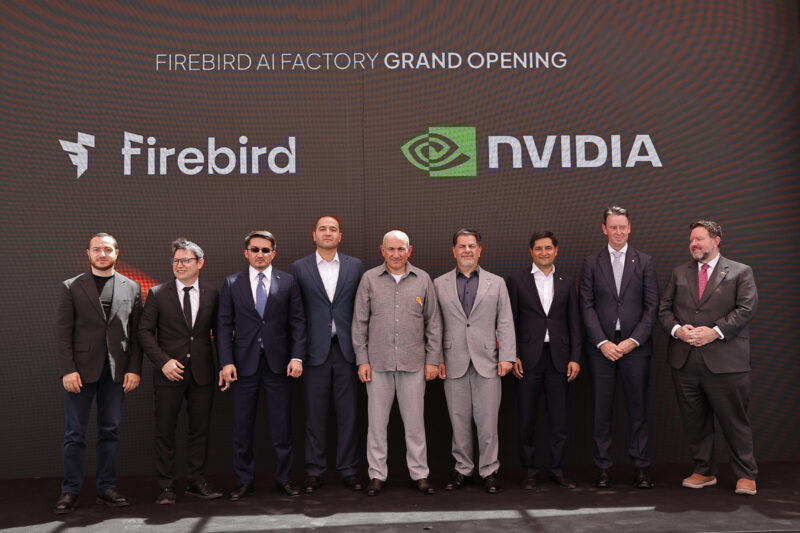
From left, prior Minister of High-Tech Industry of the Republic of Armenia Mkhitar Hayrapetyan, Firebird CEO and cofounder Razmig Hovaghimian, Deputy Prime Minister and Minister of Artificial Intelligence and Digital Development of the Republic of Kazakhstan Jaslan Madiyev, Minister of High-Tech Industry of the Republic of Armenia Davit Tadevosyan, Armenian Prime Minister Nikol Pashinyan, Vice President of Physical AI Simulation at Nvidia Rev Lebaredian, Firebird cofounder and president Alexander Yesayan, Senior Director of Global Specialty Sales (GSS) for Dell Technologies Murray Irvine, and David Allen, Chargé d’Affaires, ad interim of the US Mission in Armenia, at the official opening of the Firebird AI factory in Hrazdan on August 8, 2026 (courtesy primeminister.am)

Everything for the factory had to be imported, including electrical and mechanical equipment, and even the pipes and valves, Chalkian said. There were more than 15 contractors and subcontractors for the construction and engineering, with their own crews, all overseen by a general contractor, plus several vendors covering all the engineering systems.

After everything was set up, a 40-person engineering team continued to work round-the-clock on a shift basis to maintain operations. Including security, cleaners and other employees onsite and in a Yerevan office, at present Firebird employs 93 permanent fulltime people in Armenia.

When asked why the security was necessary, Chalkian pointed out that according to the US Department of Commerce’s Bureau of Industry and Security license, there are specific requirements on physical security, including mobile guards and checkpoints.

Yesayan in a September 2026 press conference said that in all, thousands of people are involved in the construction, design and other aspects of Firebird’s implementation.

Chalkian emphasized that while much of the conversation focuses on challenges such as power availability, cooling infrastructure, and environmental considerations, what matters most to her is the hundreds of people who have worked tirelessly, around the clock, to bring this project to life — and the remarkable can-do spirit that made it all possible.

The full capacity of the Firebird AI factory at present has already been sold, Chalkian said. According to a CivilNet interview with Yesayan, 95-97 percent of its customers are based outside Armenia at present.

The Ministry of High Tech Industry and Artificial Intelligence of the Armenian government also has a contract with Firebird AI for five years at $5 million yearly, which is at a somewhat discounted rate, Chalkian said, to use AI compute internally or give to various startups, educational institutions and researchers. The ministry is working to decide how to distribute this computing power.

The Armenian government is not, however, an investor in Firebird AI, though it has expedited permits and provided some exemptions from customs duties. All the money invested so far has been raised by Firebird as equity plus loans, Chalkhian said. According to Yesayan, the US equity investors included Armenian Americans (e.g. Afeyan), while debt financing was raised locally, including from Armenian banks.

Six Armenian banks and asset management institutions provided $300 million of loan financing in March 2026, including Fast Bank, Ardshinbank, ACBA Bank, Evocabank, C-Quadrat Ampega Asset Management Armenia, and Amundi-ACBA Asset Management Fund. Ameriabank separately in the same period provided $60 million in further financing.

The total raised for Firebird’s phase one is approximately half a billion dollars.

At present, Firebird Armenia operates at a 12 MW IT load, and the next phase will have 280 megawatts, which makes the total load almost 300 MW, Chalkian said. Right now Firebird is using Nvidia B200 chips, but Firebird also received approval, announced at a February 2026 press conference during an official visit of US President JD Vance to Armenia, to get Nvidia’s B300 chips for the second phase in Armenia. Firebird hopes to get an even more advanced technology, Nvidia’s Vera Rubin architecture, for Armenia.

The February 9, 2026, visit of US Vice President JD Vance, at left, with Armenian Prime Minister Nikol Pashinyan at which the approval of export of Nvidia B300 chips to Armenia was announced (primeminister.am)

Yesayan in his September 2026 press conference announced that phase two, to be launched within two years, will include 45,000 GPUs and raised the estimate of the cost from $4 billion to $7-8 billion. He estimated an annual turnover of at least $2 billion after phase two launched. A third phase is planned which will add another 60,000 Vera Rubin GPUs, for a grand total of over 100,000 GPUs.

The lifespan of the Nvidia chips is roughly five to eight years, Chalkian said. If a company like Firebird wants to buy more advanced technology to replace them, it would have to apply to the US for a new license.

Ripple Effects in Armenia

Some of the benefits to Armenia from the building of the AI factory in Hrazdan includes the construction jobs and permanent staff positions created, and the tax revenue flows to Armenia. Hovaghimian declared, “That’s why, before we even launched, we already were one of the top 10 taxpayers in the country.”

The ripple effect included contributing to the upgrading of Moody’s credit rating of Armenia to positive from stable on July 28, 2026, Hovaghimian said. Moody’s cites the investment in creating Firebird’s AI center as a contributory factor.

In addition, Firebird is planning to help the Hrazdan community develop through other projects. It is working at present with the United Nations Development Programme (UNDP) on the latter’s community development program, Chalkian said. It is working with the TUMO Center for Creative Technologies to see if the latter can open up a site in Hrazdan and its surrounding areas. Firebird is exploring together with the Armath Engineering Laboratories, an initiative of the Union of Advanced Technology Enterprises (UATE), to see if there might be a need for an engineering college in Hrazdan under the Firebird umbrella.

Up to 20 percent of Firebird’s capacity will be reserved for local Armenian companies to help develop the local technology sector. With most compute reserved at present for outside usage, as noted above, the local allocation presumably will increase over time.

One part of this is through Firebird Labs, an effort of the company to invest directly in and incubate local startups in Armenia in four fields: AI for the environment — environmental research, robotics and physical AI, life sciences, and space. Hovaghimian said, “We’re building an ecosystem so all these companies can grow and keep hiring and increase the size of the pie.” He noted that in building these new models for life sciences, Noubar Afeyan is an expert, Rev Lebaredian in robotics, and there are many other experts worldwide who may be brought in.

As integral to these efforts, Hovaghimian stated that at the end of September Firebird, with OpenAI as a partner, held the largest hackathon in the country, with over 200 teams applying from Armenia, Georgia, the UAE, Sweden and various other countries to explore AI applications in the four fields Firebird Labs focuses on. It was organized by the Union of Advanced Technology Enterprises. Hovaghimian said that now we could imagine people coming to work and create in Armenia because of the availability of computing capacity. He said that he spoke with his former Stanford professor about PhDs there fighting over 2 GPUs. Imagine if there are thousands available, and what that would mean for Armenia, Hovaghimian posited.

He added, “Just having that kind of availability and building this bridge between Silicon Valley and Armenia, I think is a good thing. So this is not just about compute — it’s also about our access from the diaspora (and Boston in the case of Noubar). As this company scales [up], you have access [and] growth. The same is true for every market.”

In the US and globally, concerns have risen about the effects of AI factories and data centers on the environment and resources, including the large amount of energy they require to operate. Armenia, and in Firebird’s case, Hrazdan, has some natural advantages in this arena.

Hrazdan was an industrial city during Soviet times, and a crossroads of power generation since all the main electric power lines go through Hrazdan. Hrazdan contains Armenia’s largest thermal power plant, and the Hrazdan Hydroelectric Plant, one of seven such plants in the Sevan-Hrazdan Cascade. Its energy infrastructure was one reason Firebird chose to locate its center there. In addition, Hrazdan enjoys a cooler climate which is more energy efficient for heat-producing AI factories than warmer regions.

Cooling equipment outside the main building at Firebird, June 5, 2026 (photo by Hakob Simonyan, courtesy hightech.gov.am)

At present, Chalkian said, there is more energy produced in Armenia than Firebird needs. She said that means that with the first phase, Firebird is actually helping the country by using the surplus energy. For the second phase, she said that Firebird is in discussions with the national government about all possible resources, as this cannot be done without state help. She said that the country does have additional potential energy resources, including power plants that are not at present operational.

Hovaghimian observed that in particular, there is a lot of solar energy capacity, perhaps over a gigawatt’s worth, in Armenia, though there are some operational restrictions at present. Some of these could be removed through developments in battery technology. Nuclear energy may also increase, if there is a second reactor put into operation, he said.

Data centers create noise pollution, which is a kind of humming sound. However, the Firebird center is about 1.5 kilometers from the city in an undeveloped location, and at least during this author’s visit, the sound appeared to dissipate rapidly as one left the Firebird site.

Another concern for data centers is the need for a large amount of water for cooling purposes. In Firebird’s case, Chalkian said that a closed loop is used for the cooling system, meaning that it is filled once, and then will operate without additional fluid for up to eight years.

As far as the effect that the current backlash against AI data centers in the US might have on Firebird, Afeyan speculated that it could actually work to the benefit of AI factories abroad in places like Armenia, which could then be in a sense playing a more prominent role if less capacity would be created in the US.

When asked how long Armenia’s advantage in AI might exist if other countries in the region build their own data centers or factories eventually, Chalkian said that while other countries might build AI infrastructure, they need to be sure first that they will be getting clients. She pointed out this is not a kind of ice cream factory that you just build and then sell your product. It is not that easy to line up AI compute clients.

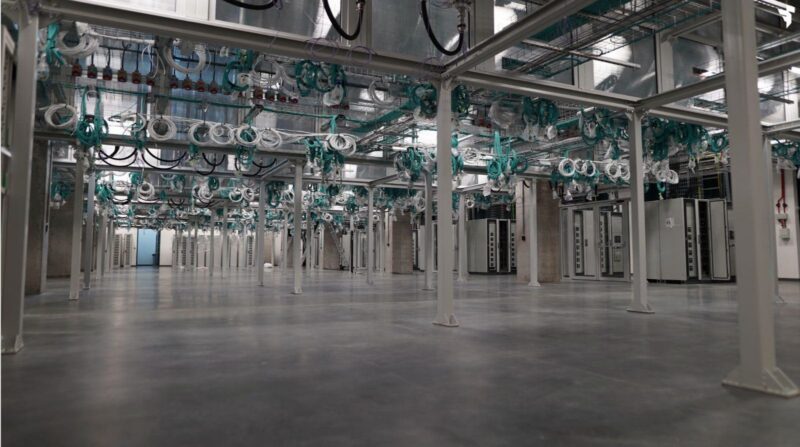
Furthermore, these centers are not that easy to build, she said. There are many countries which lack the electrical power, for example, she said. Just constructing the building with the engineering required is a difficult task. For example, she said, the Firebird project involved pulling on over 100,000 meters of cabling and installing pipes during an awful snowy winter.

Interior of Firebird AI factory with cables for power distribution panels (courtesy Firebird website)

Finally, Chalkian noted that the United States does not grant export licenses for advanced technologies to every country, as such decisions are subject to national security and foreign policy considerations

Nvidia’s Lebaredian summed up the hopes for Firebird AI’s endeavors when he declared in April 2026, during the announcement of Firebird’s five-year contract with the Armenian government: “The goal of this initiative is to bring the country to the global forefront by leveraging the power of AI supercomputing. The deployment of high-performance computing resources in the first phase will enable Armenia to reach the level of countries such as Germany, and by the end of the year, with the completion of the second phase, the country is expected to rank among the world’s top five in terms of total computing capacity. This infrastructure, built through effective collaboration between the public and private sectors, will give Armenia capabilities and productivity comparable to countries with populations in the billions.”

Get the Mirror-Spectator Weekly in your inbox: