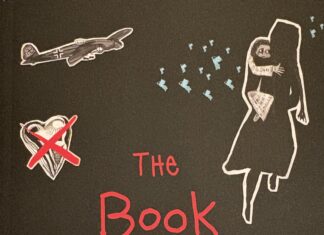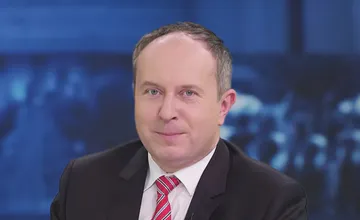

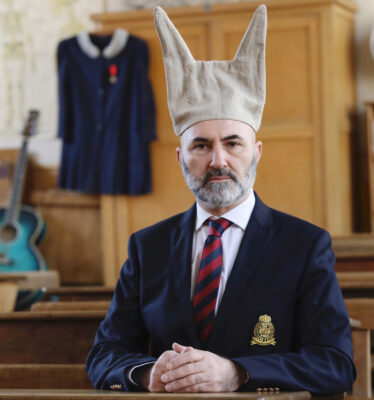
YEREVAN-PARIS — Vincent Baguian (born Pambaguian, in 1962 in Saint-Ouen) is a French singer, songwriter and author of Armenian origin. He began his professional life at the age of 18 as a courier in an advertising agency, eventually becoming a creative copywriter and working notably on campaigns for albums by Serge Gainsbourg. At the same time, he pursued his own musical career, recording his first album, “Triste,” in 1991, followed by “Pas mal” in 1996 and the acclaimed “Mes chants” in 2000, known for its mixture of poetry, irony and wordplay. His later album, “Ce soir, c’est moi qui fais la fille” further demonstrated his distinctive approach to songwriting. Baguian has also collaborated closely with singer Zazie, performing duets with her and participating with her in the musical tale “Sol En Cirque”. His songwriting talents have extended to artists such as Anggun, Florent Pagny, Marjolaine Piémont, as well as to major French musical productions including “Mozart l’Opéra rock,” “1789 Les Amants de la Bastille,” “Mistinguett reine des années folles,” “La légende du Roi Arthur” and “Le Rouge et le Noir.” He has written the novels Émile Titan: Operation Salicorne (2020) and Émile Titan: Ten Days to Save Paris (2023), written for young readers (co-authored with Baptiste Vignol), and Let Him Who Has Never Killed Throw the First Stone at Me (2023).
Vincent, I first heard about you from songwriter Arlette Kotchounian in 2018 and since then I have followed your artistic activities. You began your professional life in advertising and became a copywriter before developing your career as a singer and songwriter. What made you leave that world and devote yourself fully to music?
I worked in advertising primarily to earn a living, but it wasn’t my passion; I wanted to be a singer. That said, I learned a great deal in the field, conceiving over 120 commercials directed by major filmmakers like Patrice Leconte, Michel Blanc, Jean-Marie Poiré, Etienne Chatillez… I also spent a lot of time in the studio. I also spent a lot of time in the studio producing music for commercials or recording radio spots, experiences that kept me close to my passion. Then, I was hired to create advertising campaigns for major artists like Serge Gainsbourg, Billy Idol, Calogero… This brought me into contact with record labels and gave me insight into how the industry works. I signed up for a internship organized by the renowned French artist Francis Cabrel and was selected. Subsequently, Francis Cabrel and a producer named Richard Seff decided to sign me to their label. For a time, I continued working in advertising while performing on stage, but once I was hired to write musicals that became major successes, I was able to leave the advertising world behind.
Your songs are known for their poetry, irony, humor and particularly their wordplay. What attracts you most to playing with words, and how do you find the balance between humor and deeper emotions in a song?
Everything began with a double problem. First, I grew up in a family where little attention was paid to child’s feelings. Doing well at school was the main priority.
So, at the age of 12, I started writing songs to make myself heard. I got into the habit of saying exactly what I think in my songs which may be what stirs up emotion: that deep connection to who I really am. The second issue is that I’m dyslexic. In my head, I break words down and mix up expressions hence the wordplay. And there’s certainly an element of Armenian culture involved, too. We don’t complain; humor is a form of courtesy, a way to avoid burdening the person you’re talking to with serious problems.