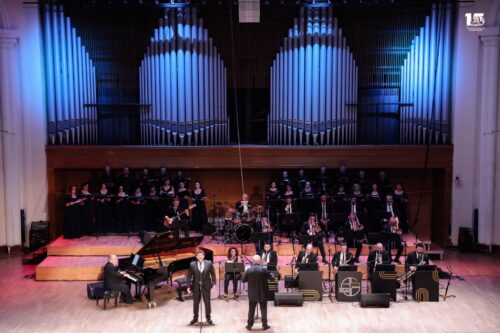


One of the performances

Konstantin Petrossian’s Anniversary Concert Was a Cultural Event and Musical Phenomenon

16
0

Not every concert becomes a cultural event, nor can every musical evening transcend the boundaries of the concert hall and exert a lasting influence on the cultural life of society. Such events are distinguished not only by the excellence of their performances but also by the artistic substance, historical significance, and cultural value that allow them to become part of the collective memory of an era. The anniversary concert of Konstantin Petrossian, Honored Artist of the Republic of Armenia, composer, conductor, and pianist, held on September 28 in the Great Hall of the Aram Khachaturian Concert Hall, was undoubtedly one such occasion.
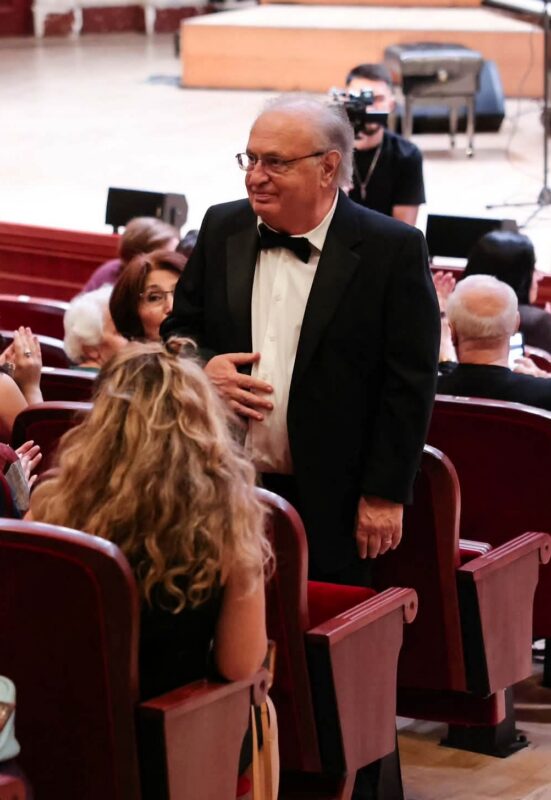
Konstantin Petrossian at the concert

Petrossian’s artistic achievements and longstanding creative career have received widespread recognition in Armenia and the United States. His contributions have been honored with prestigious state awards. On the occasion of the anniversary concert, Aram Satyan, President of the Composers’ Union of Armenia, presented the composer with the Union’s Gold Medal. In her welcoming address, Anna Asatryan, Director of the Institute of Arts of the National Academy of Sciences of the Republic of Armenia and a distinguished musicologist, likewise reflected on Petrossian’s artistic achievements and creative legacy, characterizing them as a distinctive cultural phenomenon. These tributes acknowledged not only the significance of his individual accomplishments but also his distinctive place in Armenian musical culture. A message of congratulations and appreciation from the editorial board of the Armenian Musical Encyclopedia was also delivered from the stage. The evening was hosted by the beloved television presenter Karen Kocharyan.
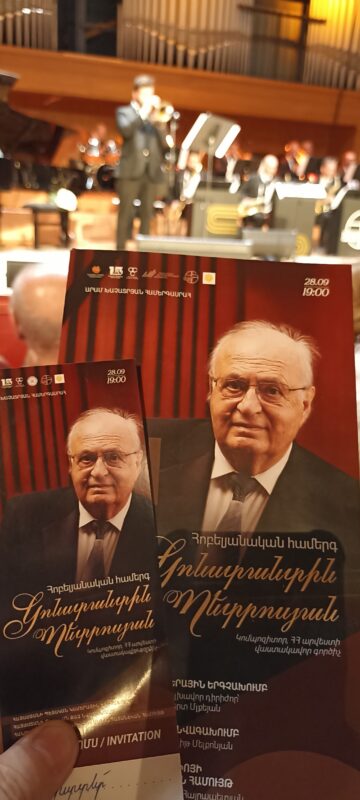
Brochures for the event

The anniversary concert brought together leading ensembles and soloists representing the breadth and vitality of Armenia’s musical and performing arts. Among the participants were the State Chamber Choir of Armenia, conducted by Robert Mlkeyan, People’s Artist of the Republic of Armenia; the State Jazz Orchestra of Armenia, under the direction of David Melkonyan; and Arevik, the Public Radio of Armenia’s children’s and youth ensemble, led by Vahe Hayrapetyan. They were joined by Sofia Melkumyan and Tigran Hakobyan, soloists of the National Opera Theater; jazz vocalist Anna Vardazaryan; saxophonist David Melkonyan; trumpeter Daniel Melkonyan; and virtuoso flutist Nelly Manukyan. This remarkable constellation of performers endowed the concert with exceptional artistic breadth and symbolic significance, bringing together different generations, musical genres, and artistic sensibilities on a single stage.

The program’s stylistic and generic range was particularly striking. Moving from academic choral music to jazz compositions, from spiritual works to patriotic songs, it revealed both the stylistic diversity of Petrossian’s oeuvre and the underlying unity of his artistic vision. The evening featured premieres, new arrangements, and performances of a high artistic and technical standard, offering a multifaceted portrait of the composer’s creative world.

Of particular significance was the premiere of the folksong cycle Native Bells, arranged for mixed choir. These arrangements demonstrated Petrossian’s ability to preserve the distinctive character of Armenian folk melodies while reimagining them within a richly developed polyphonic texture. Rooted in a profound respect for the Komitas tradition, the works also reflected the composer’s individual creative voice and his commitment to sustaining the living continuity of Armenia’s musical heritage.

One of the evening’s highlights was the first performance on an Armenian stage of Petrossian’s celebrated “Concerto for Voice and Jazz Orchestra.” In previous decades, the work had been performed in numerous countries by the legendary jazz vocalist Tatevik Hovhannisyan and the Vilnius Conservatory Big Band, conducted by Vladimir Chekasin. On this occasion, the solo part was entrusted to the talented Anna Vardazaryan, daughter of the renowned composer Martin Vardazaryan.


Get the Mirror in your inbox:

Conducted by Konstantin Petrossian and performed by the State Jazz Orchestra of Armenia, the concerto emerged as a compelling synthesis of jazz expression and elements of Armenian sacred musical tradition. Its intricate harmonic language, diverse compositional techniques, and richly layered orchestral texture formed a cohesive artistic whole. Bringing this complex work to life demanded not only technical virtuosity but also a refined understanding of style, expressive nuance, and the delicate balance between solo voice and orchestra.

The program also included magnificent variations for flugelhorn and orchestra, alongside two of Petrossian’s best-known jazz compositions, Gyumri and Garni. The latter has, for decades, served as one of the signature works associated with the Armenian State Estrada Orchestra under the direction of Konstantin Orbelyan, becoming an enduring part of the ensemble’s artistic identity.

Another noteworthy moment was the first performance of Petrossian’s Vocalize in a mixed-choir arrangement. The interpretation brought to light the work’s distinctive timbral qualities and polyphonic possibilities, demonstrating how a new performing context can reveal previously unexplored dimensions of a composition.

The song Our Lady, imbued with spiritual solemnity and set to words by Archbishop Nerses Pozapalyan, was performed by Sofia Melkumyan, the young soloist of the National Opera Theater. Her interpretation brought a distinctive sense of intimacy and reverence to the work, enriching the concert’s spiritual and emotional dimension.

The academic portion of the program concluded with the stirring patriotic chorus Azg Haykazyan, set to words by Gevorg Karapetyan. The work transformed the evening’s artistic momentum into a powerful affirmation of national identity, collective memory, and cultural belonging.

The participation of the Arevik ensemble occupied a special place in the concert’s emotional landscape. Its performances of Chocolate Clock and Space, both set to lyrics by Aramayis Sahakyan, evoked childhood memories shared by several generations of listeners. These familiar songs brought the passage of time and the continuity of human experience into particularly vivid focus. Their inclusion underscored one of the defining qualities of Petrossian’s music: its ability to transcend generational boundaries and draw listeners of different ages into a shared emotional world.

The concert culminated in Konstantin Petrossian’s iconic and much-loved song Armenia, with lyrics by Nansen Mikaelyan. Accompanied by the choir and orchestra, Tigran Hakobyan, a young soloist of the National Opera Theater, delivered a performance of great solemnity and emotional intensity. Having long since transcended the boundaries of an individual composer’s oeuvre, Armenia has become part of the nation’s collective musical memory. Its performance united the stage and the audience in a shared expression of emotion, bringing the anniversary evening to a powerful and fitting conclusion.

The significance of the concert, however, extended far beyond the celebration of Konstantin Petrossian’s anniversary or a retrospective assessment of his creative career. The packed hall, the participation of performers from different generations, and the audience’s evident engagement with the works on the program all testified to the continuing relevance of his music. Petrossian’s artistic language cannot be confined to a single period or genre. It brings together the structural and expressive traditions of academic music, the freedom and improvisational spirit of jazz, the melodic richness of Armenian musical culture, and the profound resonances of its spiritual heritage. From this synthesis emerges a distinctive musical idiom capable of speaking to audiences across generations.

Perhaps the enduring appeal of Konstantin Petrossian’s music lies in its ability to transcend time. Bridging the twentieth and twenty-first centuries, his works have retained their vitality, continuing to engage new generations while remaining deeply rooted in Armenian cultural identity. They do more than evoke the past: they remain active participants in the musical life of the present, acquiring new interpretive dimensions through successive performances and reaching new audiences in the process.

The anniversary concert of September 28 offered compelling evidence of this continuity. It reaffirmed Konstantin Petrossian’s place as a significant figure in Armenia’s musical life and demonstrated the enduring resonance of his artistic legacy among Armenians both at home and around the world. More than a commemorative evening, the concert became a celebration of national musical heritage, a testament to creative continuity, and a meaningful dialogue between generations. It also demonstrated how an individual composer’s oeuvre, shaped by diverse musical traditions yet grounded in a distinct cultural identity, can transcend the concert hall to become a living phenomenon within the broader cultural consciousness.


Get the Mirror-Spectator Weekly in your inbox: