

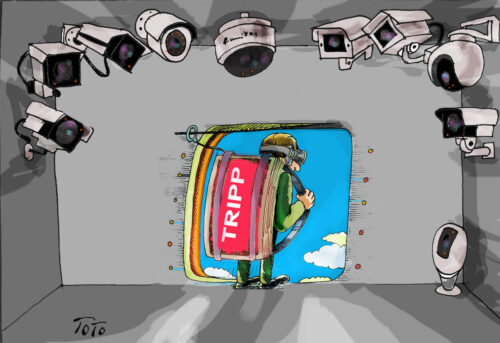
Last week, Iranian Foreign Minister Abbas Araghchi visited Yerevan to participate in the 17th Conference of the Parties to the UN Convention on Biological Diversity (COP17). During a brief exchange with journalists, he made a particularly interesting statement about the Trump Route for International Peace and Prosperity (TRIPP).
Araghchi stated that Iran is concerned about any US presence in the region but trusts Armenia and is confident that Yerevan will not take any steps that threaten Tehran’s security. “We do have concerns about any US presence in the region and around us. However, we are in close contact with our Armenian friends on this issue and trust them. We know that they are not taking any steps against Iran’s security,” Araghchi stated. On the one hand, this serves as a warning to Armenia not to take any steps that could run counter to Iran’s interests.
On the other hand, however, it may signal a certain softening of Tehran’s position. Whereas Iran previously categorically opposed the implementation of the project, it now appears to be prepared to make some concessions. In July, Iran’s ambassador to Armenia, Khalil Shirgholami, urged the Armenian side to establish mechanisms to manage potential risks associated with TRIPP, recalling Yerevan’s assurances that the project would not threaten Iran’s security.
In September, Shirgholami again raised the issue of a US presence along the Armenian-Iranian border and proposed establishing a mechanism for regular consultations between Yerevan and Tehran on TRIPP. In August, Armenian Prime Minister Nikol Pashinyan stated that the project does not envisage any foreign military or armed presence.
Iran’s softened position could mean several things. First, Tehran may seek to include TRIPP in a broader package of negotiations with Washington. US officials understand that Iran could take any measures it considers necessary to ensure its security, including on the territory of third countries. This may be one of the reasons why construction has not yet begun on the Armenian section of the project.
At the same time, it cannot be ruled out that Iran may eventually seek to participate in the project in some form or through some arrangement. The idea that Iran and the United States will eventually have to sit down at the negotiating table seems almost inevitable. However, neither country can fully trust the other. Iran considers the war unfinished, and the United States may also view the current ceasefire as temporary, with military operations potentially resuming at any time.