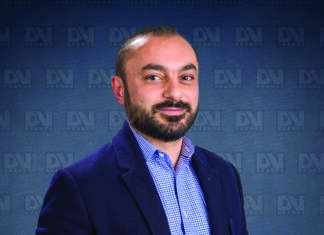


Atom Mkhitaryan, Education Expert

By Irina Atanyan

Special to the Mirror-Spectator

YEREVAN — There is a generally accepted view that the Armenian educational system is very strong and produces thousands of strong graduates each year. The data, however, is undermining that assumption, showing gaps in understanding, analyzing, and applying knowledge in real-life situations.

For the first time, Armenia participated in the Programme for International Student Assessment (PISA) in 2025. The study, conducted from March to May 2025, involved around 7,000 students from 295 schools. PISA assesses the knowledge and skills of 15-year-old students in reading, mathematics, and science, focusing not only on their textbook knowledge but also on their ability to apply that knowledge in different situations.

The data showed that Armenian students performed poorly across all three areas. In reading, around 19 percent of Armenian students reached the minimum Level 2 proficiency, compared with an international average of 69 percent. In mathematics and science, the corresponding figure in Armenia was 28 percent, compared with an international average of 65 percent.

These results do not mean that all Armenian schoolchildren are lacking in their reading or writing abilities. PISA measures functional literacy — the ability to understand text, find relevant information, draw conclusions, distinguish facts from opinions and apply knowledge in practical situations.

Get the Mirror in your inbox:

When presenting the PISA results, Minister of Education, Science, Culture and Sports Zhanna Andreasyan noted that the results had been expected.

“These results were expected for us. We consider them a baseline indicator. The reason is that most of the children who participated in PISA had studied under the old curriculum. The new curriculum was introduced fully in their schools later, and they had studied under its framework only during the final months. Therefore, the impact of the new curriculum will become clearer in the 2029 PISA assessment,” Andreasyan said.

But the problem is not limited to the new standards and curriculum. If a child does not properly learn to read, understand what they have read, and express their thoughts clearly in primary school, understanding more complex material later becomes more difficult.

According to education expert Atom Mkhitaryan (an expert at the International Scientific-Educational Center of the National Academy of Sciences of Armenia and a former trainer for the Council of Europe and expert for the European Union’s Erasmus+ program), the low PISA results cannot be explained solely by the fact that students studied under the old curriculum; the problem is broader.

“For a long time, our education system has been dominated by an approach based on memorization and reproduction of material. A child learns the material and reproduces it, but is not always able to understand its meaning or apply it in another situation. In other words, we should ask not only, ‘What does the student know?’ but also, ‘What can the student do with what they know?’” Mkhitaryan notes.

Mkhitaryan points out that the problem does not lie solely with teachers or students. It is also influenced by teaching methods, textbooks, the assessment system, teachers’ preparation and workload, as well as the socioeconomic conditions of schools and families.

“This is a systemic problem. These factors are interconnected, and when one link in the chain does not work, its consequences become visible in students’ results,” the education expert emphasizes.

At the same time, the picture in primary education is not uniformly negative. According to the TIMSS (Trends in International Mathematics and Science Study) 2023 results, Armenia’s fourth-grade students scored an average of 513 points in mathematics on a 0–1,000 scale, above the international average of 502. In science, their average score was 457 points on the same scale, below the international average of 494.

According to Atom Mkhitaryan, the TIMSS and PISA results do not contradict each other because they assess different age groups and different sets of skills. Relatively strong performance in primary school does not necessarily mean that this knowledge will later develop into the ability to solve more complex problems, analyze information, and apply knowledge in new situations.

One of those links in the chain can already break down in primary school.

Some third-grade children still struggle to read and write. If a child has difficulty reading and understanding simple text at that age, they will have to spend subsequent years filling that gap instead of acquiring new knowledge.

“The issue is not simply whether a child is promoted to the next grade. Gaps need to be identified in time, and the child needs to receive support. Schools should not wait until assessments such as PISA show that there is an educational problem. Early identification needs to be strengthened, and individualized instruction should be introduced. Assessment should not merely record whether a child has moved on to the next grade; it should show which skills the child has acquired, which they have not, and what support is needed to move to the next stage,” Mkhitaryan explained.

Lack of Schooling

Mkhitaryan also drew particular attention to children who do not attend school.

“Many school-age children simply do not attend school. They have been left outside both PISA and the attention of schools and the relevant authorities,” he notes.

In response to an inquiry, the Ministry of Education, Science, Culture and Sports (MESCS), said that as of January 2026, 10,441 children who were subject to compulsory education were outside the education system. According to them, the main reasons for children remaining outside compulsory education are socioeconomic.

At the same time, the ministry said there are no significant concentrations of such children in particular communities.

The ministry also said that a procedure established by a 2021 government decision is in place to identify children who are not attending school and refer them for appropriate support so that their right to education can be restored. Under the procedure, guardianship and trusteeship bodies, the Unified Social Service and local administration bodies are involved in working with children and their families. Representatives of the Ministry of Internal Affairs may also become involved when necessary.

Even for children who do attend school, however, teachers have limited time. In a 45-minute lesson, when a classroom may have 25–30 students, it is difficult to cover the required material, listen to each child, understand their difficulties, and make sure everyone has understood the lesson.

“If the goal is simply to deliver the material and hear from a few students, it is possible to manage within the time available. But if we want each of the 25–30 students to read, think, ask questions, discuss, justify their views, and apply what they have learned, 45 minutes is quite a limited amount of time. However, I would not see the problem as being only about the length of the lesson. More important is how that time is organized. Modern teaching does not mean that the teacher should speak for 45 minutes while the students listen,” he said.

He added, “At the same time, individual work is genuinely more difficult in large classes. Therefore, we need to discuss optimal class sizes, teachers’ workloads, teaching methods, and additional professional support.”

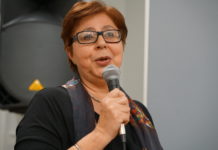
Ani Apitonyan

Private Tutors

Many parents today send their children to private tutors to make up for material they have not managed to cover at school or to help them perform better. According to the education expert, the widespread use of private tutoring may also indicate that some parents do not have sufficient confidence in relying solely on school education.

“Of course, not all cases are the same. Some parents send their children to private tutors so that they can perform better, prepare for an Olympiad, or get ready for an exam. But if a child attends private lessons simply because they cannot understand the school curriculum without them, then there is a problem. If a parent believes that without additional paid assistance their child cannot learn what they are supposed to learn at school, it means the school is not fully providing the support the child needs,” he said.

“This is also an issue of inequality. Families that can afford private tutoring have an opportunity to fill their children’s educational gaps, while other children are left dependent solely on the school’s resources. The quality of school education should be raised so that private tutoring is a choice, not a necessity,” Mkhitaryan emphasized.

The work experience of private English teacher Meri Grigoryan also shows that children often turn to private tutoring to fill educational gaps. According to her, many students have not properly mastered the basics of English: they struggle to read, have a limited vocabulary or are afraid to speak. Some children, even after studying English for several years, are unable to independently understand or form simple sentences, she said.

“Parents usually contact me when they see that their child is struggling to keep up with the school curriculum. During private lessons, we can work with the child individually and identify exactly where they are having difficulties. Many parents themselves do not know enough English to explain the material to their children or help them with homework. There are also parents who do not have enough time because of work and daily responsibilities, so they turn to a specialist,” Grigoryan said.

According to her, around 10 years ago, children’s foundational knowledge was, in some cases, stronger, and they were able to concentrate on lessons for longer periods. Today, children’s attention is shorter.

“Today, children’s attention shifts very quickly from one thing to another, so more engaging and modern methods are needed. But it is possible to work effectively with these children as well; we simply need to find the right approach for them,” she notes.

Psychologist Ani Apitonyan also addressed this changing environment. According to her, children today learn not only at school and within the family, but also online and through various information environments.

“Today’s child learns not only at school and within the family, but also through various online and information environments, where they interact with numerous sources at the same time and receive large amounts of information quickly. The education system needs to study this environment and understand the conditions in which children’s attention and interests are formed. Reforms, meanwhile, should be based on facts and research,” Apitonyan said.

In these conditions, turning to private tutors also has psychological reasons.

“When a parent does not have the necessary knowledge or time, they turn to a specialist. In some cases, this is also done because the parent wants to preserve their relationship with the child. If a mother has to become her child’s teacher every day and the child does not complete the assignments, this can create tension in their relationship,” Apitonyan noted.

This issue is also connected to the way homework is organized in Armenia.

“The educational process continues at home as well, but the main work should be done at school. At home, a child should have relatively short and clear assignments. When much of the work intended for school is moved into the home, the parent is forced to take responsibility not only for the child’s upbringing but also for their education,” she stressed.

In such circumstances, the parent’s role changes. They are no longer simply monitoring the child’s education but must explain, assist, and supervise. According to Apitonyan, boundaries are also important here.

“Parents should be informed about their child’s progress, setbacks, behavior and difficulties. They should participate in school life and take an interest in their child’s education, but boundaries must also be maintained. A parent is not a teacher. If they completely take on the teacher’s role at home, this can lead to conflicts between the child and the parent,” she said.

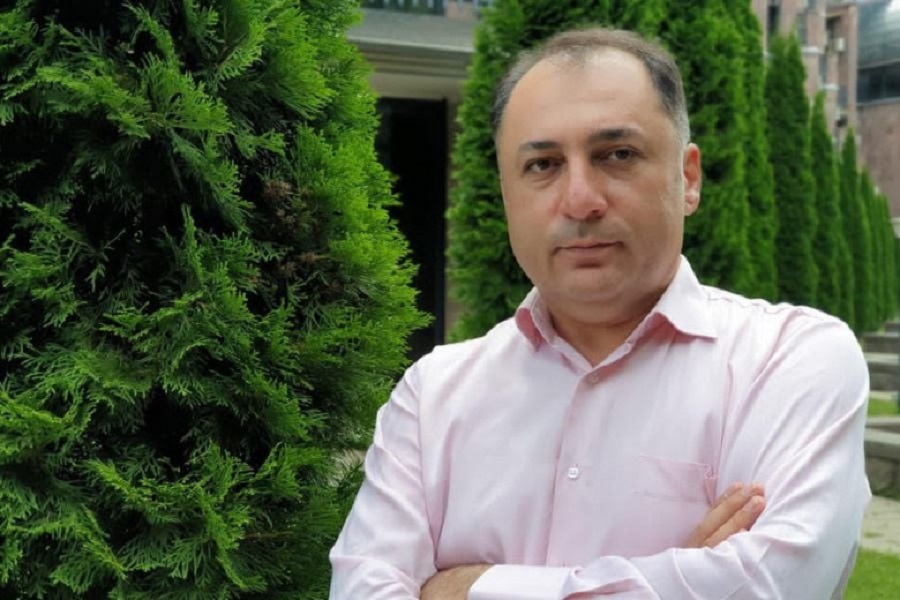
Mariam Karapetyan, a writer and associate professor and researcher in the field of literature, journalism and media, said she is personally involved in her children’s education. She said she is cautious about hiring private tutors because it is not always easy to find a specialist one can trust.

At the university, Karapetyan is known as a patient person, but that patience does not always remain intact when she studies with her own children.

“When I do schoolwork with my children at home, I sometimes lose my patience when that childish stubbornness kicks in,” she said.

According to her, when a child does not understand the material, she tries to explain it again and encourage them. However, children’s refusal to study can sometimes create tension.

“When a child does not understand the material, I try to explain it again and present it in a different way. But when they do not want to study or refuse to do an assignment, it gets on my nerves. The children are still young, and at that age, the parent’s influence is stronger and more consistent,” Karapetyan noted.

The information environment in which children live today also affects their learning. According to Karapetyan, students’ phones are collected at school and are generally not used during lessons. At home, however, a phone can become a source of distraction.

Her younger son, for example, may get tired while doing homework, take a break, and play a football game on his phone.

“A phone can also be useful. For example, children can use it to gain certain knowledge about geography or other subjects. But, of course, there are also negative consequences. When a child gets tired while studying and immediately switches to a game, it becomes difficult for them to return to their schoolwork,” she added.

Karapetyan said that children’s successes can strengthen their motivation, while an excessive amount of homework can have the opposite effect.

“When a child succeeds at something, it motivates them. But when there is too much homework, a child can become tired and frustrated. In that case, learning becomes not an interesting process but a burdensome obligation,” she said.

However, there are also other cases in which children simply do not want to study. This is also reflected in the PISA results: some students stated that they considered school a waste of time.

According to the Apitonyan, the reasons for such an attitude should be sought in the environment and conditions in which the child studies.

“If a child does not see school as important, they are likely not to want to study either. But we need to understand why they think that way. Perhaps the teaching methods do not correspond to their age and interests. Perhaps they do not see a connection between what they learn and real life. Perhaps there are problems with the teacher. We need to understand why a child does not want to do an assignment. Maybe they have not understood the material, maybe the assignment is too difficult, maybe they are tired, or maybe they are afraid that they will be criticized if they make a mistake,” Apitonyan explained.

At the same time, according to PISA data, 22 percent of Armenian students from socioeconomically disadvantaged backgrounds were considered academically resilient, meaning that despite socioeconomic difficulties, they achieved comparatively high results.

According to Apitonyan, for such children, education can sometimes become an opportunity to change their environment.

“If a child sees that education can help them change their life, that can become a powerful source of motivation. Sometimes the supportive words of a single teacher or another important adult can have a significant impact on a child,” Apitonyan emphasized.

The next stage of the education cycle is preparation for university admission. At this stage, students often turn to private tutors to prepare for entrance examinations. According to Mkhitaryan, a problem can arise when they only study to the test.

“If, in order to successfully pass an exam, a student has to spend months solving only test banks and memorizing the correct answers, that system can encourage mechanical preparation. But multiple-choice questions themselves are not necessarily a problem. What matters is what they assess,” the education expert notes.

Mkhitaryan says more practical, analytical, and open-ended tasks are needed, requiring students not only to choose the correct answer but also to justify it and apply their knowledge in a new situation.

If a student who arrives at university from school later chooses to become a teacher, the same problem can return to the school system. Mkhitaryan describes this as a closed cycle: an underprepared school student leads to an underprepared university student and an inadequately prepared teacher unable to teach properly.

According to Mkhitaryan, it is necessary to increase the attractiveness and competitiveness of the teaching profession, as well as improve professional training and career opportunities.

“Being a good teacher is not only about knowing your subject. A teacher must be able to make that knowledge accessible to different children. They must understand how to work with a struggling student, how to encourage an active student, and how to create a collaborative classroom environment,” Mkhitaryan emphasized.

The problems of the education system did not emerge overnight, and they cannot be solved with a single reform. The starting point should be identifying and addressing problems in time, so that they do not move from one grade to another, from one stage to the next, and eventually become a problem for the entire system.

Get the Mirror-Spectator Weekly in your inbox: