

Grzegorz Pełczyński

The Armenian Genocide in Polish Literature

22
0

By Grzegorz Pełczyński

Ceghaspanutjun is the term for the Armenian Genocide during World War I. It is rather little known in Poland. Much more well-known is the term Holocaust – the genocide of the Jews.

It must be remembered: Armenians in Turkey had been murdered since the end of the 19th century; 300,000 of them died in 1894-1895, and 20,000 in 1909. Then the rule in this country was taken over by the Young Turks, who dreamed of a great empire, from the Balkans to Mongolia, inhabited exclusively by Turkic peoples. The first obstacle to the fulfillment of these dreams were the Armenians, who inhabited mainly the eastern part of what was then Turkey (former Western Armenia). In 1915, the Turkish government began the planned extermination of the entire Armenian population in the country. So Armenians were cruelly killed in their villages and cities, or they were displaced and driven to desert areas to die of hunger and thirst. About 1.5 million of them were murdered.

In Polish literature — in its works of fiction — the extermination of the Armenians during the First World War, or even earlier, was a topic discussed very rarely.

Already in the 1920s, soon after the Armenian Genocide, it was mentioned in two novels written by outstanding Polish writers. The first is Przedwiośnie [The Early Spring] by Stefan Żeromski, published in 1924. Describing the fate of a young Pole, Cezary Baryka, the author presents a highly complicated situation of the Polish nation during the October Revolution and in the initial period of the existence of his country. And since Baryka lived in Baku when the massacre of Armenians took place there, which was part of what started in Turkey in 1915, Żeromski could not ignore it. He obtained information on this subject from two Polish women who had lived in Baku at that time.

According to Żeromski, the massacre of Armenians committed in this city in September 1918 by Azerbaijanis (called Tatars in the book), with the help of the Turkish army, was revenge for the pogrom of Azerbaijanis committed against them by Armenians in March of that year. Well, the situation in the entire Transcaucasia, including Baku, was very complicated at that time. Żeromski did not explain it properly, and he did not devote his novel to it.
Get the Mirror in your inbox:

This could have been done by the famous Polish film director Filip Bajon in a TV series based on Przedwiośnie in 2002. But its first two episodes show that Armenians are to blame for what happened in Baku in 1918. Armenians living in Poland protested against it, accusing Bayon of allowing Azerbaijani historical interpretations to be imposed on it. It is necessary to add here that Azerbaijani television was a co-producer of the series.

In any case, the novel’s descriptions of thousands of Armenian corpses scattered throughout the city, which were then loaded onto carts and trucks to be taken to the sea, remain shocking. Baryka was also forced to do this work. He quickly got used to it, despite its gory nature. That was the case until he saw the body of a young, beautiful girl, which shook him. Suddenly, a dialogue began to take place between the murdered Armenian woman and the young Pole — the girl was filled with grief for her life ending so quickly and so painfully, while the boy could only muster a look of desperate astonishment. The Armenian woman finally asks him: “Don’t forget my wrong, young coachman! Take a good look at human crime! Beware! Remember!”

The next novel about the Armenian Genocide is Choucas by Zofia Nałkowska, printed in 1926 in “Tygodnik Ilustrowany”, and published in the form of a book the following year. Its subtitle — Powieść internacjonalna [An International Novel] — informs about the author’s intentions. It postulates the integration of nations that, opposed to each other during the past war, should now somehow come to a common understanding. The writer gathered representatives of these nations in a Swiss sanatorium. She spent some time in a similar sanatorium and met Armenians there.

Therefore, among the heroes of her novel there are also Armenians: Miss Hovsephian, Mr. Peynirian and Miss Sossé Papazian. They all escaped the massacres in Turkey though they saw what happened and were scarred.

Miss Hovsephian, always dressed in black, resembles the titular choucas — black birds that fascinate the inhabitants of the sanatorium. This is how she talks about murdering her compatriots:

The Turks murdered them in their apartments, on the streets, and in prisons. Little boys were taken to town squares and slaughtered with axes and knives, while behind the police cordon their mothers howled in agony and went crazy. Entire Armenian cities, entire armies of ghosts, entire hosts of those about to die were driven through swamps and deserts along trails along which the corpses of those who had gone before were rotting. As they went, they died of hunger and plague — men, women and small children. They stopped to rest in cemeteries, in the poison of bodies merely covered with dirt. And again they moved on, and in the grass between the graves there were people dying of typhus and cholera (…). Near the cities, one often saw a hand lying on the ground, sometimes gnawed bones, or pieces of rotting human flesh dragged by dogs from shallow, mass graves. The waters of the Euphrates were poisoned and stank of corpses .

Mr. Peynirian, in turn, came from Constantinople, where diplomatic missions were, where Europeans with interests in Turkey lived, and therefore the Turks treated Armenians in this city more leniently. However, he had to leave the city, where his mother lived. He knew that his mother was still alive, but he could not correspond with her. He had some remnants of his former fortune, allowing him to live a modest life. “And he was waiting here — for what? It is unknown. For new political changes, for the awakening of international conscience, for a miracle. Because all the promises of America and Europe have failed,” the author adds accusingly.

And finally, the youngest of the three Armenians, Sossé Papazian, “probably also experienced a lot — and she remembered something of it too well, something terrible. It was known that when she had a strong fever and was delirious, she saw a single, well-known, monstrous vision that filled her with terror and despair.”

Compared to Przedwiośnie, in Choucas there is much more information about Ceghaspanutjun, as well as the entire history of the Armenian nation. The topic of this international novel provided the opportunity to develop Armenian themes, and Nałkowska did so. We admire the knowledge acquired by the author, although it is not known how she acquired it, as well as the mastery with which she wove it into the narrative.

I would also like to draw attention to a mention in Władysław Jan Grabski’s novel Bracia from 1934, which deals with current Polish issues. One of its characters, while in Paris, accidentally met an Armenian who did not arouse his sympathy. He looked with dislike at this “thin brunette with a Semitic nose. What a confusing character! History question mark! The Turks complain that the Armenians oppress them, with usury and murder insidiously, and the Armenians shout about the Turks’ atrocities and organized pogroms. Who to believe here if both sides present their arguments with such faith?”

The writer clearly did not bother to establish the facts and deliberately or unconsciously decided to relativize the issue.

The next novel, which contains quite a lot about Armenians and their genocide, is W stanicy [In the Outpost] by Józef Łobodowski, the second volume of his novel series, usually referred to as the “Ukrainian trilogy”, published in London in 1958. Its hero, Staś Majewski, like Cezary Baryka from Przedwiośnie [The Early Spring], tries to leave Russia in revolution. Along the way, he experiences many adventures and meets different people. A Cossack friend named Chubar tells him how during World War I he was stationed among the mountains beyond Yerevan, in Igdir. There was a group of Armenians who hid in the mountains and were not murdered. Russian soldiers ensured their safety and also gave them food in exchange for their services.

In 1961, a List do starego tureckiego znajomego [A Letter to an Old Turkish Friend], written by Bohdan Gębarski, was published in the weekly Kierunki. It is probably not a work of fiction. However, I decided to mention it because it is not devoid of certain elements characteristic of fiction. Moreover, it is the most famous work in Polish literature devoted to the Armenian Genocide. It has been translated into many languages. It was also published by Polish Armenians as a brochure in their own publishing series.

The sender of A Letter…, who is, in a way, the narrator, addresses a Turk he met before the war about the genocide committed by his compatriots. He reminds him of his questions about this issue, which he was unable to answer, explaining that he was a child during the war. But this question undoubtedly irritated him. Maybe that is why he did not make any contact with a Pole for a quarter of a century. And suddenly, after such a long time, he sent him a letter in which he expressed his satisfaction with the acts of justice visible in the modern world, mentioning the Eichman trial and decolonization. The addressee responded with an open letter — List do starego tureckiego znajomego — in which he again asked questions about Armenians murdered by the Turks. He was able to answer most of them himself.

However, he still does not know why the Turks do not respond to their crime and try to convince the world that it did not happen at all:

I cannot understand your current indifference towards the crime that has been weighing on you for forty-something years. I don’t understand how a nation can live in these conditions, love its homeland, laugh and be happy, write and read humorous books, visit abroad and host foreigners. I think this is what German society would have been like if Hitler had won World War II. But then the whole world would be mad. I cannot help but notice that although over a hundred years have passed since this genocide, the Turks have not changed their attitude.

Gębarski is also the author of a short novel titled Morituri. Opowieść o 1915 [Morituri. A tale of 1915], also about what happened in Turkey that year. So far, it is the only larger work in Polish literature entirely devoted to this subject. Unfortunately, it was not published during the author’s lifetime (he died in 1978). And yet Gębarski, although he usually dealt with journalism in magazines, coped with artistic prose quite well. Morituri was published by Armenians only in 1992 in the above-mentioned publishing series. In the same year, it was published in Armenia in Armenian, translated by Anahit Ter-Ghazarian.

The novel takes place at the beginning of World War I and its protagonists are officers of the Turkish army, also of Armenian nationality. Brave and liked by their colleagues, they are unexpectedly doomed to extermination. They begin to be gradually separated from the remaining members of the officer corps.

I must also mention the references to Ceghaspanutjun made by the famous poet Wiktor Woroszylski in a work titled Literatura. Powieść [Literature. A Novel]. This work represents a specific literary genre called Sylva, fashionable in Poland, especially in the 1970s — these are supposedly chaotic notes that form a coherent whole. In Woroszylski’s sylva you can read about the genesis of his poem Oczy Metakse [The Eyes of Metakse]. While in Yerevan in 1954, the poet watched the dance of a very young Armenian woman whose movements seemed to him marked by the trauma that her grandparents had probably experienced and which, in turn, was passed on to her through her parents.

The second mention is a quote from the minutes of the meeting of the leadership of the Young Turk Ittihad party, as if it were a fragment of a conversation. The main speakers are Dr. Mehmed Nazim, one of the most prominent party activists. He states authoritatively that all Armenians must be exterminated. Others agree with him.

Having mentioned longer or shorter fragments concerning the extermination of Armenians by Żeromski, Nałkowska, Łobodowski, Woroszylski, and above all two works by Gębarski, it must be said that this is really not much. Even if I mentioned poems on this topic, because Oczy Metakse is not the only one, the thesis would still hold that Polish literature is not very interested in this topic.

There is no such work written in Polish as Czterdzieści dni Musa Dah [Forty Days of Musa Dah, written by Franz Werfel. Apparently this novel was very popular in the Warsaw Ghetto during World War II. The Jews locked inside felt similar to the Armenians who were besieged by Turkish troops on Mount Musa.

The topic of the Holocaust in the context of the small number of works about the extermination of Armenians written by Poles is by no means accidental. They were more interested in the extermination of the Jews because Poles had witnessed it. Ceghaspanutjun took place far from the areas inhabited by them, and besides, it took place during a crucial time for them during the First World War and the fight for independence.

Moreover, in Poland in the interwar period the Armenian community was small and assimilated. Refugees from Turkey very rarely chose Poland as their place of settlement. Therefore, there were no people who could remind about this genocide due to genetic connections with the murdered.

Contemporary Armenians living in Poland remember it much more. But most of them came to Poland from Armenia over the last thirty years, so their identity was shaped by the memory of the crime committed in 1915. Maybe what is still stuck in their heads will somehow be expressed in the works of Polish writers.

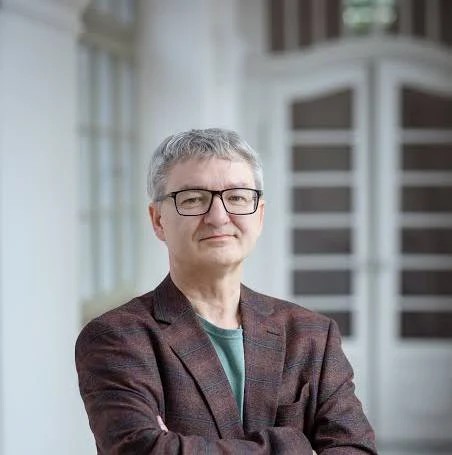
(Grzegorz Pełczyński is a cultural anthropologist, researcher in religious studies, and publicist, as well as a PhD professor at the University of Wrocław. Since 2004, he’s the chairman of the Ethnographic Committee of the Poznań Society of Friends of Learning. He’s a member of both the Association Internationale des Etudes Armeniennes, and the Historical Committee of the Evangelical Methodist Church. He’s also the creator and executive editor of the Our Europe journal.)

Get the Mirror-Spectator Weekly in your inbox: