

The World of Zabel Yesayan Comes to Boston

11
0

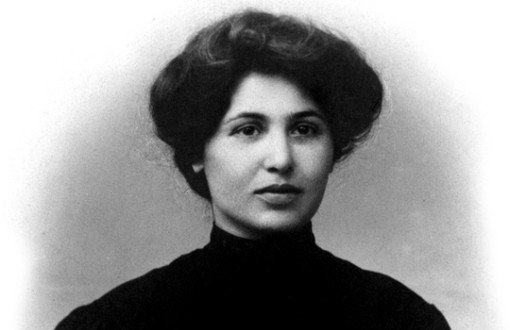
BOSTON — Writer Zabel Yesayan has been rediscovered in the past couple of decades with the English translation of several of her books. Yesayan’s life coincided with some of the most harrowing chapters in Armenian history, from the Armenian Genocide to the repatriation of many to Soviet Armenia. She was the only woman to be on the list of intellectuals to be rounded up on April 24, 1915 but ultimately met her end somewhere in Siberia, one of many victims of Stalinist purges.

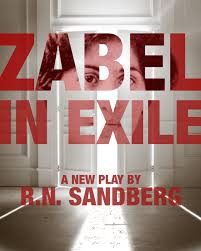
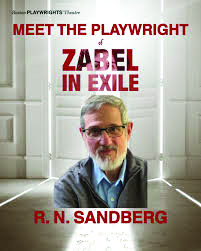
Now, the Boston Playwrights’ Theatre (BPT) will bring her to life through a new play, “Zabel in Exile,” by R. N. “Bob” Sandberg, with a run of 11 shows scheduled for February 19 to March 8.

Yesayan, née Hovannessian, was born in 1878 in Istanbul to an intellectual family. She was one of the first women from the Ottoman Empire to study in Paris. She became a writer, journalist and social commentator, thus putting her in the crosshairs of the Young Turk leaders.
Zabel Yesayan

Her books have been translated into English in the past two decades through the efforts of the Armenian International Women’s Association (AIWA). Among her books available at Armenian bookstores are the autobiographical novel The Gardens of Silihdar, My Soul in Exile: And Other Writings and In the Ruins: The 1909 Massacres of Armenians in Adana, Turkey.

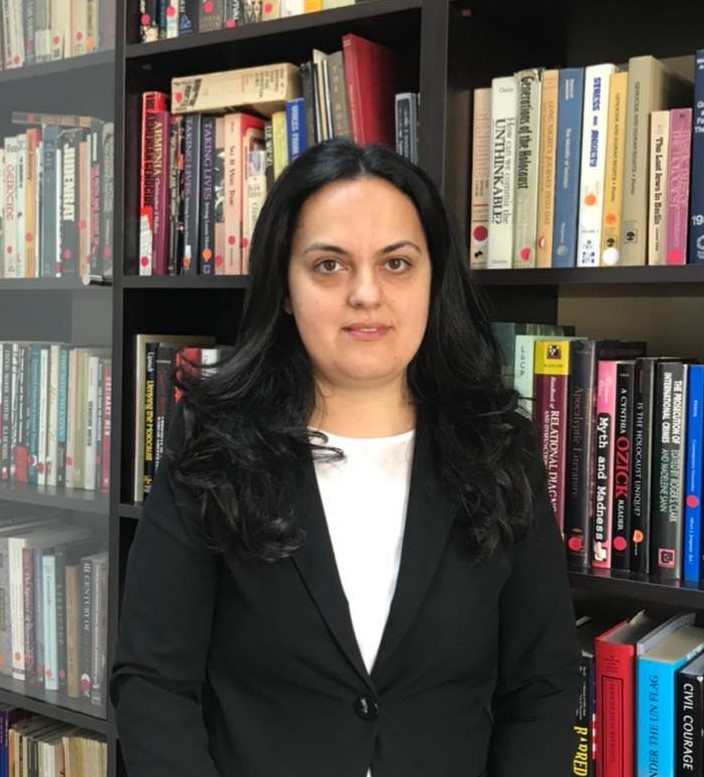
Judith Saryan and her husband Victor Zarougian are the producers of the BPT production. They had commissioned the play in 2018. In a recent interview, Saryan explained why she wanted a play produced based on Yesayan’s works.

“She is a pivotal figure in history,” she explained, as“one of the most important reasons really comes back to In the Ruins, which she wrote after she visited the aftermath of the Adana massacres. It was one of the first times anyone in history had documented the testimonies of people who had been massacred.”
Get the Mirror in your inbox:

She stressed that Yesayan was directing the book at the ruling Young Turks, asking that they recognize the tyranny happening in the country. “In fact, she was predicting what would happen in Turkey,” she added. “That makes it very important from a literary point of view.”

Saryan added that she has seen the rehearsals of the play, exclaiming, “I think it’s amazing.”

Playwright Sandberg’s daughter, Megan Sandberg-Zakian, the artistic director of the BPT, is directing the play. She has been involved with the Boston theater scene for a while. It was through her that Saryan found the playwright.

“Victor and I commissioned this play in 2018. That’s when I met with Megan Sandberg-Zakian,” she said. “We decided on her father, Bob Sandberg. It’s a father-daughter partnership which kind of fit in with Zabel Yesayan because she was very close to her father. He [Zabel’s father]was a very important mentor to her. He was the one who really encouraged her open-mindedness, her focus on human rights and dignity.”

The playwright Sandberg was delighted with the cast, and of course, with working with his daughter.

“Judy had seen some of Megan’s work. She had seen her last name and asked if Megan would be interested in exploring a project about Zabel Yesayan. Megan said yes. Judy wanted to commission a play and she reached out to three or four playwrights and got proposals. Megan stayed out of that process and Judy decided to go with the way I was envisioning that play,” he said.

Sandberg is familiar with Armenian history, as his wife, Virginia Zakian, is Armenian. In addition, he said, the character of Zabel seems familiar to him.

“I could understand Zabel very easily because of my wife,” who is “a tough cookie, a fighter, being someone who isn’t going to take anything at all and is going to stand up for herself and not be worried about the consequences,” he noted.

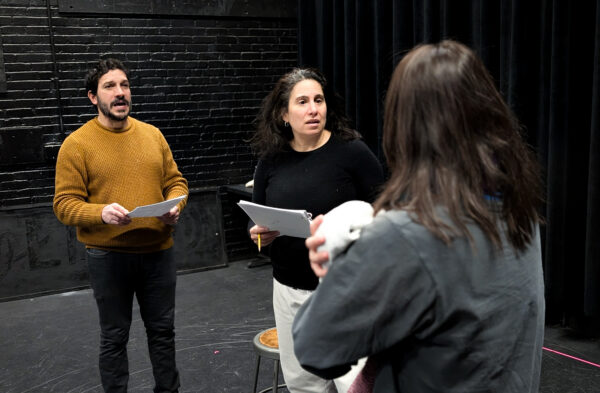
Robert Najarian, Sarah Corey, Grace Experience

Zakian is the Harry C. Wiess Professor in the Life Sciences, Emeritus, at Princeton staff and had her own lab there.

“I knew the history and had read numbers of things before this came around,” he said. “I had a lot of close contact with my wife’s family and her extended family.”

He continued, “Yesayan had such a variety of different life experiences and wrote in a variety of different ways and the challenge was how do you capture all of that. My take on it was that a way to do that was to do a memory play. You had to find a dramatic situation that was going to justify bringing varied material into the play. My idea was that you see Zabel in her Soviet prison cell, being condemned to death and she is coming to terms with what her life has meant, with death facing her. That allows you to bring in lots of memories from Gardens of Silihdar, and things from all the other writings. In some ways her life is more dramatic than her writing.”

“We see her in her cell in different times, with the guard who is in charge of her,” with different memories coming back to her.

“She remembers different things and also there are times when people from her past come unsummoned to her,” he said, “engaging her or even confronting her.”

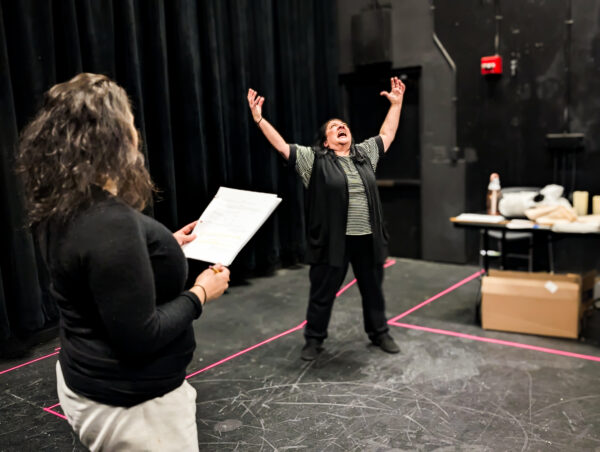
Sarah Corey, June Baboian

Asked who the target audience is, he said, “Anybody who is interested in families, anyone who is interested in how we conduct our lives, cope with challenges that come from bad things going on in the world, how difficult it is to see our way through that, how do we manage it in some ways. The play, has, I hope, some humor in it. It’s not totally dark but there are many challenging things.

“People who want to be moved and grapple with the important things in our lives,” should see the work.

Asked if he thought the play would open eyes, Sandberg  was humble and replied, “I feel like it would be presumptuous of me to say ‘open eyes,’ but for people who know things about the history of that part of the world, there will be things that they know but other things that will enrich, deepen their perspectives. For people that don’t know, they will be fascinated and shocked.”

He was delighted with the cast and the production. “Great. It’s a wonderful cast. I obviously think very highly of the director. The Boston Playwrights’ Theater is an excellent place to be working. I was at the rehearsals last week and they went great. It is a really smart, talented, funny cast of actors. It’s going to be a really good show.”

This is his first production with BPT.

Her message resonates with our times. Sandberg said: “The play, because it is a difficult moment…is a really important play for people to see. And I hope people will feel the various resonances in the play with the world we are living in now. You want to be true to her story and the time of the play. At the same time, there need to be things in it that are naturally there, that are going to keep the audience feeling like they are seeing somethings that are going on in our world today.”

Sandberg has a long history with the theater. He taught at the Cornish College of the Arts in Seattle and wrote plays and teaching students who wanted to be actors “text analysis,” which is how an actor looks at the text and then acts. He also taught directing as well as directed. At Princeton he taught English and theater, “an incredibly wide variety of courses,” including dramatic literature, playwright, Shakespeare and musical theater, among others.

The veteran playwright, asked to name some of his favorite playwright, noted Tennessee Williams, Caryl Churchill, Tony Kushner and Wole Soyinka (Nigerian Nobel Prize winner for literature).

For thousands of years, humans have been entranced by theater. For Sandberg, its appeal, even now, in the age of shortened attention spans and online addiction, makes sense.

“The media most of us is dealing with so much of the time is on screens. I think at some level, when we get into that live experience it can touch us even more when we are in a smaller space. That liveness is the basis of theater, that it is happening in front of us live, and we are living with it,” said Sandberg. “As amazing as the films and TV shows may be in terms of creating realities, it only goes so far.”

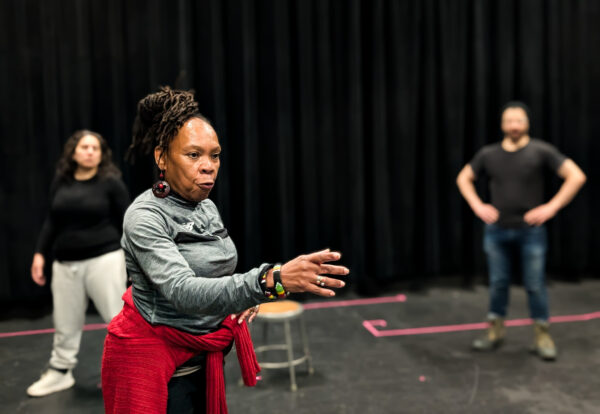
Sarah Corey, Nailah Randall-Bellinger, Danny Bryck

As for what is next for him, he said he is not sure, though he hopes that the play gets a positive response and can be staged in different cities.

“This particular group working on this show, there are highly emotional things in the play, but this is a very joyful group of people working on it. They bring so much laughter and so much positive energy.”

“Zabel” really is a family affair for Sternberg. In addition to his daughter, he is assisted by his 13-year-old granddaughter, who is working as part of an independent study.

She contributed a number of insights and ideas.

The cast features June Baboian, Danny Bryck, Sarah Corey, Grace Experience, Anelga Hajjar, and Robert Najarian. Another full-circle moment for Sandberg is that Corey, who portrays Zabel, was a former student of his at Princeton.

Saryan said she found out about Yesayan when she attended the showing of a documentary about her at NAASR many years ago. After that, she spoke to Barbara Merguerian, the former president of the Armenian International Women’s Association, and the two agreed that there was a need to translate Yesayan’s works into English for a new generation. The two, plus Danila Jebejian Terpanjian, and Joy Renjilian-Burg edited the versions translated by G. M. Goshgarian.

“We worked together to find translators and publish the books,” she said, giving credit to designer and illustrator Taline Boghosian who did the covers and Mark McKertich who did the typesetting.

She and her husband also helped fund much of the publication of In the Ruins. All the translations sold well.

“Her work, her writing, was not available to English readers and wasn’t at all well-known in the US or Armenia. The Middle East knows her work, including Beirut and definitely in Cyprus and Istanbul in the Armenian schools,” she said. “It’s still a work in progress getting her known.”

She added, “People are excited to learn about her because she is such an important figure. We talk about the male writers, and there were many female writers who got lost. It often happens. Many people have been trying to resurrect her. She is a great role model because of her writing, her great achievements as a writer and her activism, it’s very inspiring.”

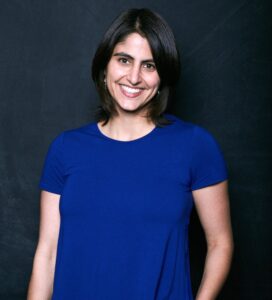
Megan Sandberg-Zakian

She also singled out her courage for writing the book and publishing it, “very much known by the Young Turk government. She had an awareness of her own ability to speak to a much greater global audience.”

Added Saryan, “It’s an important time for this play because it’s important to recognize we have heroes among us. I’ve said this before. Zabel Yesayan is my hero. In particular I am moved by her courage in the face of unbelievable danger. Her willingness to speak her mind, which put her at risk, but made her immortal,” Saryan said. “We’re counting on the Armenian community to be excited about the play, but we want to reach a non-Armenian audience.”

Sandberg-Zakian expressed her delight working with her father.

“It’s amazing. My dad was my first teacher and taught me most of what I know about making theater, so it’s a true honor and privilege to be responsible for stewarding his work on stage,” she said.

She was also unfamiliar with the life and legacy of Yesayan before starting work on the play. “I was not familiar with her work until I met Judy. I’m beyond grateful to her for bringing Zabel into my life (as she has done for so many others!). I could say many things about what her legacy means to me, but on my mind at this moment is that she reminds me that artists have a critical role to play in times of political oppression, by bearing witness, and offering alternative visions of a more empathetic future.”

Sandberg-Zakian said she had collaborated with BPT several times before becoming its artistic director. She noted that she collaborated with the theater several times, “most notably on a production of a play by the founder of BPT, Derek Walcott, whose “TI Jean and His Brothers” I directed in a co-production with Central Square Theater circa 2011. This was also the production where Judy Saryan and I first met, when she attended a post-show conversation I was moderating, so it all comes full circle!”

Asked what she wanted the audience to take away from the play, she said, “We have been here before. Bear witness. Don’t stop caring. Don’t give up.”

For additional information and to purchase tickets, visit www.BostonPlaywrights.org.

Get the Mirror-Spectator Weekly in your inbox: