

Nemanja Dragaš։ ‘We Are Like Seeds of the Same Pomegranate’

16
0

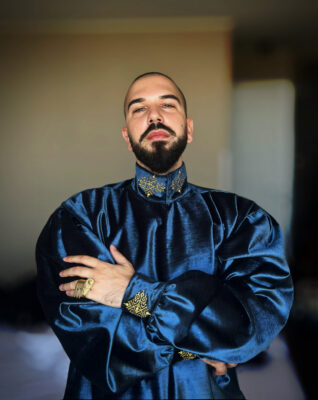
YEREVAN/BELGRADE — Striking in appearance, tall and stately, amiable and friendly Nemanja Dragaš (born in Belgrade in 1992) is an award-winning Serbian poet, theatre artist, fashion designer and creative director. He is among the most acclaimed poets of his generation.

He completed his primary and secondary education in Pljevlja, Montenegro. In 2012, he became the youngest member of the Association of Writers of Serbia. He graduated from the Academy of Arts in Belgrade, where he received the Academy’s Vidovdan Award as the top student of his graduating class. He later completed postgraduate studies in the Theory of Dramatic Arts and Media at the Faculty of Dramatic Arts in Belgrade.

Dragaš has published seven books of poetry, including Promised Universe, Chained by Hours, Morphium, Antibodies, and Ego-Makete. In 2016, Promised Universe earned him the Branko Marčeta Literary Award, and in 2020, he was named a laureate of the Milutin Bojić Award. His poetry has been translated into several languages. Alongside his literary work, Dragaš has also been active in theatre and film production.

Dear Nemanja, your versatile activities encompass both the arts and science. How do you find a balance between the two?

At the heart of both lies a love for all that is alive — for growth, as well as the spirit and the body. Balance is precisely at the crossroads where art and science meet, exchanging their knowledge and understanding of what it means to be human. I am fascinated by this intersection because it raises so many questions while offering so many answers. I enjoy being part of that exchange, contributing something of my own while sharing and building upon everything that has already been created and accumulated before me.

When did you first become acquainted with Armenians and Armenian culture?
Get the Mirror in your inbox:

Almost a decade ago. It is one of those rare kinds of love that also becomes a lesson in humanity, roots and blossoming. Wonderful friendships with Armenians in the diaspora, along with stories of the extraordinary city of Yerevan, eventually brought me here. I could never have imagined that I would find such a profound sense of home – or that I would keep returning to it as one returns to a mother’s embrace. That is the kind of love Armenia offers: unconditional, poetic, dignified and steadfast. Like Ararat.

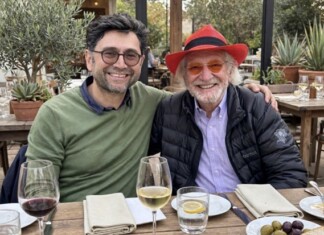
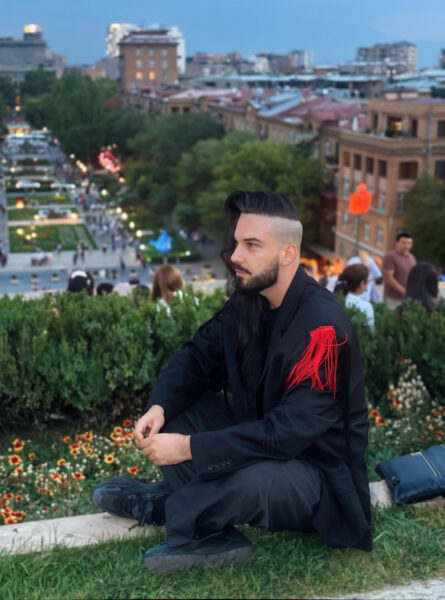
Nemanja Dragaš in Yerevan

It is often said that Armenians and Serbs have many similarities. Do you agree with this, and if so, what similarities do you see?

It is true. By nature, both peoples are warm and deeply respectful of guests, friends, and family. The importance of others is always held close to the heart. The beauty of the food, culture, and art on the one hand, and the weight of history, unhealed wounds, and living memories on the other, create another profound bond between us. There are also our faith, our struggles and our hopes. We are like seeds of the same pomegranate — separated, but never truly distant. The same color, the same flavor. And despite everything, life continues to emerge from us like a song.

We first met in 2022, when you participated in the Junior Eurovision Song Contest. Since then, you have visited Armenia several times. What was your connection to the contest, and what has brought you back to Armenia since then?

My story with Armenia is a remarkable one. In 2022, a member of my extended family represented Serbia at the Junior Eurovision Song Contest in Yerevan, and together we learned songs in Armenian. When I arrived in Yerevan, I fell in love with both the city and the taraz (national costumes). I knew I had to return. And I did. The following year, I came back as a Culture Moves Europe grant recipient and spent several weeks at the Teryan Cultural Centre, learning about Armenian tradition, folklore, ornaments, garment-making techniques and the ways in which the past continues to shape contemporary Armenian fashion. I later returned as a guest of Taraz Fest, and this year as a designer, presenting my own brand at The Future of the Past festival in Victory Park.

How would you describe and assess the high-fashion scene in Armenia?

The Armenian fashion scene is a genuine source of inspiration. From traditional taraz to contemporary clothing, there is an extraordinary interplay of creative approaches that open up a dialogue with the past, explore the freedom of the moving body and offer poetic interpretations of fabric and form. Alongside more conventional formats that follow global trends, what I notice in Yerevan is a particularly strong connection to folklore and cultural heritage. That contrast is a source of great beauty.

Several Serbian writers have written about Armenia and Armenians. Do you think you might one day write something specifically connected to Armenia?

Absolutely. Spending time in Armenia is like picking fresh fruit from the tree of creation. Somehow, there is always a new recipe for a delicious compote. And everyone knows how much I adore compote in Yerevan. For me, it is also a connection to childhood. Poets always write about beauty, even when they use other words to describe it. Because beauty is a source of love — just as this city has become the source of so many beautiful moments in my life.

Do you have any artistic projects or collaborations with Armenia in the works?

Of course. Armenia has already become part of my creative journey. I launched my brand after spending time here, and my very first fashion show took place in Yerevan. While I prefer not to announce new projects before they take their final shape, I am certain that Dragaš-jan will return to this city many more times — and continue to enjoy his favorite view from the top of the Cascade. From December, a direct Belgrade–Yerevan flight will bring us even closer, giving us even more reasons to look forward to new encounters.

Get the Mirror-Spectator Weekly in your inbox: