
At Trinity Canyon Vineyards

Initiative Hopes to Put Spotlight on Armenian Wine Globally

13
0

WATERTOWN/YEREVAN — WineArmenia.org, an Armenian wine network, in collaboration with the Vine and Wine Foundation of Armenia, has announced the launch of Armenian Wine Week, November 8-14, an initiative to raise awareness about Armenian wines globally.

The celebration will culminate on International Areni Day on Saturday, November 14.

The online initiative brings together wineries, importers, retailers, restaurants and Armenian organizations to help the country’s increasingly popular wine industry to grow.

Participants are invited to buy two bottles of Armenian wine, gift one bottle to a non-Armenian friend, colleague, or neighbor and then challenge three Armenian friends to do the same. Being an online campaign, participants are encouraged to share their experience on social media using the official campaign hashtags: #UncorkArmenia and #ArmenianWineWeek.
The force behind the push behind Armenian wine is Vahe Baloulian, the co-founder of Akumb restaurant (The Club), Tapastan and In Vino. He also founded Armenia’s first organic wine producer, Trinity Canyon Vineyards.


Get the Mirror in your inbox:

He participated in an interview recently, explaining his involvement with wine in Armenia as well as this particular campaign.

“With Armenian Wine Week, I hope to introduce Armenian wine to more people around the world. Our wines deserve far greater international recognition than they currently receive. Compared with larger, more established wine-producing countries, our industry simply doesn’t have the advertising budgets to compete for attention on a global scale,” he said. “Imagine if every Armenian introduced our wine to just one person who had never tried it before. We could reach people and places that no advertising campaign of ours could ever afford to reach. One bottle, one new friend, one introduction at a time,” Baloulian said.

A growing wine industry, he noted, in turn creates works for thousands in the Armenia, especially in the rural areas. In addition, it can lead to wine tourism.

Armenia has a deep history with wine, dating back millennia, but it was only in recent decades that it became a big producer of wine.

Baloulian said, “Armenia’s modern wine renaissance began in the late 2000s and gathered momentum throughout the 2010s. Although Armenia has a winemaking history stretching back more than 6,100 years, the Soviet period reshaped the industry, prioritizing brandy production and limiting the development of many indigenous grape varieties and quality-focused wine producers.  The modern revival was driven by a new generation of Armenian entrepreneurs, winemakers, and diaspora Armenians who brought international experience, investment, and new ideas. They began rediscovering indigenous grape varieties, investing in vineyards and wineries, and introducing Armenian wines to international audiences.”

Vahe Baloulian

In Vino opened in 2012 as the country’s first wine bar. Only two years later, the EVN Wine Academy opened, he said.

“Today, Armenia is rediscovering its ancient wine heritage while building a modern wine industry with its own identity and growing international ambitions,” he added.

Asked what makes Armenian wine distinct from those of other regions in the world, Baloulian said, “What makes Armenian wine distinctive is the combination of indigenous grape varieties, diverse high-altitude terroirs, and an extraordinarily ancient winemaking tradition.”

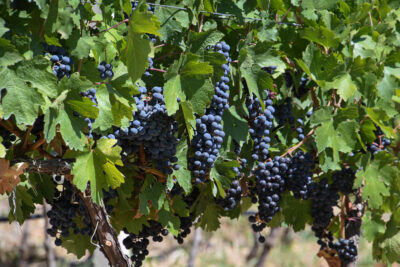
He further explained, “Among Armenia’s most important varieties are Areni, known particularly for elegant, structured red wines, and Voskehat, which can produce complex, aromatic white wines. Armenia is also home to many lesser-known indigenous varieties that offer exciting possibilities for winemakers and wine lovers.”

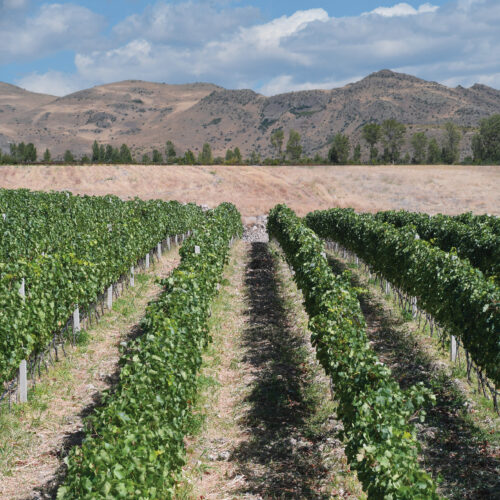
Many vineyards grow at elevations of 900 -1,600 meters, he noted, where they receive a lot of sunshine and intense temperature variation from morning to night. And finally, the soil also contributes to its uniqueness.

And one last element is the traditional “karas clay vessels” which are “allowing winemakers to explore ancient techniques alongside modern technology.”

“Ultimately, Armenian wine is not defined by one particular flavor or style. What makes it special is the diversity of indigenous grapes and terroirs that give Armenia a wine identity of its own,” he said.

A vineyard in Armenia at Trinity Canyon Vineyards

Armenian wine has not taken over the world yet. When asked where it is popular, Baloulian said Russia “remains Armenia’s dominant export market for wine, because of long-established commercial ties and the historical orientation of Armenia’s alcoholic beverage industry toward the former Soviet market.”

He added, “At the same time, Armenian wine is gaining visibility in the United States, Europe, and other international markets. In the US, the Armenian diaspora is the main target. Interest is also growing among wine enthusiasts looking for distinctive indigenous grape varieties and wines from historically significant wine-producing regions.”

Russia remains the leading destination for Armenian wine exports (by some estimates 70-90 percent), while the United States is the fastest growing market (again by some estimates up to 10 percent). Several European countries, including Poland, France, Belgium, and Germany, also receive Armenian wines, although the volumes are considerably smaller.

South America remains a much smaller market, less than 1 percent.

At home, wine is becoming increasingly visible. The wines are being sold in Yerevan, but the grapes are planted and harvested in the wine regions of Vayots Dzor, Aragatsotn, and Armavir, he explained, and those in turn are attracting visitors.

If Armenian wines are slowly gaining notice, its brandy is already world famous.

“Brandy remains a much larger and more established export industry in Armenia, with a long commercial history, substantial production capacity, and well-developed international distribution networks. Wine, by contrast, is going through a transformation. Alongside established producers, a new generation of small and medium-sized wineries is investing in indigenous grape varieties, vineyard quality, modern winemaking, and distinctive regional wines. These producers are helping Armenia move beyond its traditional reputation as a brandy-producing country,” Baloulian explained.

He added, “At home, the growing wine culture is another important development. Wine bars, restaurants, festivals, and wine tourism have helped introduce a new generation of Armenians to our winemaking traditions and contemporary wines.”

Baloulian’s most famous restaurant is Akumb [The Club]. He said, “In 2004, we opened a restaurant in Yerevan called The Club. It’s a special place, and over the years it has welcomed many international guests. During one of his visits, Paulo Coelho wrote on our menu: ‘The Club is a place where I heard the soul of Armenia.’”

He added, “There’s something interesting about The Club. Yerevantsis often bring their foreign guests there to introduce them to Armenian culture, food, and hospitality. But they don’t necessarily come as often when they don’t have guests to introduce. I began to see a similar pattern with Armenian wine. We speak proudly of Armenia’s 6,100-year winemaking heritage, yet we don’t always introduce our own wines to people outside our community or even choose them as often as we could ourselves.”

That disconnect led him to the current initiative. “What if Armenians everywhere did for Armenian wine what Yerevantsis do for The Club? What if, during one week each November, Armenians around the world introduced Armenian wine to their non-Armenian friends, colleagues, and neighbors? The idea behind Armenian Wine Week was born from that simple thought. You don’t need to organize a big event, spend a lot of money, or be a wine expert. You simply buy two bottles of Armenian wine, give one to someone who hasn’t discovered it yet, and invite other Armenians to do the same.”

For more information about the initiative, visit ArmenianWineWeek.com.


Get the Mirror-Spectator Weekly in your inbox: