

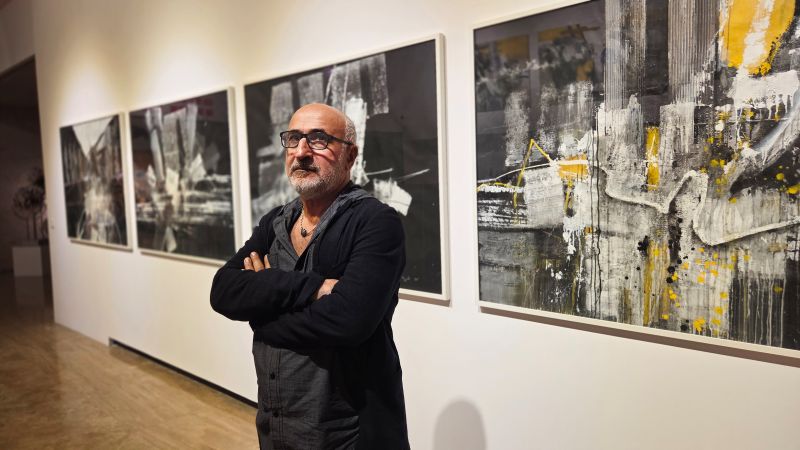
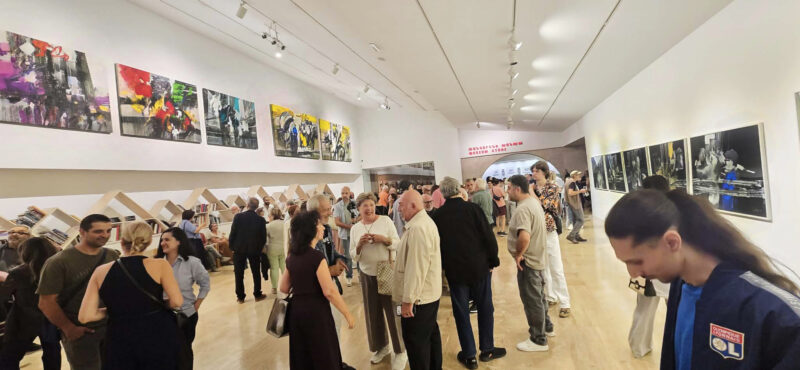
YEREVAN — On September 30, large numbers of artists and art-lovers filled the spacious rooms of Gallery One of the Cafesjian Center for the Arts in Yerevan for the opening preview of an exhibition of recent works by Gagik Ghazanchyan. The artist, born in 1960 in Yerevan, studied in the Painting Department of the Panos Terlemezian State College of Fine Arts in Yerevan, and in the Graphic Arts Department of the Yerevan Institute of Fine Arts and Theater. A member of the Artists’ Union of Armenia since 1992, in the last 40 years he has exhibited in major cities in the USA, Europe and the Middle East. The Cafesjian Center for the Arts, which included his works in 2018 in a group exhibition of contemporary abstract art, now hosts a solo exhibition.
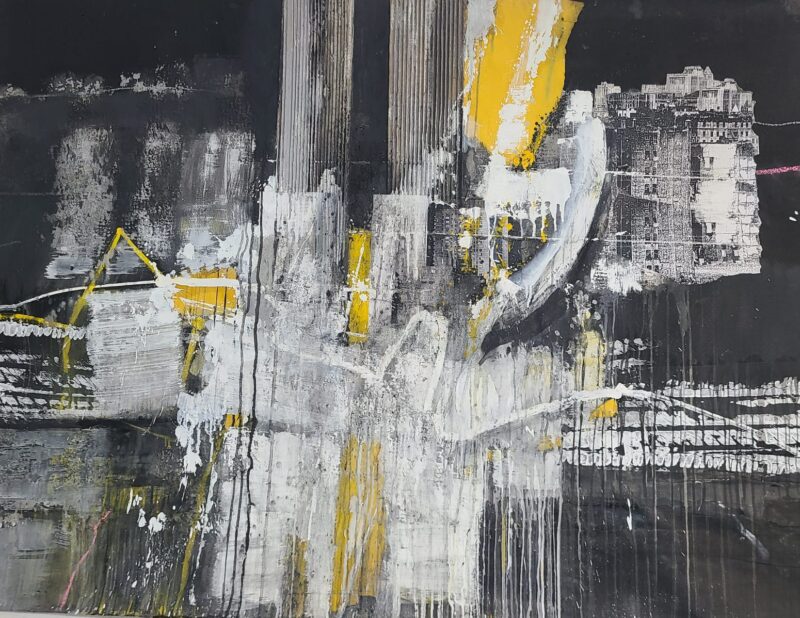
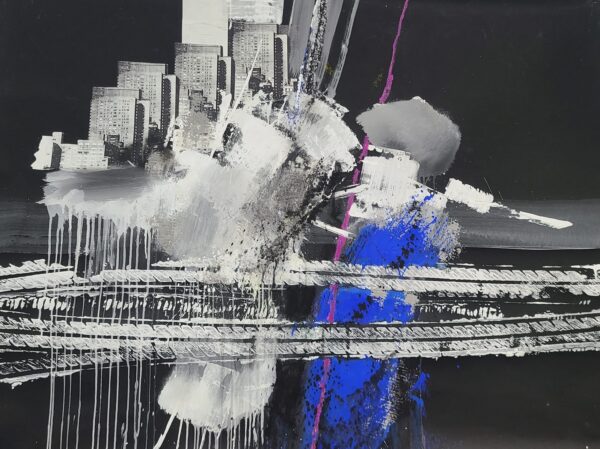
The show, entitled unFamiliar City, is both exciting and provocative, as it poses challenges to the eye and the intellect. As one strolls along the walls and pauses to contemplate each of the gigantic canvases, the question arises, where am I? It is like driving a car into a metropolitan center on a cold autumn evening, with torrents of rain pounding on the windshield, making it almost impossible to identify people or objects. Then, slowly, the eye begins to discern among the webs of parallel black lines flanking broad brush strokes of color, snippets of photographs (taken by the artist during travel) of urban edifices, towering against a darkened sky. Aha, we are in the city, some city – but what city?
The Ideal City or Megalopolis Madness?
The works on display, painted between 2024 and 2026, record Ghazanchyan’s continuing preoccupation with urban settings, and the process of urbanization over time, through which the city assumes enigmatic new forms and exudes shifting moods. Historically, the typical European city, for example, grew up around the church and city hall, the court or palace, and seats of religious, political, cultural, and civic institutions. Plazas, large open spaces provided areas for craftsmen and artisans, merchants and bankers, and markets. The city existed as an organic structure, arranged with a center and successive concentric circles or polygonal shapes moving outwards, with radial avenues spanning out from the center. Geometric spatial relations created architectural harmony, and as the city expanded, growth occurred as an organic process. Cities that preserve such historical development are themselves works of art: Florence, or Cordoba, Prague or Isfahan, to name a few. In the modern era, the city has yielded to the megalopolis, sprawling, seemingly haphazard conglomerations, flanked by shopping malls and suburbia; or, the traditional city has become a collection of tightly knitted islands hosting ever-higher glass-and-steel skyscrapers that dwarf the human being. And they appear not only in the USA and Europe, but increasingly throughout the world. The personality of the city has devolved into anonymity, a process depicted on canvas in the cityscapes painted by artist Ghazanchyan.
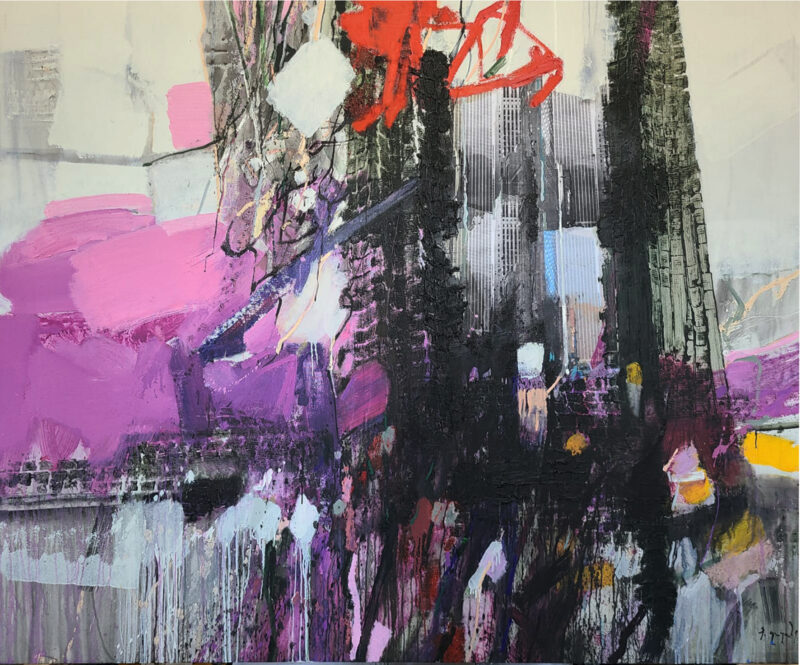
As explained by exhibition curator Armen Yesayants, “The title unFamiliar City reflects both the spirit of Gagik Ghazanchyan’s recent work and his artistic engagement with urban environments, conceived between the recognizable and the unrecognizable. The familiar remains interwoven with the unfamiliar, just as recognizable urban fragments persist within artistic forms that obscure, displace and transform them.”
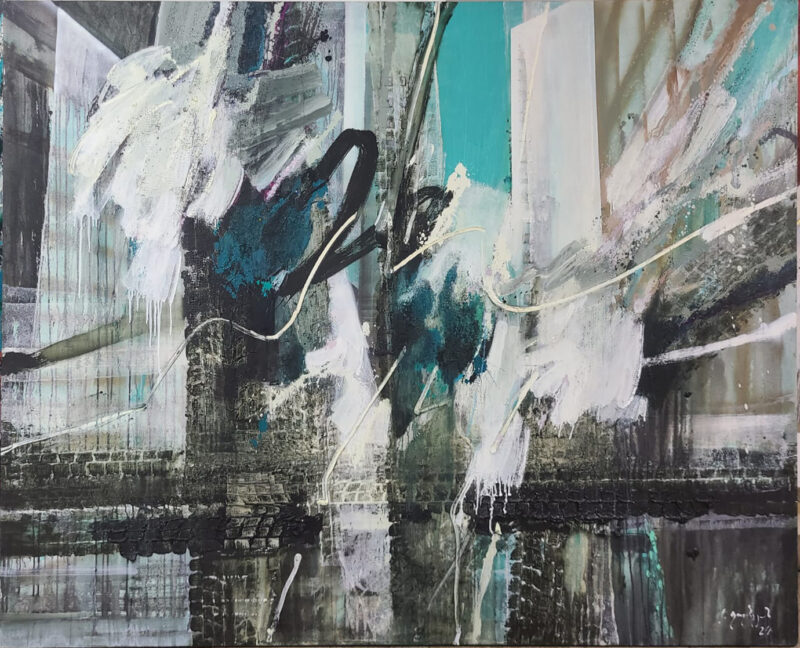
The Ghost City